

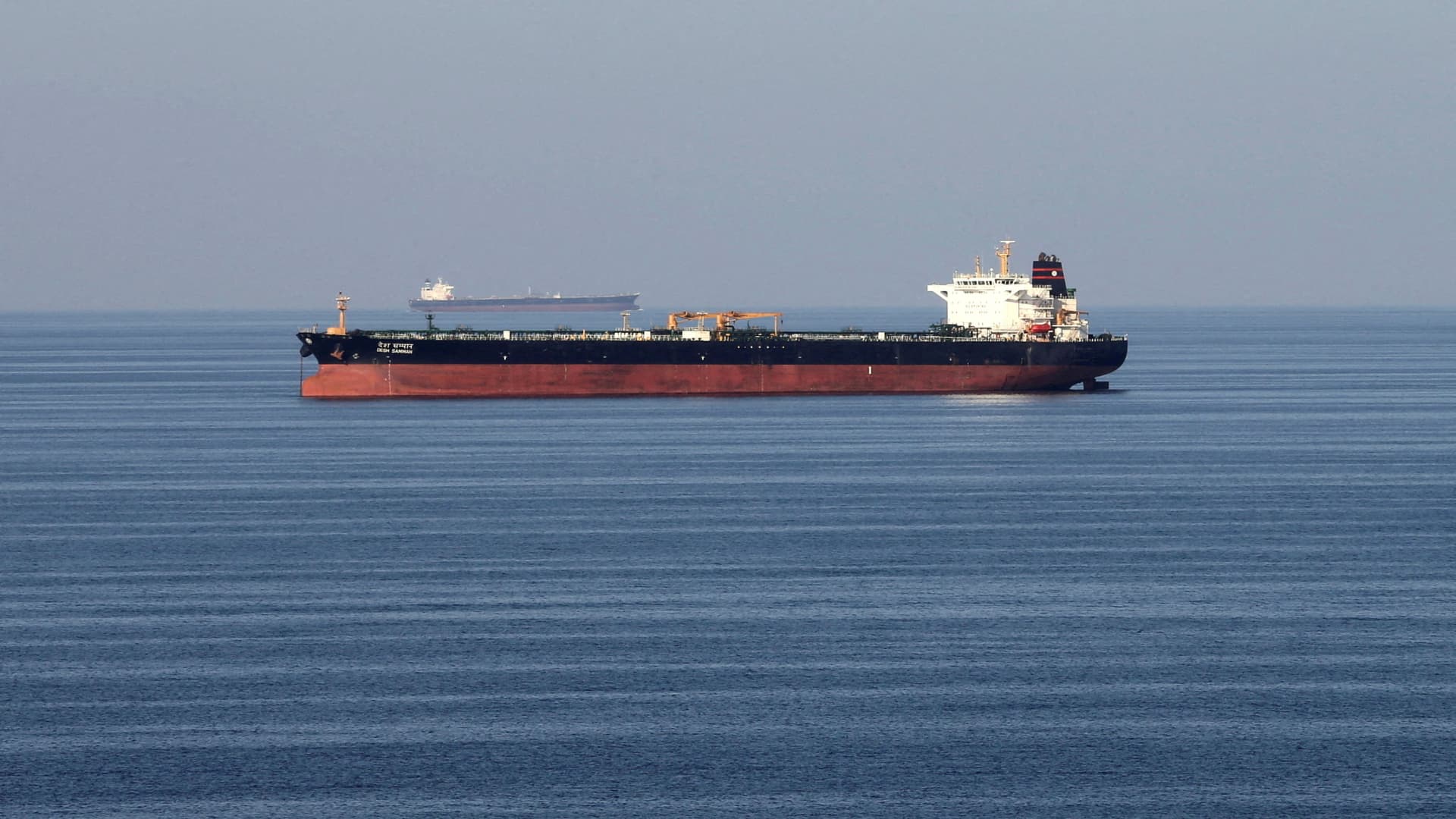

In the worst-case scenario, a full-scale war between the United States and Iran could send oil prices soaring and cause an economic downturn.
President Donald Trump indicated Thursday that he will decide within the next 10 days whether to launch an attack on Iran, amid a major U.S. military buildup in the Middle East.
“This Iran situation just scares the daylights out of this market all the time,” John Kilduff, founder of Again Capital, told CNBC. “There will be some mischief by Iran and the market is pricing in that.”
President Trump warned that an attack on Iran would be “much worse” than the limited US airstrikes that targeted the country’s nuclear facilities last June, but left open the possibility that negotiations could result in a deal governing Iran’s nuclear program.
Pricing risk
Oil prices rose more than 5% this week as traders priced in the increased risk of military action. The market’s biggest concern is that the war will disrupt the flow of oil through the Strait of Hormuz.
The strait is an important barrier for global oil trade. On average, more than 14 million barrels of oil and condensate per day will pass through the narrow waterway in 2025, accounting for a third of total global seaborne oil exports, according to data from consulting firm Kpler.
About three-quarters of the oil that passes through the strait goes to China, India, Japan and South Korea, Kpler said.
Iran’s Revolutionary Guards partially closed the strait for several hours on Tuesday to conduct military exercises. The semi-official Tasnim news agency quoted Iranian Navy Rear Admiral Alireza Tansiri as saying the Guard was prepared to close the strait if ordered by Iran’s leaders.
“Iran could disrupt Hormuz for much longer than many market participants think,” said Bob McNally, founder of Rapidan Energy and former White House energy adviser to President George W. Bush.
worst case scenario
The United States could face a situation similar to the 52-day air campaign against Yemen’s Houthi rebels, whose missile strikes disrupted the Red Sea, but worse, McNally said.
“Iran has much better weaponry than the Houthis and a coastline that is better suited for operations,” the energy strategist said. It also boasts a vast stockpile of mines and short-range missiles, which could threaten the security of the strait for commercial traffic.
“Lloyd’s is not going to allow or guarantee tankers to pass through Hormuz in those circumstances,” McNally said, referring to London’s insurance company.

Mr McNally said without oil flowing through the Straits, global energy markets would not be able to balance supply and demand. He said a prolonged shutdown could push oil prices above $100 a barrel, curtailing demand and causing an economic downturn.
McNally said Iran may be calculating that by stalling its economy ahead of the U.S. midterm elections in November, it can allay President Trump’s worst fears.
According to a research note published earlier this month, Rystad Energy expects oil prices to rise rapidly by $10 to $15 per barrel in a scenario of escalating conflict between the United States and Iran.
limited strike
But Trump also has a range of options, including blockades and other actions that fall short of a full-blown regional war, McNally said.
Natasha Kaneva, head of global commodity strategy at JPMorgan, said in a report Thursday that any U.S. military action “is likely to be surgical and aimed at circumventing Iran’s oil production and export infrastructure.” Kaneba said any post-strike oil price increases “will eventually subside as global fundamentals remain relatively soft.”

Goldman Sachs similarly sees no risk of large-scale, sustained supply disruptions, at least in its base case, Daan Struiben, head of oil research, said in an interview with CNBC. However, if the conflict were to eliminate 1 million barrels a day of Iranian exports in a year, oil prices would rise by $8, forcing the market to reassess the risk of further oil price increases, he said.
The Trump administration also appears unfazed about the risk of chaos in the Middle East.
Energy Secretary Chris Wright said in a Feb. 6 interview with CNBC that “there is a very abundant supply of oil in the world right now,” and that he would give the president “more influence over geopolitical actions so that we don’t have to worry about crazy oil price spikes.”
