

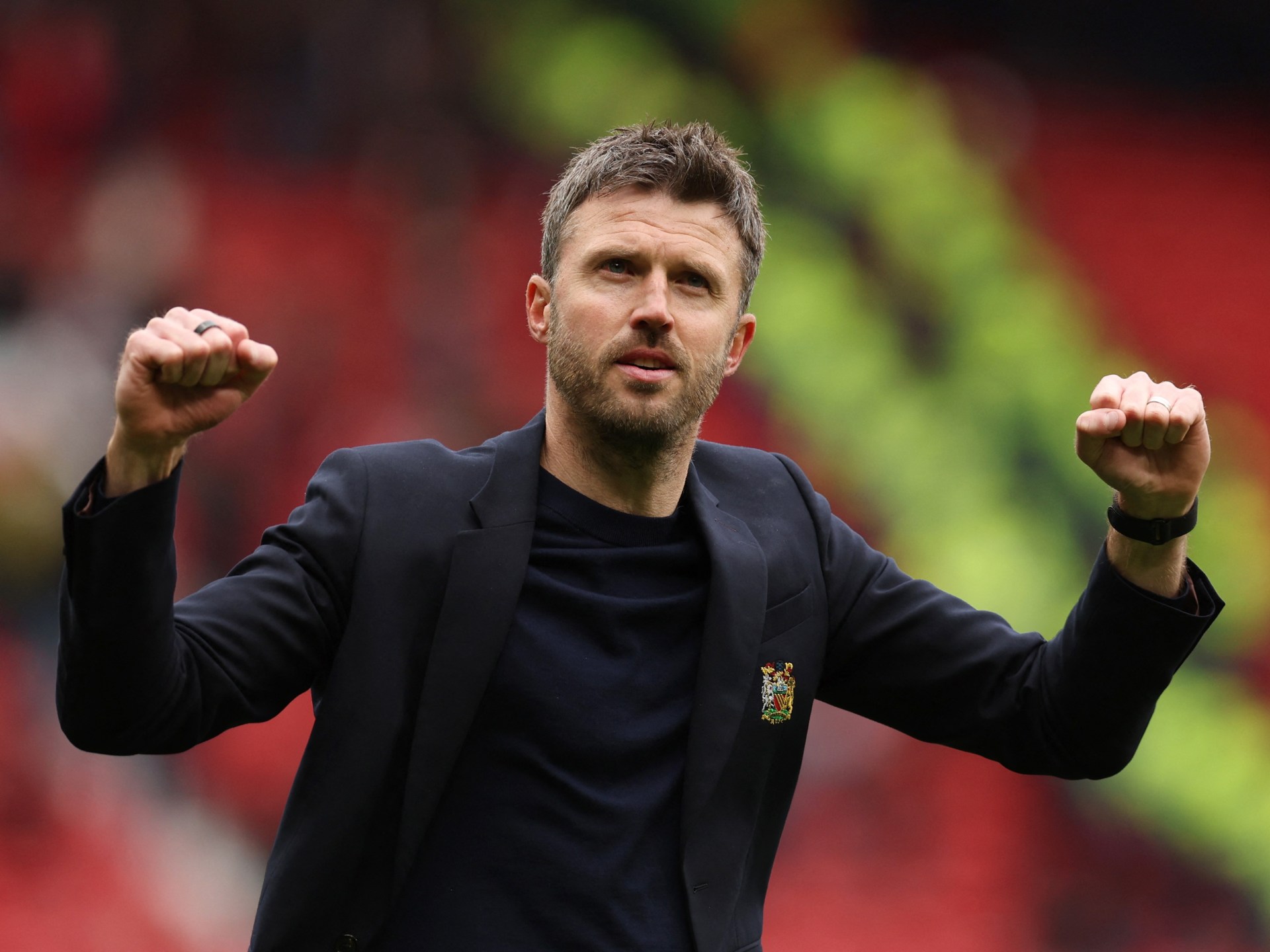
Michael Carrick never chased the spotlight as a player, nor did he suddenly seek it out as a manager.
In a season when Manchester United needed clarity, composure and conviction, Carrick came to embody all three: modest, deeply respected and quietly authoritative.
Recommended stories
list of 4 itemsend of list
Since he took over as interim manager in January, it has been more than just an operational turnaround, it has been a transformation. United’s leaders took notice and on Friday made him the permanent manager.
When Carrick stepped into the role following the sacking of manager Ruben Amorim, United were adrift, their campaign defined as much by uncertainty as by poor results.
Within a few months, they were reborn, climbing to the brink of finishing third in the Premier League and securing a return to the Champions League with a game in hand.
While the results alone are shocking enough, they only tell part of the story. Carrick won 11 of 16 league matches and lost only twice, and his team accumulated more league points than any other team during that period.
United rediscovered the competitiveness they sorely lacked, defeating Manchester City, Arsenal, Liverpool and Chelsea.
United centre-back Harry Maguire said: “When Michael came in we had two tough games (against Arsenal and City) and I think everyone probably watched them thinking, ‘Oh no’.
“We managed to get six points and since then everyone has believed in it and we are confident in it too.”
For a team that finished 15th last season, the turnaround felt more dramatic than gradual.
But those inside Old Trafford point to something deeper. Carrick not only improved performance, but also reset the environment.
Morale in the locker room stabilized and a sense of purpose returned to a team that had been on the verge of collapse.
Coby Mainu, a finalist for the Premier League’s Young Player of the Season award, praised Carrick, saying: “The confidence he gives to all his players. Everyone wants to follow him, fight for him and die for him on the pitch.”
Amorim has had some blind spots for the young midfielder, but Maynou’s performances in recent months have been one of the clearest signs of United’s resurgence under Carrick.
He returned Mainu to a central role and instilled in him the confidence to play with freedom and authority. That change was reflected in his calmness and creativity in key moments, including his crucial contribution to the victory that secured Champions League qualification.
Mainu was named in Thomas Tuchel’s England World Cup squad on Friday.
Players are talking about clarity, communication and a manager who connects rather than commands.
Maguire, a central figure in the resurgence, summed up Carrick’s attitude succinctly.
“He had a great way with the players and was a very good communicator,” he said.
Bruno Fernandes, who won the FWA Men’s Player of the Year award, also praised Carrick.
“I’ve always said Carrick has the potential to be a great manager,” Fernandes said recently. “As a player, if you can watch and think like him, you can do it from the bench.
“Of course it’s not, but with that poise and intelligence you can tell yourself it’s possible. He’s done a great job since he arrived.”
That ability to connect is rooted in Carrick’s personality. He is not a bossy or demonstrative figure, but rather someone who influences through poise, intelligence, and empathy.
As a player, he was the metronome of the midfield, dictating the drama-free tempo. As a coach, these traits define his touchline presence.
And his authority comes from within. Few people understand United’s identity better. The 44-year-old, who won five Premier League titles during his spell at Old Trafford, knows both the expectations and the pressures of the role.
That knowledge influenced his decision. Coach Amorim preferred a back three, so they reverted to a traditional four back, but were harshly criticized for refusing to be flexible.
He also moved key players such as Fernandes back to their more natural positions. Amorim played the Portugal international in a deeper role as one of two central midfielders, while Carrick pushed him into a higher position.
Fernandes was once again the centerpiece of the team, tying the league assist record with one game left in the season.
The hustle and bustle that once surrounded the club has died down, replaced by a sense of excellence rarely experienced in recent years.
That is perhaps Carrick’s most important accomplishment. He did not promise revolution, but he brought stability and in doing so laid the foundations for something more sustainable.
For Carrick, this journey has a certain symmetry to it.
The baton to guide United’s future has been handed to a player who has been in charge of United’s midfield for more than a decade.
