

Gen. David Petraeus, former CIA director, Fmr. Central Command and commander of U.S. forces in Iraq.
Adam Jeffrey | CNBC
Former CIA Director David Petraeus said unmanned systems will pose the greatest risks and opportunities for structural growth over the next decade, citing the conflict in Iran and Ukraine as evidence that the war is rapidly evolving.
Speaking at the UBS Asia Investment Conference, Petraeus said the increased use of drones in conflict zones demonstrates both the growing dangers of unmanned weapons and the urgent need to improve defenses against them.
“A lot of it is going to be about unmanned systems and defending against them, and in this case that wasn’t enough,” Petraeus said.
“It’s never going to be perfect, but it could be much better than what we’ve seen so far.”
The surge in drone warfare in the Middle East will prompt the region to invest in defense and offensive capabilities.

Iran’s cheap Shahid drones have become a fixture in conflicts and proxy attacks across the region, but the United States and its allies often rely on more expensive air defense missiles to intercept them.
According to published estimates, Shahed drones cost around $20,000 to $50,000 each, far below the cost of ballistic and cruise missiles, which can cost millions of dollars.
He added: “There will be huge spending on defense against things from Iran, but this is just a hint of future war.”
Petraeus noted that even “modest” amounts of drones pose real problems, such as reducing Qatar’s liquefied natural gas production.
The former four-star general, who also led U.S. Central Command, said future wars will increasingly rely on unmanned systems. He added that in a year or so, warfare will evolve beyond unmanned systems to include autonomous systems fighting each other.
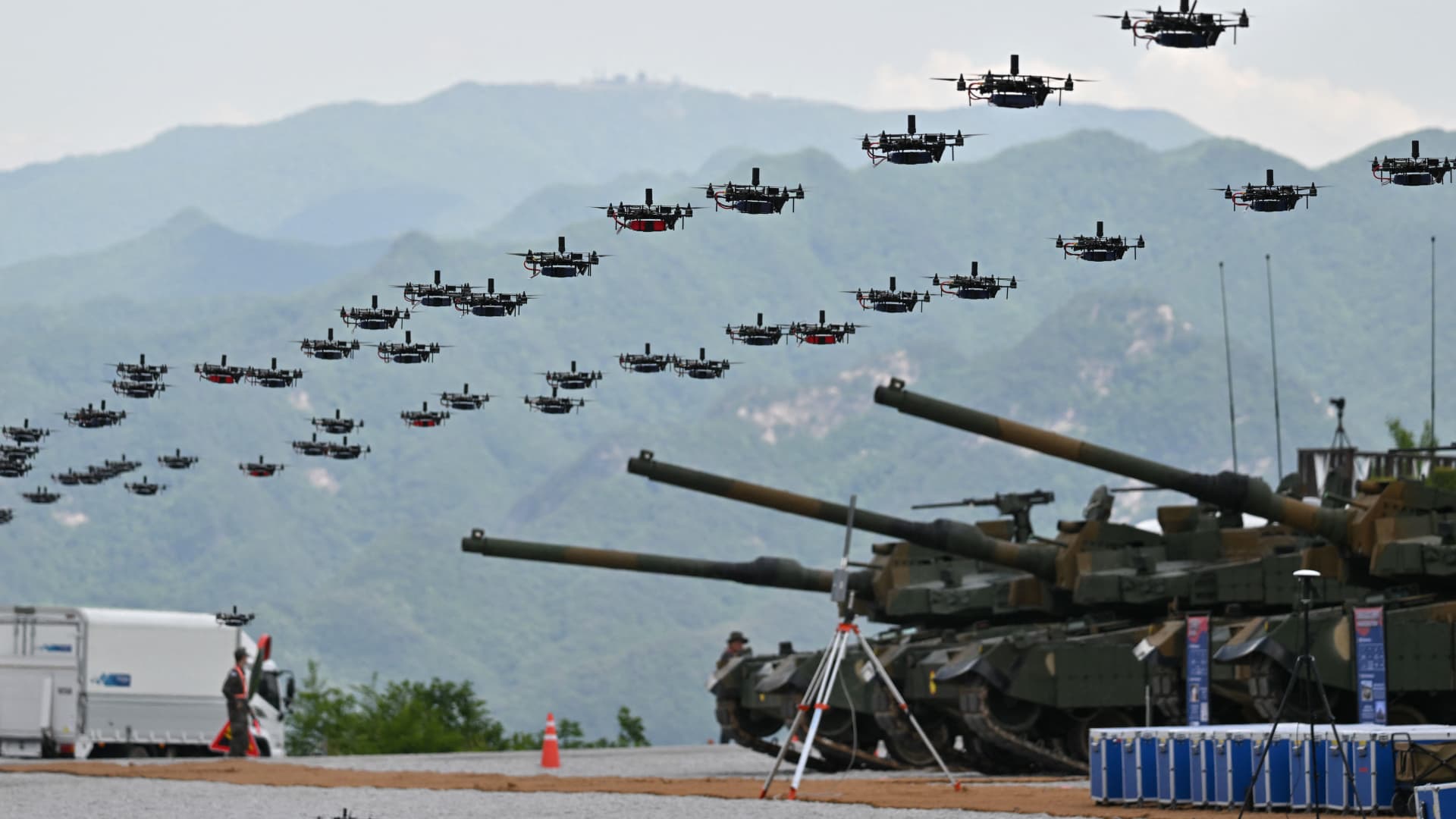
Rather than being controlled remotely by a human controller, autonomous drones can form swarms that outnumber defenses, communicating with each other and adapting to changing battlefield conditions.
“Now you are faced with a horde, and we have no defense against it.”
Citing his visit to Ukraine, Petraeus said Kiev’s military was “truly extraordinary” in building its own drones and defeating Russian drones through means such as interceptor drones and the use of electronic warfare to disrupt control networks. Ukraine also uses pickup trucks equipped with machine guns connected to targeting computers to intercept incoming drones.
Still, Petraeus warned that current countermeasures, such as individual drone interceptors, may not be enough against coordinated swarms.
“Actually, that’s really, really, really scary because autonomous systems … are not limited by the number of pilots operating these systems remotely,” he said.
A moment of great change
But the rise of unmanned systems represents a huge investment opportunity, Petraeus said.
Asked which part of the defense value chain is likely to see the most structural growth, Petraeus said the answer is “unmanned systems of all kinds.”
He said a “big, even bigger moment of change” will come when militaries move beyond individual autonomous weapons and begin deploying what he called “autonomous systems of autonomous systems.”
In that scenario, he said, autonomous sensors could collect battlefield data, feed it back to autonomous command and control systems, and direct autonomous weapon systems with little or no human input.

The shift toward autonomy is driven by the difficulty of maintaining command and control links on the battlefield, he added.
When drones and other weapons systems cannot rely on continuous communication with a human operator, they must navigate, target, and coordinate autonomously.
“Autonomy is definitely going to be an amazing development in the future,” Petraeus said.
He added that space-based communications, including systems such as SpaceX’s Starlink, will help connect unmanned platforms.
Petraeus noted that Iran’s Shahid drone does not rely on satellite communications, and said it is more like a “low-altitude small cruise missile” than a remotely piloted drone.
“All of this will be coming to a theater near you soon,” Petraeus said. “The investment implications are huge.”
