

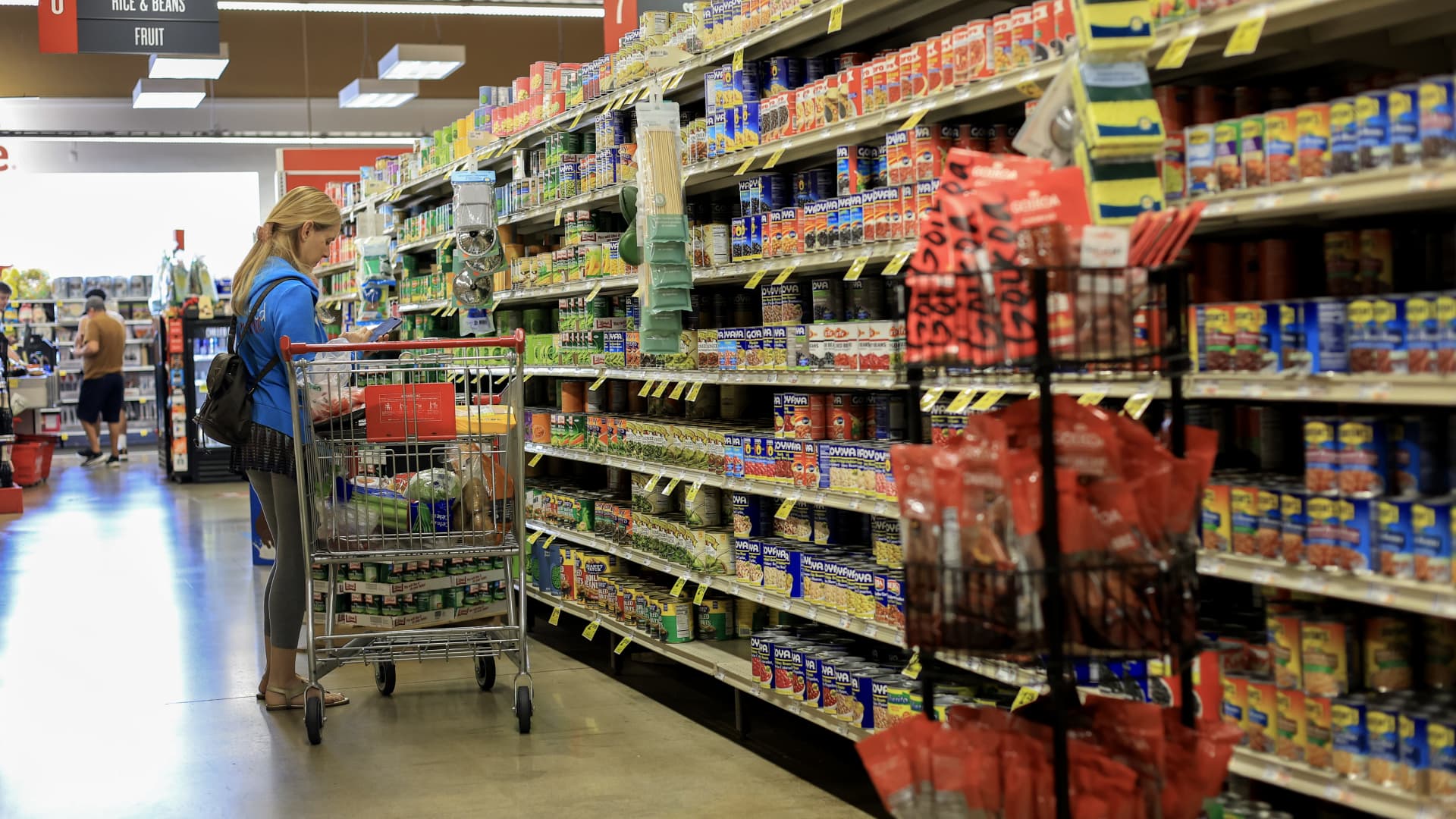

The so-called K-shaped economy is currently associated with a “significant increase in food insecurity,” according to a new blog post from the New York Fed.
A large portion of the population faces high levels of financial strain, according to a post published Wednesday based on data from the Consumer Expectations Survey.
Within this group, low- and middle-income households have been hardest hit by long-term inflation. The researchers found that a larger proportion of their spending was allocated to items such as housing, food and utilities that have increased in price since the pandemic, and as a result they refrained from buying groceries.
Rising costs of living and cuts to the Supplemental Nutrition Assistance Program (SNAP) are “raising new concerns about food insecurity among those at the bottom of the K-shape,” the New York Fed researchers wrote.
Researchers say households are struggling with the expiration of pandemic-era aid, including expanded SNAP benefits, formerly known as food stamps. Most recently, President Donald Trump’s “Big and Beautiful Bill” tightened work requirements for SNAP benefits.
Nearly 14% of U.S. households were food insecure in 2024, according to the latest report from the U.S. Department of Agriculture.
The New York Fed said food insecurity is likely the reason Americans are feeling worse now, even though the overall economy has expanded at a solid pace since the coronavirus pandemic.
Consumer sentiment is on the decline after a series of recent financial shocks. The University of Michigan Consumer Survey, a hot bellwether, hit an all-time low in May.
“Consumers are generally pessimistic about their financial situation and outlook,” New York Fed researchers said.
But researchers at the New York Fed also found “significant” variation across households, “supporting the concept of a ‘K-shaped’ economy.”
Rise of the K-shape
Rising stock markets and rising home prices tend to lift higher-income households, which disproportionately own such assets, and leave lower-income households behind.
The pandemic has accelerated these dynamics, creating the concept of a K-shaped economy as stocks and housing wealth soar while low-income households struggle to keep up with rising prices.
Currently, gasoline prices are also pushing down on K. As of Wednesday, the national average gasoline price reached $4.46 per gallon, about 40% higher than a year ago, according to AAA.
“The top of the K-shape reflects high levels and increases in net worth,” the New York Fed researchers wrote, “and the bottom of the K-shape represents a sizable share of low- and middle-income households experiencing high levels of economic uncertainty and financial hardship.”
The central bank’s monthly consumer expectations survey released on May 7 also found that about one-third of households expect their financial situation to worsen further in a year’s time.
Subscribe to CNBC on YouTube.
