

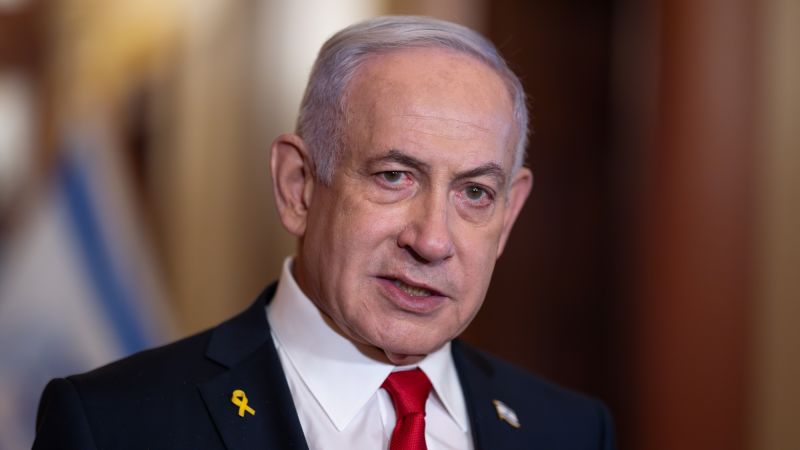
What began as Israel’s leader’s snub of mainstream media has become a broader attack on press freedom in the country.
Prime Minister Benjamin Netanyahu has not given an interview to Israel’s three main broadcasters in more than four years. He accused them of “brainwashing” and claimed they were supporting Israel’s enemies and personally pursuing journalists who criticized him.
Now, that long-standing tension has evolved into something more aggressive. : On Monday, Prime Minister Benjamin Netanyahu’s coalition government will establish a special parliamentary committee to advance a bill to replace Israel’s independent media regulator with a political appointee. The changes would give the government sweeping powers to fine and sanction news organizations, but critics warn the measures could permanently reshape the country’s media landscape.
The bill, proposed by Communications Minister Shlomo Karhi, a Netanyahu ally, passed its first reading last month after being introduced in May. The government says its goals are to open markets, promote competition, remove outdated regulatory barriers and modernize Israel’s media laws for the digital age.
But Israeli networks have warned that the proposed reforms would expand political influence and undermine editorial independence. In an unprecedented move, the rival networks set up a joint emergency forum in August 2023 to oppose what they called the government’s plan for a “hostile takeover” of the media market.
“What we are seeing is an attempt to seize power on the eve of an election. The clear goal is to suppress press freedom and silence critics before Israelis go to the polls,” a forum source told CNN.
The media regulation bill is part of a wide range of restrictions and measures to be taken on press freedom in Israel. Earlier this year, Reporters Without Borders (RSF) dropped Israel’s ranking to 112th out of 180 countries in its World Press Freedom Index. “Disinformation campaigns and repressive laws have intensified in Israel, increasing pressure on Israeli journalists,” RSF said.
A bill originally aimed at banning Qatar-based Al Jazeera has now been expanded to give the government the power to shut down certain foreign broadcasters without court oversight in the name of “national security.” Another bill would privatize Israel’s public broadcaster Kan 11.
Defense Minister Israel Katz recently announced that Galei Tzahar (Army Radio) will be closed next year. The timing coincides with broader government moves to tighten control over the media sector, although some have questioned the presence of military-run broadcasters in a democracy.
And all of this is unfolding as Israel has banned foreign journalists from entering its own Gaza Strip since the war began more than two years ago. Reporters Without Borders said the ban was an “unprecedented violation of press freedom and the people’s right to reliable, independent and pluralistic media coverage.”
The media regulation bill has already faced criticism from national regulators, the Ministry of Finance, the Ministry of Justice, the legal adviser to parliament and the attorney general. “This proposal increases the risks to Israel’s free media,” Attorney General Ghari Baharav Miara said in a legal opinion submitted to the government in September, raising “serious concerns about its commercial and political influence and involvement in media organizations in general and news broadcasting in particular.”
Despite legal objections from both the government’s legal advisers and Parliament’s legal advisers, Karuhi continues to press ahead. The communications minister, who in a Knesset speech in November accused the press of “weakening Israel domestically” and claimed it enabled the Hamas-led attack on October 7, argued that the reforms would create “genuine freedom of expression, not the expression of disgruntled people with microphones.”
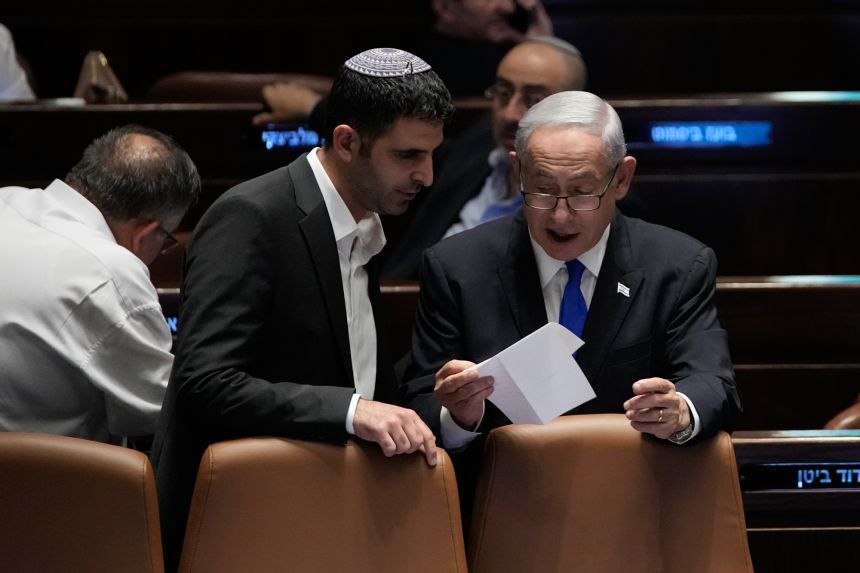
As Netanyahu’s government pushes to suppress and boycott critical reporting, it has simultaneously promoted the pro-Netanyahu government’s Channel 14 (often referred to as Israel’s Fox News) with regulatory benefits such as lower distribution fees and various remedies that allow it to operate with fewer restrictions than other commercial channels.
“Over the past two years, the Israeli government has systematically launched a political, regulatory and rhetorical campaign to undermine the media,” said Tehila Schwartz Altshuler, a senior fellow at the Israel Democracy Institute.
“Violent harassment of journalists is escalating, while ministers and senior politicians in the coalition routinely assault journalists in public, blaming the media for national failures such as the events of October 7.”
Pressure is not only institutional. Individual journalists known for their critical coverage of Netanyahu and his government have endured escalating threats and intimidation, many with the tacit or explicit support of members of Netanyahu’s party and far-right coalition partners such as National Security Minister Itamar Ben Gvir.
Guy Peleg, Channel 12’s senior legal correspondent, has faced protests in front of his home and a campaign of threatening messages and billboards calling for him to be jailed.
The campaign against Peleg, who has regularly covered Prime Minister Benjamin Netanyahu’s ongoing corruption trial, is not new. During the 2019 elections, his face was featured on a Likud billboard along with three other critical journalists under the slogan “They don’t decide.”
The attacks intensified after Peleg exposed allegations of mistreatment of Palestinian detainees at the Sde Teyman detention facility. The incident recently led to the resignation of the IDF’s top military lawyer.
“They want us to feel fear,” Peleg said on Channel 12’s flagship show “Ulupan Sisi.” “They are asking us to go with the security guards. What we have to say is that we will not give up, we will not be afraid and we will continue to work.”
Mordecai David, a right-wing activist known for his confrontations with journalists and opposition groups, repeatedly harassed Peleg, and Peleg eventually obtained a court restraining order requiring him to stay at least two meters away from David.
Still, David has been welcomed by key figures in the coalition government. Ben Gvir welcomed him to his Knesset office and hailed his protest movement as “great” and a “democratic mission.” Tzvika Vogel of Ben Gvir’s far-right Otzma Yehudit party invited him to a hearing of the Knesset Committee on Harassment of Journalists despite a separate restraining order from opposition lawmaker Gilad Kariv.
“The government is accepting these people,” Peleg told CNN. “They are honored guests of the Knesset committee. We are not talking about a few lunatics who wrote comments and sent hateful messages. We are talking about a group that the government embraces, strengthens in various ways, appreciates and tells to keep moving forward.”
Peleg said there are several weapons in the war against the media.
“One is through parliamentary legislation, the other is through the defense minister and the army radio, and the third unit sends in various sub-organizations to carry out a campaign online and through harassment, which is essentially a form of terrorism,” he said. “It’s all part of one unified system.”
Prime Minister Netanyahu’s current political position is already intertwined with the media. Prosecutors allege he traded regulatory benefits in exchange for positive coverage, and his media operations ultimately led to a criminal investigation and indictment. The Israeli prime minister has now formally asked Israeli President Isaac Herzog for a pardon in the long-running corruption trial, although he has not admitted any wrongdoing.
A new mechanism that Netanyahu’s government is now seeking to legalize would formalize similar arrangements, which critics say would allow government ministers to reward friendly media outlets and penalize critical ones.
The timing of promoting legislation is important. Israel’s next election is scheduled for October 2026, unless Prime Minister Netanyahu’s coalition government collapses by then. In either scenario, Israel is in an election year, and independent journalism is critical to democratic accountability.
“As Israel enters an election year, news organizations face unprecedented political pressure, regulatory threats, and physical intimidation,” Altshuler told CNN. “The public sphere is more vulnerable than ever to influence, capture, and erosion of democratic oversight.”
