

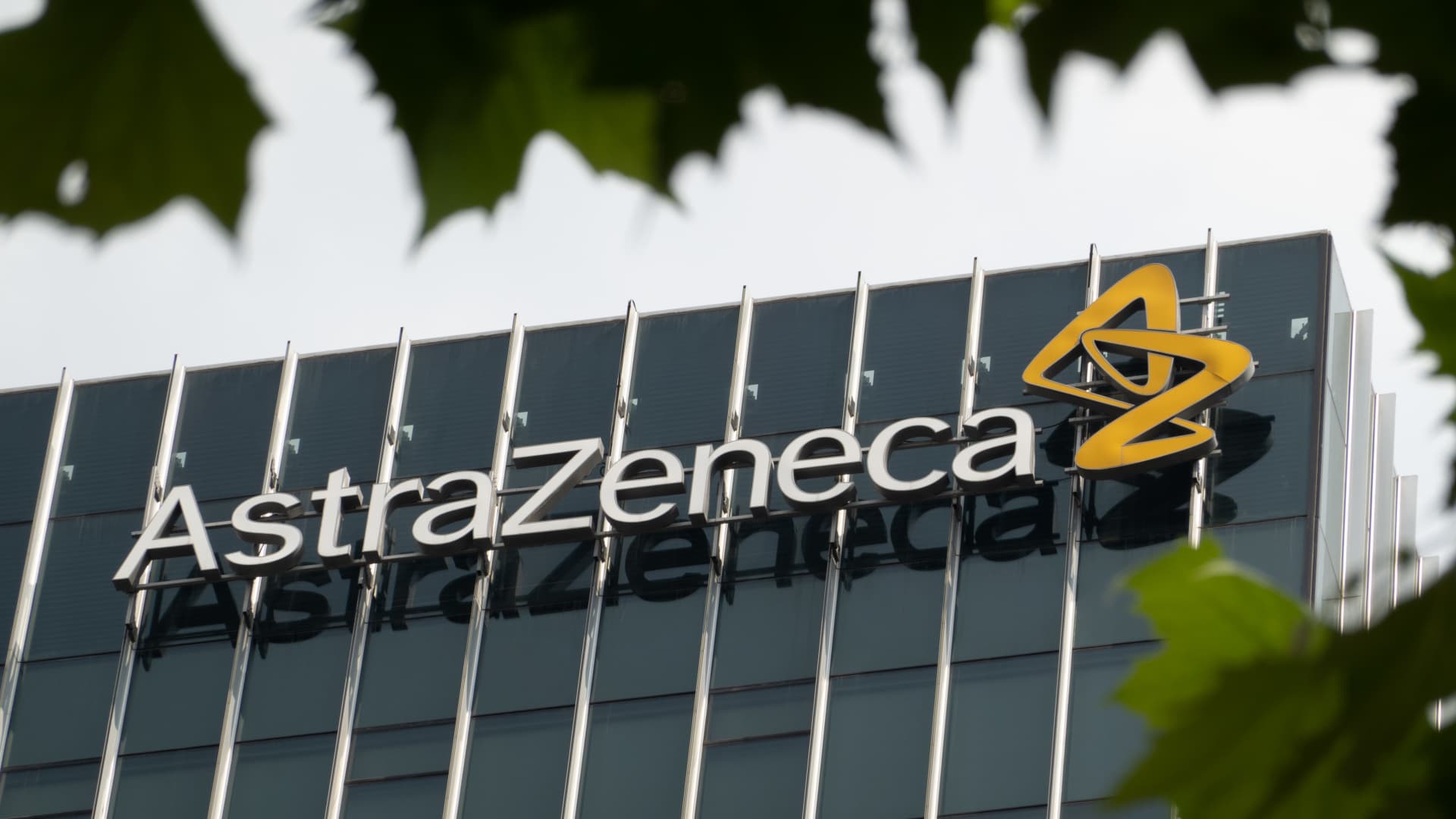
shares of AstraZeneca Shares fell as much as 9% after late-stage clinical trials of a heart disease drug failed to meet targets, and analysts say the bigger issue may be investor confidence in the company rather than billions of dollars in lost sales.
Wainua, the drug AstraZeneca was testing to see if it could help patients with a rare heart disease, failed to meet its main goal of reducing deaths and recurrence of heart-related emergencies over 140 weeks compared with a placebo, the British drugmaker said in a press release early Thursday.
The researchers looked at how the drug could help patients with a rare, life-threatening heart disease called transthyretin-mediated amyloid cardiomyopathy (ATTR cardiomyopathy), if added to patients’ current treatment plans.
Analysts at Jefferies noted that while the results did not threaten the company’s $80 billion revenue target by 2030, AstraZeneca was “very confident in its primary endpoints and its ability to achieve the combination.”
“The bigger issue is probably that management is so confident in its ability to meet the primary endpoints of the trial and to demonstrate benefit above and beyond background therapy that there is some loss of confidence,” the analysts said, modeling a $2.5 billion decline in risk-adjusted sales for the drug.
Under CEO Pascal Soriot’s leadership over the past 14 years, AstraZeneca has built a reputation as a strong player, particularly in oncology. The company rarely releases negative trial results, and Thursday’s surprise disappointment could have ramifications beyond the drug itself.
rare mistake
AstraZeneca confirmed that its existing license for Wainua is not affected by these trial results. The drug is already approved to treat a condition in which misfolded proteins accumulate and cause nerve damage. In Europe it is sold as Wainzua.
The study looked at a specific type of condition in which misfolded proteins accumulate in the heart muscle, making it stiff and difficult to pump blood, ultimately leading to heart failure. It is estimated that approximately 500,000 people are living with this condition.

AstraZeneca’s London-listed shares over the past 12 months.
In the end, the stock fell 8.7% in London, marking its worst day since the start of the coronavirus outbreak in March 2020.
The UK blue-chip stock index was under heavy pressure. FTSE100fell 0.5%, making it the only major European index in the red as of Thursday.
AstraZeneca’s New York Stock Exchange-listed shares fell 8.4% in morning trading. shares of ionis pharmaceuticalThe company, which is co-developing Wainua in the U.S., plunged 19%.
The failures of AstraZeneca and Ionis remove one player from the increasingly competitive ATTR cardiomyopathy market.
For many years Pfizer’s Vindamax was the only drug approved for this condition. What has changed in recent years is that bridge bio It introduces a new pill that stabilizes the transthyretin protein, similar to how Pfizer’s drug works. alnylam The introduction of drugs that inhibit the production of transthyretin, a similar approach pursued by AstraZeneca and Ionis.
Oppenheimer analyst Kostas Viliolis wrote in a note Thursday that Wainua’s failure means Alnylam’s treatment, Ambutra, will become the only silencer, giving the company a monopoly on the market for drugs that silence ATTR cardiomyopathy.
Amvuttra is also likely to predominate in ATTR polyneuropathy, where misfolded proteins are deposited in nerves. That’s because Amvuttra is the only silencer currently proven to be effective against both symptoms of this condition. Viliolis estimates the overall market for ATTR cardiomyopathy to be between $15 billion and $20 billion, but said it’s difficult to know for sure because it was previously thought to be rare but is now proving more common.
Alnylam stock rose about 15% in morning trading, while BridgeBio stock rose 13%.
No additional benefits
In AstraZeneca’s study cohort, the majority of patients were already taking stabilizers that prevent proteins from misfolding in the first place. Because the patients were already being treated for the disease, adding Wainua to standard treatment did not show significant additional benefit for the group as a whole.
AstraZeneca said Wainua demonstrated a “nominally significant” risk reduction for death and cardiac events compared with placebo for patients not taking stabilizers at baseline.
AstraZeneca should have “very good trial design capabilities” and a failure in the trial due to design flaws, such as the proportion of patients taking tranquilizers, would be a blow to the company’s credibility, Jeffries said.
AstraZeneca said 57% of patients were treated with a stabilizer at baseline and a further 24% started receiving a stabilizer during the trial.
“I wouldn’t be surprised if people pause now until we see a catalytic pathway,” Jefferies said, noting that the stock may not recover until the next big event for the stock, the AVANZAR trial for lung cancer, is completed.
Analysts at Citi said it was unlikely that AstraZeneca would be able to apply for further approval for Wainua given the missed key endpoint. alnylamAmvuttra is already commercially available.
Sharon Barr, executive vice president of biopharmaceutical research and development at AstraZeneca, said: “While this trial did not meet its primary objective, we believe the results support an improved scientific understanding of treatments for the hundreds of thousands of patients around the world who suffer from this progressive and often fatal disease.”
Full data will be presented at the European Society of Cardiology Congress in August.
Correction: This article has been updated to correct Oppenheimer’s market size estimate for ATTR cardiomyopathy. Analysts estimate the market to be between $15 billion and $20 billion.
