

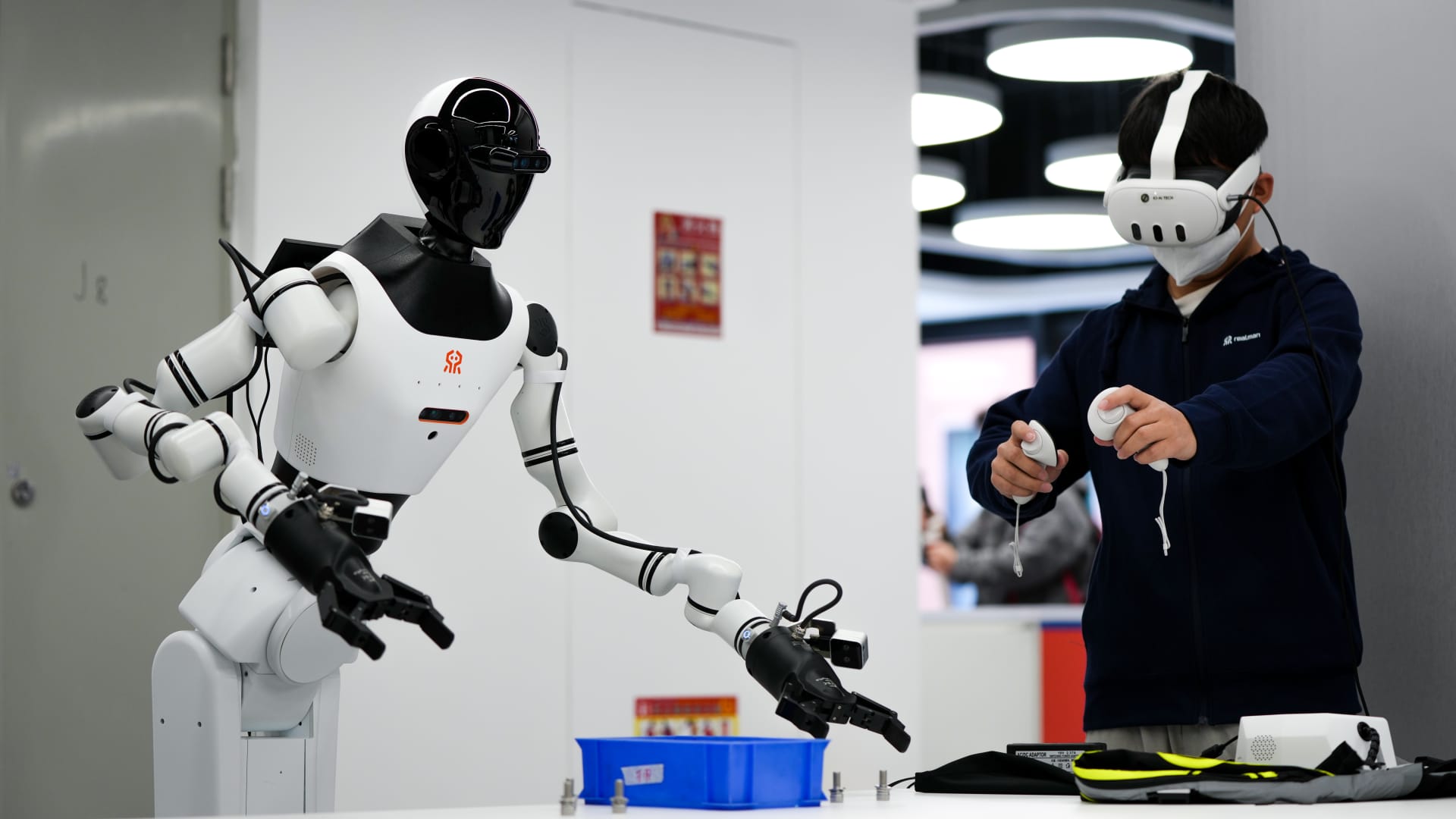
Morgan Stanley’s enthusiasm for humanoid robots has cooled in recent days, and the company’s analysts believe that technical challenges are not the only obstacle to Android’s widespread adoption. The bank has twice revised upward its forecast for China’s 2026 shipments of humanoid robots, expecting shipments of 50,000 units this year, almost double the previous forecast of 28,000 units. The bank had already doubled its initial forecast of 14,000 units in January. But Morgan Stanley has tempered its optimism on the sector, with analysts questioning whether robots have PR issues. The bank said in a note issued Tuesday that the robotics industry faces several headwinds that could slow growth. “Even before meaningful deployment, humanoids are often treated publicly by both investors and companies as direct replacements for workers, rather than tools for dangerous, repetitive or labor-constrained tasks,” the analysts wrote. “The industry’s social license for adoption may be just as important as technical performance,” Morgan Stanley analysts said, adding that investors, including investors themselves, have so far overlooked the potential for robots to complement rather than replace human workers, to eliminate labor shortages, transform the viability of greenfield facilities, and support new jobs in supporting roles. Policymakers in Washington have also grown wary of China’s advances in artificial intelligence and the risks of increasing reliance on Chinese technology in recent years. On Tuesday, the Trump administration banned imports of new humanoid and quadrupedal robots from China, saying they posed an “unacceptable risk” to U.S. national security. Morgan Stanley said the ban risks increasing research and development costs in the U.S., where cheap Chinese-made humanoid robots rely on model research. The bank also highlighted how investor expectations are changing as the deployment of humanoid robots increases. “Our recent experience is that investors are finding it increasingly difficult to impress with polished videos or one-off demonstrations and are increasingly seeking tangible evidence of real-world investment returns,” the analysts wrote. However, they added that the current rate of commercial adoption, while expanding, remains “narrow” and “nascent.” Despite potential headwinds, Morgan Stanley maintains its target of shipping 50,000 humanoid robots in China by the end of 2026.
