

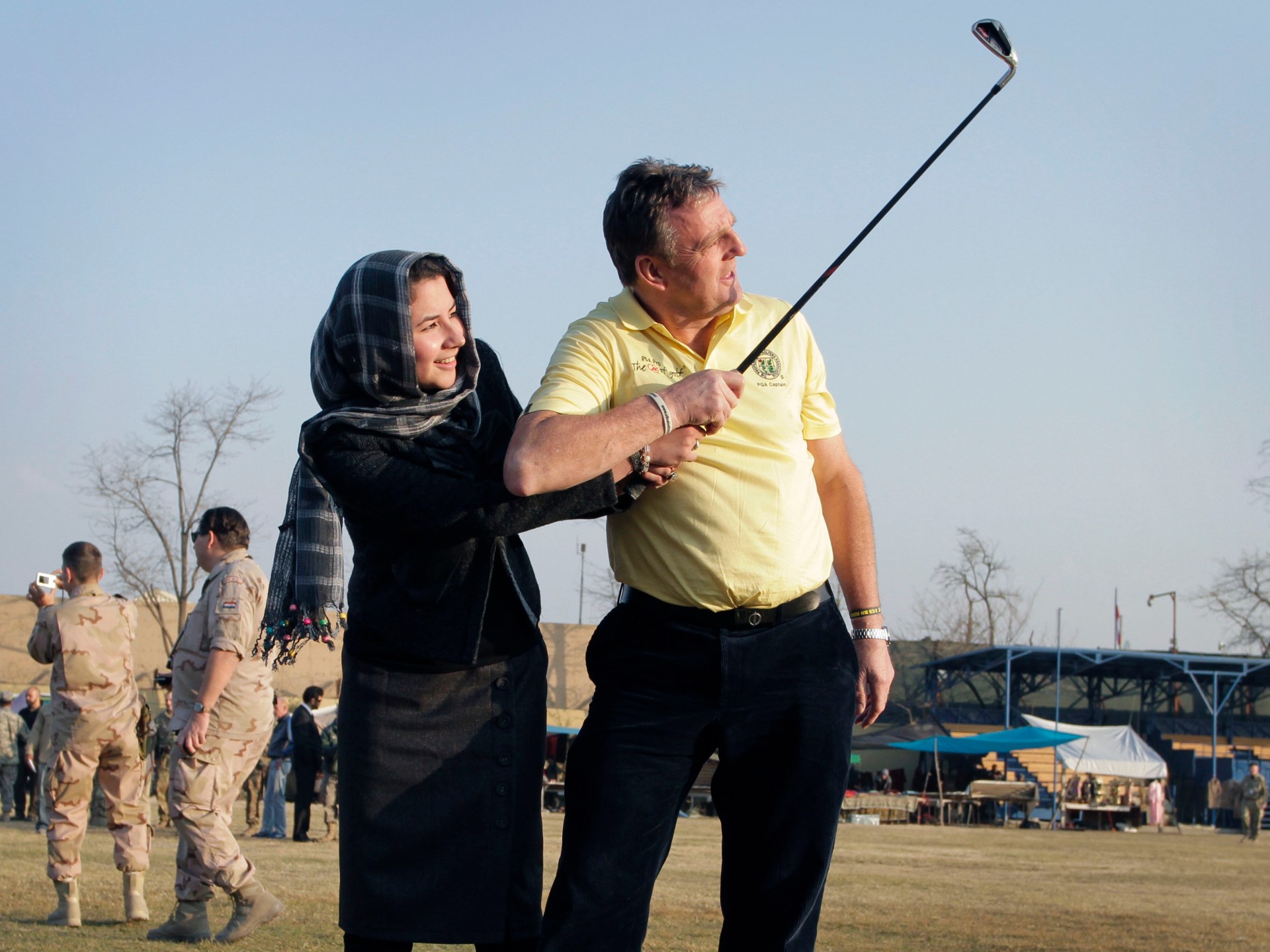
Afghanistan’s International Olympic Committee member Samira Asghari said Taliban authorities must face the harsh reality that women’s rights to education and sports must be respected if the Taliban is to be accepted internationally.
Asghari, 31, is living in exile for the second time and hopes to engage with Afghanistan’s rulers.
Recommended stories
list of 4 itemsend of list
The Taliban government banned girls from attending school over the age of 12 and barred them from most jobs, public service, and sports.
Asghari, who became Afghanistan’s first IOC member in 2018, acknowledged that her “situation is very difficult” and that “certain precautions are certainly needed” to beat the drum for women’s sports in Afghanistan.
Nevertheless, the former international basketball player, like many of Afghanistan’s top female athletes, remains unflinchingly vocal about the treatment of women by Taliban authorities.
“The reality is that if you take a public stand for women’s rights, you become a target, but I strongly believe in communication and engagement,” she said in an email interview with AFP.
“As long as the Taliban remain a reality on the ground in Afghanistan, we cannot afford to waste time doing nothing.
“In my role, I have tried to facilitate discussions between the IOC and those currently in charge, with a focus on the sports rights of women and girls, especially primary school girls who are still in Afghanistan.”
“Conversations are not always easy,” said Asghari, one of four children born to a mother who is a retired professional make-up artist and a father who was a manager for the Afghanistan National Olympic Committee.
“It doesn’t legitimize the government,” she said.
“But they are critical to creating concrete opportunities for future generations of boys and girls in Afghanistan.”
“We hope that FIFA can cooperate with the negotiations between the IOC and the Taliban.”
Afghan sportswomen are scattered all over the world, making it complicated to put together a team.
However, Afghanistan Women’s United, a women’s soccer team made up of players based in Europe and Australia, recently participated in the FIFA Unites: Women’s Series 2025 in Morocco.
“This support for athletes outside Afghanistan is only a first step. We hope that FIFA can cooperate with the ongoing talks between the IOC and the Taliban,” she said.
Asghari, who has been involved in the “project” for more than a year, hopes the message gets across to Afghanistan’s rulers.
“The Taliban were given the country and now they are trying to maintain power while ignoring basic human rights, especially of women,” she said.
“It will be very difficult for the Taliban to continue to rule Afghanistan in this long term, and they need to understand that their international acceptance is directly tied to respect for human rights, including women’s rights to education and sport.”
Asghari, who participated in the recent Islamic Solidarity Games in Riyadh that pitted Afghan men and women against each other, said he hoped there would be a “small opening” in the Taliban’s stance.
“I also believe that if there are small possibilities, such as developing sports in primary schools where girls are still allowed to attend up to the sixth grade, we should take them on,” she said.
“This is not about accepting Taliban restrictions, this is about not abandoning Afghan girls and women.
“We must face reality while pushing for fundamental change.”
Asghari says even such small advances could prevent the long-term harm suffered by women during the Taliban’s first government, from 1996 to 2001.
She said she saw the effects firsthand when she returned from Iran, her first stint in exile.
“My deep concern is that we are creating another lost generation,” she said.
“I remember when I was 12 years old and in sixth grade, a 20-year-old woman sitting next to me in the same class was unable to go to school during the previous Taliban regime.
“I didn’t know how to communicate with her and it was difficult for both of us, but especially for her because she had lost so many years.
“We cannot tolerate something like this happening again, which is why even the smallest opportunity is so important.”
Asghari remains hopeful despite the bleak outlook, believing in “continued engagement and dialogue” with the Taliban.
“The future of Afghanistan is this young generation. We must give them every opportunity possible. Never give up on them, no matter how small.”
