

Lee este artículo en español
Keiko Fujimori was sworn in as Peru’s president on Tuesday, winning a close election that marked an unprecedented milestone in Latin America.
She outperformed candidate Roberto Sánchez, who had more support domestically, but lost after the votes of citizens living abroad were counted. This is the first time such a scenario has occurred.
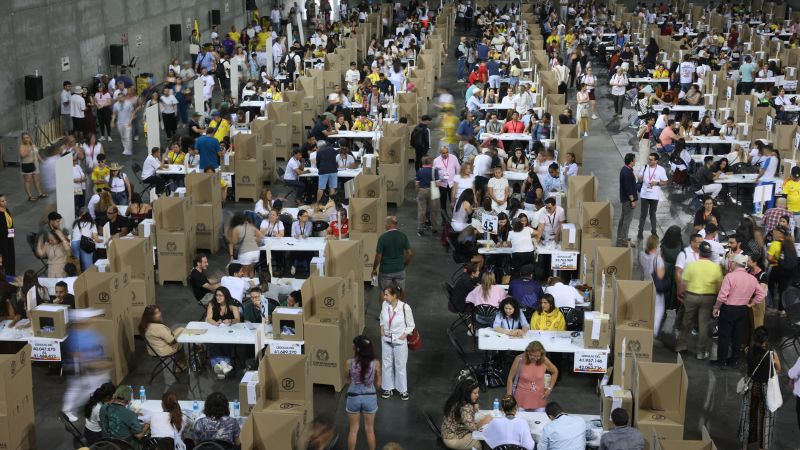
The influence of overseas voters was also felt in this year’s Colombian presidential election. Abelardo de la Espriela won by about 250,000 votes, but without the overseas voters, his narrow margin over Iván Cepeda would have been less than 75,000 votes.
The results of these elections have focused a lot of attention on the discrete vote, in part because it is the last portion of the electorate to be counted. That makes it appear to play a particularly decisive role, even though it counts the same as any vote in any state or region.
“There is a pernicious calendar trap. These are the last votes counted so they look like the decisive votes,” said political scientist Manuel Alcántara Sáez, director of Panama’s Center for International Political and Social Research (CIEPS-AIP).
Had the results in Peru and Colombia not been so close, discrete voting would have been a minor issue, argues Chilean political scientist Marcela Ríos Tovar, director of Latin America and the Caribbean at the International Institute for Democracy and Electoral Assistance (IDEA).
“I don’t know if we can say it has changed or if we can say it is more significant. I don’t think we can estimate the outcome. It depends on other factors, such as the size of each country’s diaspora population and voter turnout,” she noted.
As several countries move forward with measures to ease and expand the participation of their nationals abroad, let’s take a look at the impact it could have and how it differs from country to country.

Ríos stressed that while the potential for external voting can be very large in countries with large diaspora populations, the impact is often reduced abroad, where abstention rates are much higher.
“In general, the diaspora’s turnout is much lower than the population back home. The (domestic) participation rate is 61%, while the (international) participation rate is less than 13%. This is also related to the size of the diaspora,” she explained.
Differences also occur depending on the regulations of each country.
In Peru, where voting is compulsory even for expats and registration is automatic after changing address, more than 300,000 people from other countries voted, and participation in the June runoff reached 27%, matching the historical average.
However, the situation is different in Mexico. The country has the second-largest diaspora population in the world, with more than 13 million people, but only about 185,000 people took part in the 2024 elections.
“The diaspora is huge, but turnout is extremely small. Voting abroad has only recently been established, so it’s currently limited and won’t become widespread unless the system changes,” Rios said.
In addition to registration, Mexican nationals must have credentials processed at the consulate in advance.
Guatemala, also a country with a significant diaspora of around 3 million people, held its first overseas vote in 2019. In the first round of the 2023 elections, 1,443 people voted abroad, but this number could have been higher because many Guatemalans went to the polls without documents or were not registered.
As for the Venezuelan diaspora, nearly 5 million people are eligible to vote, and the potential impact is significant. However, only about 1% were able to vote in 2024 due to registration, deadlines and missing documents. Opposition parties say this is a deliberate attempt by the current government to prevent the participation of migrants, many of whom have left the country due to recent economic and political crises.

The two countries that have recently brought this issue to the table are the countries that pioneered external voting in Latin America. Colombia was launched in 1962, followed by Peru in 1980.
In the 1990s and 2000s, more countries began amending their electoral laws to incorporate foreign participation.
“Most countries that already have legislation in place are looking for mechanisms to facilitate it,” Rios said. Most systems use only in-person voting, but some, such as Colombia, are “facilitating and improving access” and allowing early voting, she said.
But there is still a long way to go before voting abroad is as easy as voting at home, she added.
“Voting remains a hassle unless you have mail-in voting, expanded voting, or an electronic voting mechanism,” Rios said. “In many cases, specific documents are required. You must be in person to register. Not all allow online registration, which is time-consuming and costly.”
“It remains expensive for many Latin Americans living outside of cities with consulates and voting locations,” she says.
Alcantara said safety should be considered in the process.
Spanish political scientists noted that voters without legal residency in the United States may be afraid to participate and attract attention, given the White House’s anti-immigration campaign. “People don’t want to risk being photographed in public places because of a sense of panic that they might be discovered, he says.”

The fact that voting abroad was so important in Peru and also relevant in Colombia reinvigorated the debate about the rights of members of the diaspora, especially those from disadvantaged communities.
“The philosophical question in some ways is whether people outside the country have the right to vote,” Alcantara said.
There is also the question of how far citizenship rights should be extended.
“Does someone[living abroad]have the right to express his opinion in a general election?” Alcantara asked.
Rios noted that the concept of political representation is often linked to the concept of citizenship, which often applies not only to those born in the country, but also to children of foreign nationality. “We have a long tradition of universal citizenship. It’s a right because it allows you to maintain a connection to your country of origin,” she commented.
Only three Latin American countries (Uruguay, Nicaragua, and Cuba) do not allow their citizens abroad to vote. “Uruguay is an anomaly, the only integrated democracy in the region that does not allow expatriates to vote. The idea of questioning the rights of expatriates is more established,” Rios said.
The researchers also pointed out that the presence of significant communities abroad contributed to the expansion of rights. “We have a long history of forced migration, war, persecution and exile diaspora. It’s a kind of reparations,” she says.
“In Mexico, Central American countries and Colombia, we have citizens leaving the country for more economic reasons. Giving them the right to vote creates a connection with their country of origin and strengthens ties. Moreover, many play an important role. In some countries, remittances make up a significant portion of GDP,” she added.
The issue has gained attention in some election campaigns aimed at winning over these votes.
While Ríos noted the lack of clear regulations on what is allowed in some cases and how activities abroad are financed, Alcantara emphasized that movements and candidates targeting the diaspora are already rallying on social networks.
“Absolutely” the campaign is tailored to reach those voters, he said.
CNN’s Michael Rios contributed to this report.
