

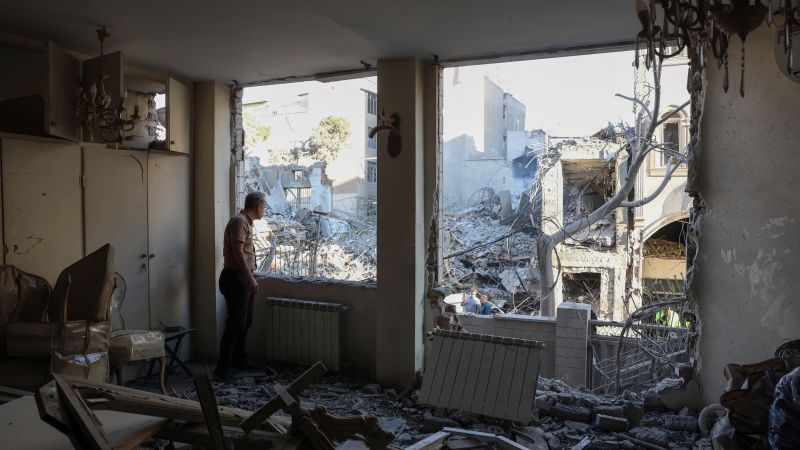
A key recent development in the war with Iran centers on attacks on U.S. ally Saudi Arabia by Tehran-backed groups.
As a precaution, the Saudi Ministry of Defense announced on Monday that it had intercepted several drones launched from Iraq targeting oil facilities in the country’s oil-rich Eastern Province and Riyadh region.
Here are the latest developments in this regard and other important issues we are monitoring:
• The drone launched in Saudi Arabia is not the first from Iraq, but several countries have condemned the attack, including Kuwait, Qatar, Oman and Lebanon.
• Oman on Monday launched a push for regional diplomacy aimed at finding a political solution to the military conflict between the United States and Iran. Oman’s Foreign Minister Badr Al-Busaidi held telephone talks with officials from Iran, Saudi Arabia, Qatar, Kuwait and Egypt to discuss efforts to de-escalate tensions, Oman’s Foreign Ministry said.
• Iran is not currently negotiating peace with the United States. Iranian Foreign Ministry Spokesman Esmael Baghai said in a televised news conference that the Iranian government “will never allow the United States to determine the timing of war and peace.” The United States has said it will pause attacks on Iran to allow talks to progress, but Baghai said there are “no negotiations with the United States at this time.”
• President Donald Trump said the United States wants to have more sophisticated munitions as the Iran war dwindles stockpiles, but insisted the military has what it needs to wage a conflict. The president acknowledged that Russia may be aiding Iran by providing information about U.S. military bases, but dismissed it by saying, “We’ve eliminated the U.S. military bases thoroughly, so it doesn’t really matter.”
• Meanwhile, Israeli Prime Minister Benjamin Netanyahu, en route to the United States, said Iran would be a key issue on the “topic” of his meeting with President Trump on Tuesday. Separately, the US president ended a question about Netanyahu’s opposition to the sale of F-35 fighter jets to Turkey, saying there was “no one” but him to direct the sale.
●And next week, Israeli and Lebanese officials are expected to meet again in Rome to continue working to implement a US-brokered agreement that ultimately aims for a comprehensive peace between the two countries. U.S.-led talks will be held from August 4-6, according to a State Department official.
• Nearly all of the 78 ships that have crossed the Strait of Hormuz since Saturday have taken the Iranian-designated route, according to shipping information group Maririsks, with no ships recorded using the U.S.-promoted southern route near the coast of Oman.
CNN’s Aida Karimi, Sana Noor Haq, Abbas Al Lawati, Dana Qarni, Tim Lister, Eleni Giokos, Kevin Liptak, Jennifer Hansler, Irene Greif, Eyad Kurdi, Aqeel Nazim and Mohamed Tawfiq contributed to this report.
