

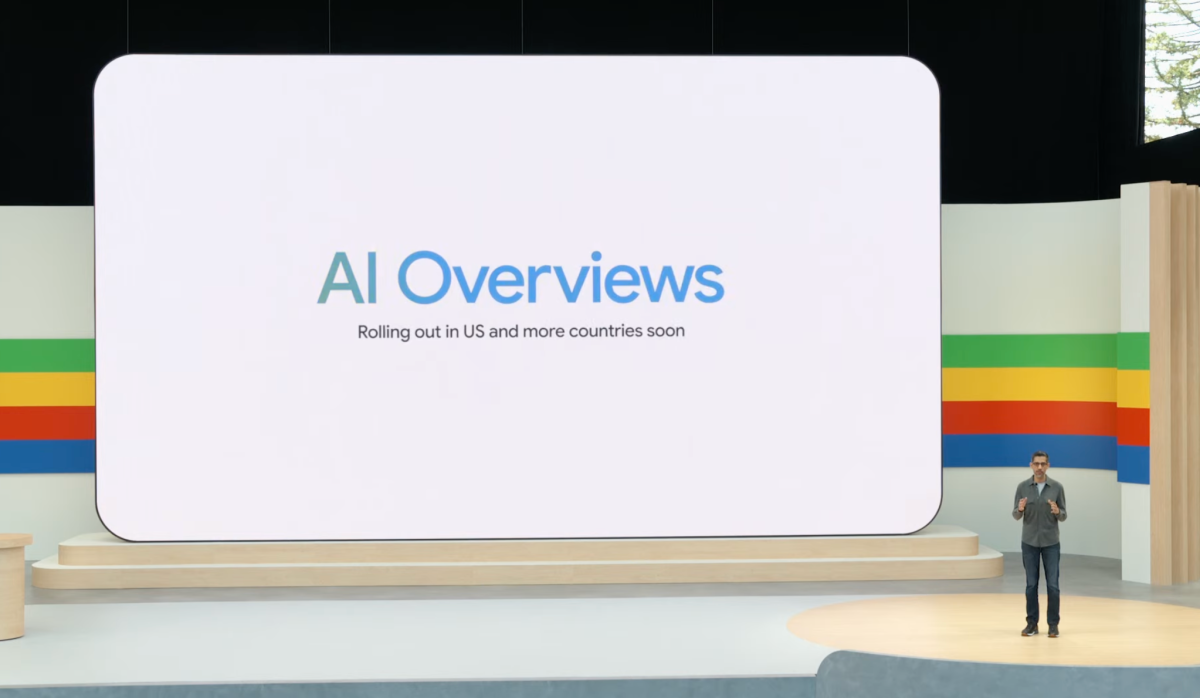
Whether users like it or not, AI search is quickly becoming the default. In just one year, Google’s AI-generated answers, known as AI Overview, appeared in 15% to 43% of searches, driving a change in the way web users consume information online, according to a new report.
In a recent analysis of the generation landscape, market intelligence firm Similarweb noted that what started as an AI layer on top of search has become an integral part of the search journey itself, with Google guiding users to an AI overview that they can then continue exploring through Google’s more conversational AI mode.

During the same period, the number of AI mode visitors increased from 126 million in June 2025 to 279 million by May 2026.
This data points to widespread changes in the way users search the web. This is a transition from the days when Google provided a simple list of blue links for you to click and read, to the days when Google itself became a destination, getting answers and information from the websites it indexed.
This appears to increase the amount of time users spend on Google’s platform, rather than just using it as a tool to find websites. Over the past year, data from Similarweb shows that the average length of Google searches has increased, suggesting that people are replacing short, keyword-based search queries with longer, more natural, conversational search queries designed for AI.

This change is not welcomed by publishers who are losing referral traffic to the rise of AI citations that do not lead to clicks. Last year, Similarweb reported on this trend and noted how devastating it is, especially for news publishers. Most recently, technology infrastructure company Cloudflare introduced a tool that allows publishers to fight back by blocking AI crawlers from their websites unless the AI company pays for access to their content through the marketplace.
While AI citations don’t necessarily get users clicking to their destination, the number of AI responses containing citations has increased more than five times over the past year, says a new report from Similarweb.
Despite this growth, as of May 2026, only 6.8% of ChatGPT desktop queries in the US contain quotes. (Some industries are seeing better results, such as travel, retail, and sports queries generating more frequently cited answers than others.)

However, there is some hope for publishers. At least for ChatGPT, US desktop browsing has improved since the May 7th search update, with the percentage of visits landing on a web page more than doubling from 25% in March 2026 to nearly 60% by May 30, 2026.
This suggests that users are taking advantage of more prominent blue links in AI search results when they are available.

Even with these improvements, the trend for AI search at scale remains the same, as Google transforms from a gateway to the broader web to a destination in its own right.
If you buy through links in our articles, we may earn a small commission. This does not affect editorial independence.
