

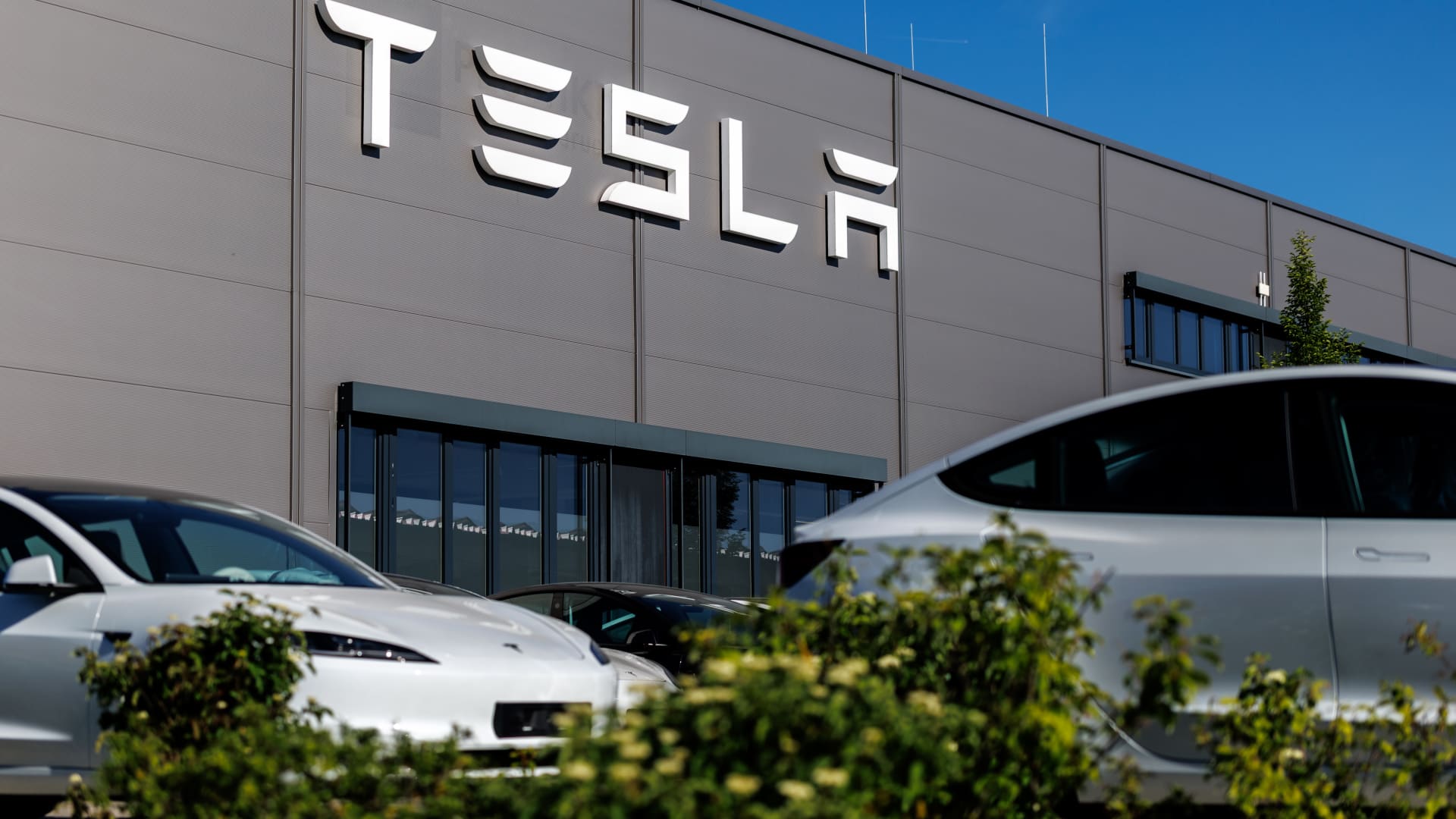
as Tesla (TSLA) is preparing to announce its second-quarter financial results on Wednesday, but the environment for the major EV companies is likely to become increasingly difficult.
Despite a seemingly strong macro footprint, a combination of underlying headwinds, competitive pressures and high valuation expectations suggests risks are biased to the downside heading into the release. Tesla recently announced second-quarter sales and deliveries that easily beat consensus estimates. However, instead of rising, stock prices fell.
This price movement is classic evidence. Market expectations are so high that beats are now seen as just a baseline. If the company achieves its goals and fails to trigger a rise in stock prices, it will likely be met with displeasure on Wall Street, even if it hits or slightly beats its bottom line.
While widespread enthusiasm for pure EVs has cooled significantly over the past two years, competitive pressures in key segments remain intense. Rivian’s R2 expansion is targeted at the core mass-market SUV segment ($45,000 to $60,000). This is the very price range that Tesla’s Model 3 and Model Y have traditionally smeared (more than 96% of sales in 2025 were these two models).Tesla faces increasing margins in the market as competitors like Rivian focus on this volume sweet spot with the newly released R2 with improved economy and fresh design appeal. The core automobile business. True, Rivian doesn’t have the production capacity to replace Tesla’s most popular models, but strong demand will help it increase the capital and production capacity it needs.
Unfounded ratings and confusion caused by AI
Tesla’s soaring valuation is largely dependent on non-automotive catalysts such as robotics and self-driving. Wall Street continues to price in long-term options for humanoid robotics (Optimus) and fully autonomous driving.
But the overall market enthusiasm for the AI story is changing. Investors now prefer hardware providers that deliver tangible financial returns in the short term over downstream software promises. Another potential area of support is speculation about potential corporate activities and synergies with SpaceX, which continues to be widespread.

TSLA Year to date
However, a merger or reorganization makes little strategic sense for either company’s core business. Moreover, with SpaceX stock trading below its original public valuation, the speculative enthusiasm surrounding financial engineering among companies has run out of steam.
Technically, TSLA appears to be weak. The moving envelope indicator and Bollinger Bands show that long positions are struggling, while the MACD, RSI, and key long-term moving averages clearly show a bearish momentum profile.
Tesla’s post-earnings stock price movement in recent quarters has been slower than its multi-year historical average. The options market reflects this compression.
Implied Volatility: An at-the-money straddle expiring on July 24th (e.g., a $380 straddle) is priced at approximately 7% of the underlying stock price. Historical movement: This is clearly below Tesla’s long-term average post-earnings swing of ~9% over comparable two days.
Strategy: Short-term bear put spread
Option premiums are pricing in lower price movements than historical averages, but implied volatility is slightly higher than last quarter and put skew remains high. Buying options outright can expose traders to a costly “volatility crash” immediately after the announcement.
For stockholders seeking downside protection and traders looking for a risk-defined alternative to shorting stocks, short-term bear put spreads offer reasonable risk/reward.
in particular:
August 21st (normal expiration date) Buy $360 for $15 August 21st (normal expiration date) Sell for $330 $6 Put $6 Max loss: $900 Max profit $2100 Skill level: Intermediate
This deal:
Captures high put skew and protects against “IV” and “Volcrush”. Short puts reduce net vega and theta resistance after earnings are announced. Attractive Risk-Reward: At $9.00, this $30 wide put spread gives you a more than 2:1 profit if Tesla falls to $330 by August expiration. This is significantly lower than the current share price, but the average price is up and down more than 15% in the month following earnings.
