

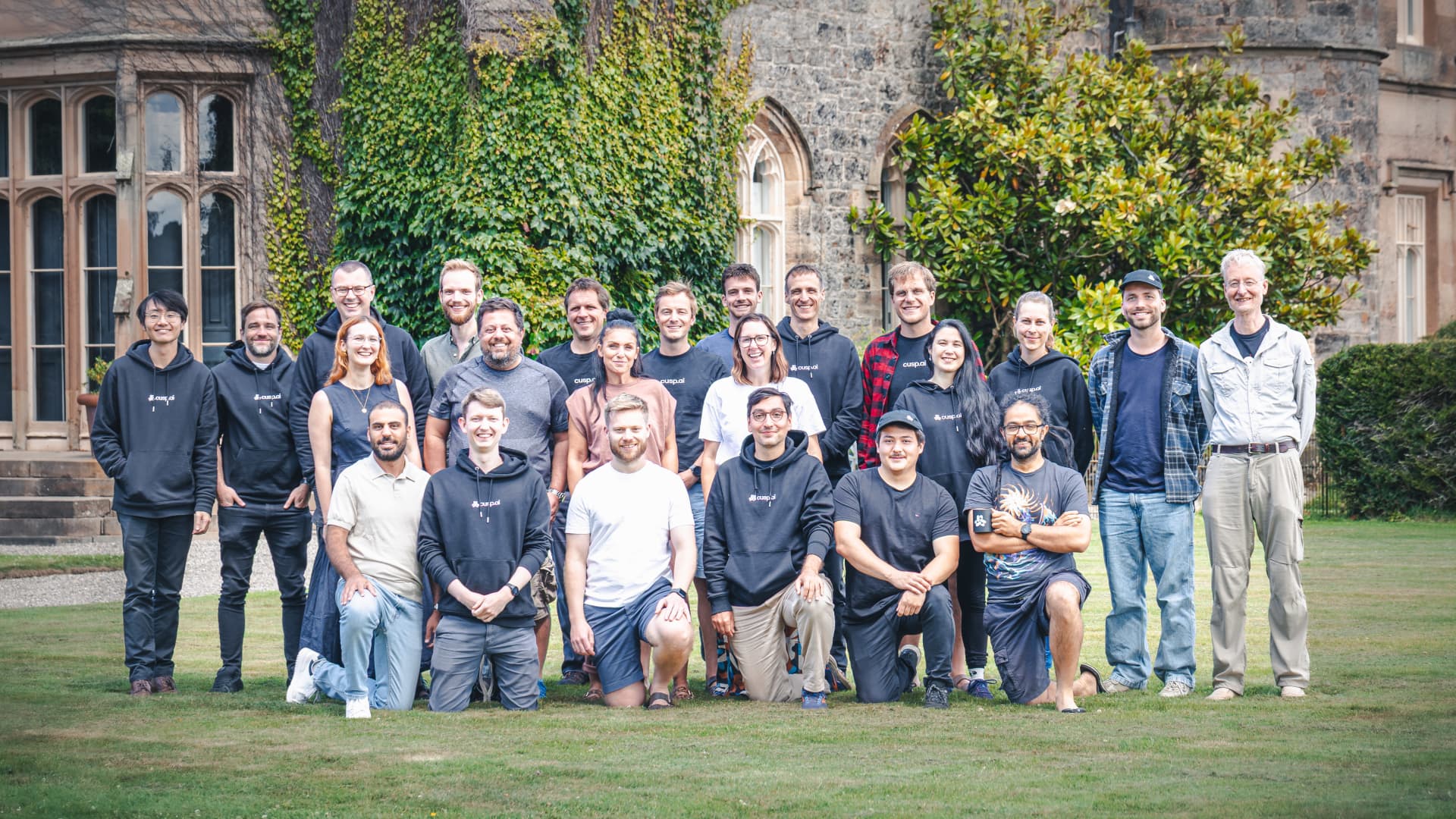
Jeff Bezos has invested in British startup CuspAI, which announced a partnership on Monday. Nvidia The company seeks breakthroughs in semiconductors, clean energy and advanced manufacturing, collaborating with many other industry leaders.
The $450 million funding, valuing CuspAI at $2.6 billion, was led by Kleiner Perkins and NEA, with significant participation from Jeff Bezos’ Bezos Expeditions. Additional new investors include Glade Brook Capital Partners, Lux Capital, AMD Ventures, and the UK Sovereign AI Venture Fund.
CuspAI uses artificial intelligence to simulate the performance of new materials, narrowing the possibilities for a huge number of clinical tests.
“Most of the big leaps in technology are in materials,” Josh Coyne, partner at Kleiner Perkins, said in a statement. “The next steps, from cheap carbon capture to semiconductors to cleaner water, will continue to wait for materials that no one has discovered yet.” “CuspAI has built a search engine that changes that.”
Building the physical future of AI
CuspAI is one of a new wave of AI companies looking to apply this technology to the physical world.
Bezos’ own company, Prometheus, founded in 2025 and raised $12 billion at a $41 billion valuation, develops AI for invention and physics engineering.
UK-based CuspAI has opened a new office in Singapore and is expanding its team in the UK, Netherlands, Germany, Japan and US.
The startup has also launched what it calls the “AI Materials Foundry,” a network of data, labs, computing, and scientific expertise that will run on CuspAI’s AI platform.
Nvidia is one of 45 organizations that provide computing infrastructure. meta The Basic AI Research Team is also participating in this effort.
“As AI transforms the physical world, new materials will open up new frontiers across semiconductors, energy and advanced manufacturing,” said Chad Edwards, CEO and co-founder of CuspAI.
“AI Materials Foundry combines NVIDIA accelerated computing infrastructure with world-class chemistry and materials expertise to power the next generation of materials discovery.”
