

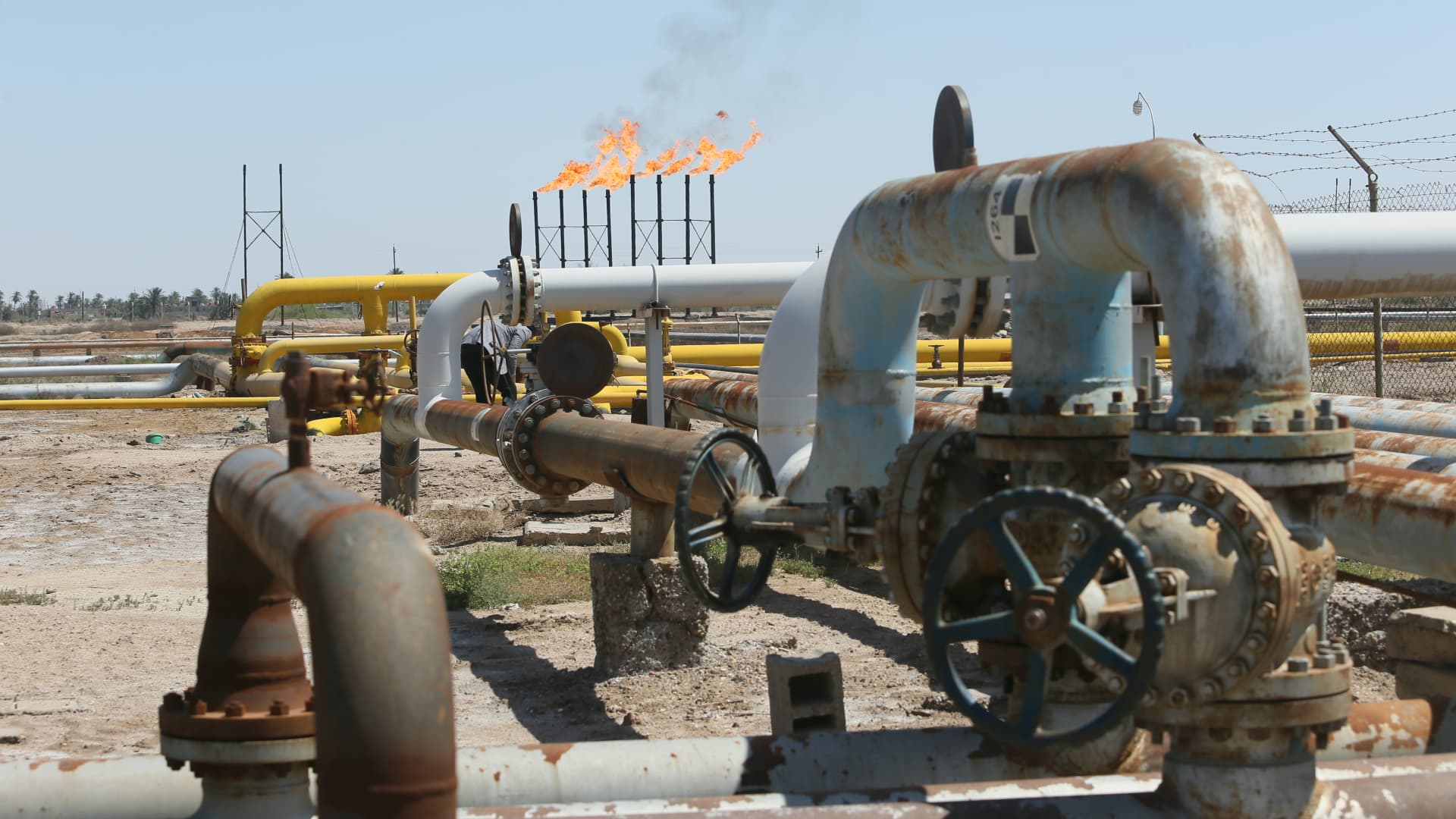

Iraq and Syria signed a deal on Friday to rebuild an alternative oil pipeline in the Strait of Hormuz.
Baghdad and Damascus signed an agreement on U.S. investment in Iraq at a chamber of commerce summit in Washington. Energy Secretary Chris Wright presided over the signing by Bassem Abdul Karim Nasr, CEO of Basra Oil Company, and Youssef Kablawi, CEO of Syrian Oil Company.
“There is tremendous scope to improve Iraq, increase oil production, reduce dependence on hostile neighbors and bring freedom, prosperity and energy abundance to the Iraqi nation,” Wright said before signing the deal.
Iraqi Prime Minister Ali al-Zaidi will visit the United States this week. He met with President Donald Trump at the White House on Tuesday.
The pipeline stretches from Kirkuk in northern Iraq to Syria’s Mediterranean coast and has a nameplate capacity of 700,000 barrels per day, according to the U.S. Energy Information Administration. It has been closed since it was damaged during the 2003 US invasion of Iraq.
Iraq, OPEC’s second-largest oil producer, suffered greatly from disruptions to tanker traffic in the Strait of Hormuz during the US-Iran war. Baghdad has limited pipeline options to transport oil to global markets, so it relies on the southern port city of Basra on the Persian Gulf.
Iraq’s oil production fell by more than 50% to about 1.9 million barrels a day in June, compared with about 4.2 million barrels a day in February, before the U.S. and Israel attacked Iran, OPEC data showed.
Several Gulf countries want to expand pipeline capacity to reduce their dependence on Hormuz. The United Arab Emirates is building a second pipeline to the port of Fujairah in the Gulf of Oman, doubling its export capacity outside the strait.
Reuters reported on July 7, citing sources, that Saudi Arabia is considering expanding its Red Sea pipeline by 2 million barrels per day.
Analysts warn that while the pipeline could act as a hedge against Hormuz’s geopolitical risks, it does not address the fundamental threat posed by Iran to the region’s energy infrastructure.
“The problem isn’t the waterways,” Rapidan Energy founder Bob McNally said Monday on CNBC’s “Power Lunch.” “That means Iran can use weapons to attack loading facilities, pumping stations, terminus stations, these terminals, and the storage units of these pipelines.”
