

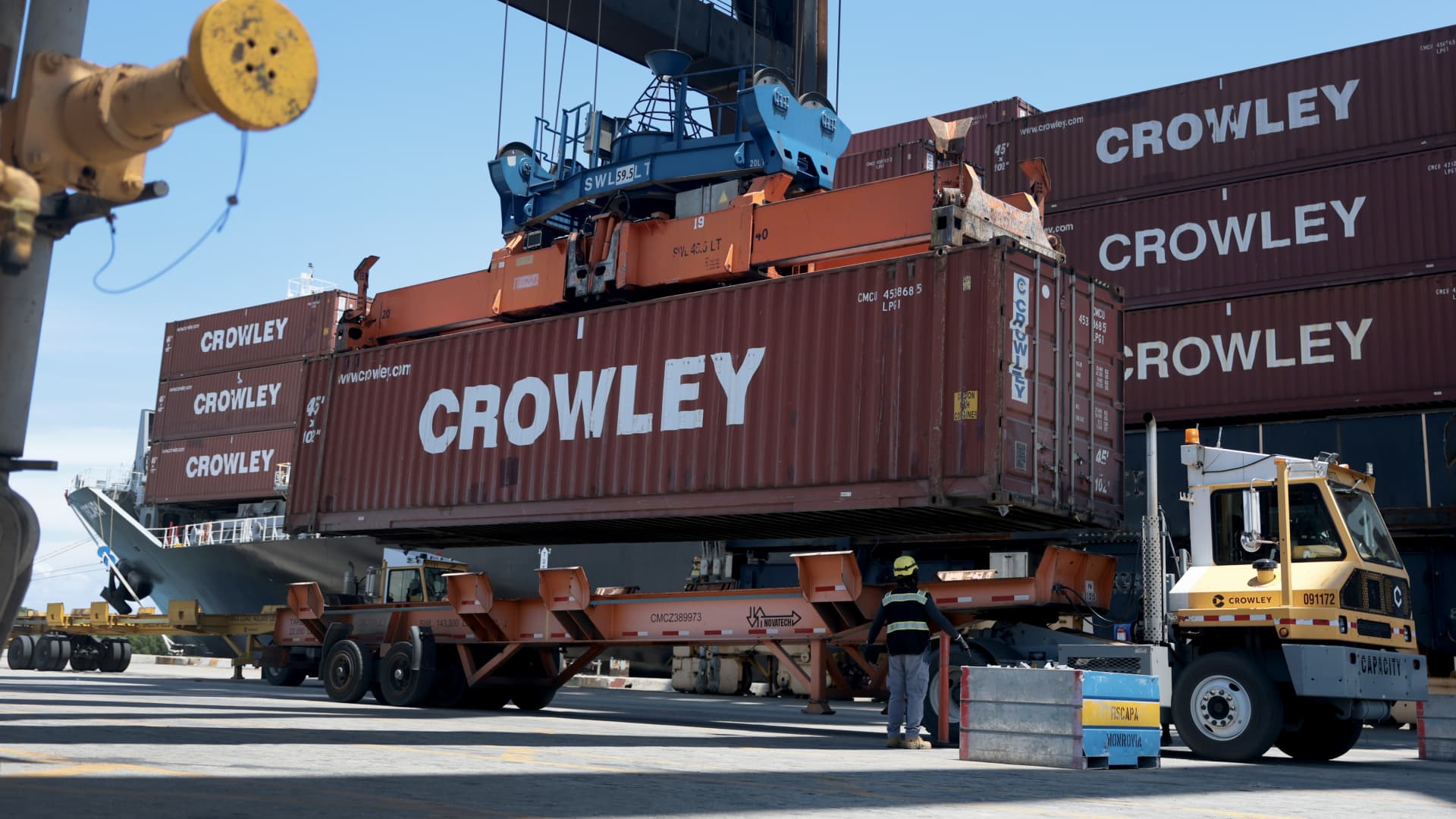
A longshoreman unloads a shipping container from a ship at Port Everglades in Fort Lauderdale, Florida, April 20, 2026.
Joe Radle | Getty Images
The cost of goods brought into the United States recorded an unexpected increase in June, the Bureau of Labor Statistics reported Friday, as prices for goods from China rose by the highest monthly level in more than 18 years.
Import prices rose 0.3% in the month, as declines in energy were offset by increases in other regions. On an annualized basis, prices rose 7.1%, the largest increase since August 2022. Economists surveyed by Dow Jones had expected a 0.8% decline in June.
The report said the cost of computers, peripherals and semiconductors is rising, and the enhancement of artificial intelligence may be impacting prices.
Outside of these sectors, the BLS said industrial and service machinery drove up costs, offsetting a 0.4% decline in fuels and lubricants. The group posted a 12.6% rise in May.
China was also a factor, with import prices rising 0.9%, the largest monthly increase since January 2008, but this may reflect the impact of tariffs. The 12-month increase was 1.3%, the largest annual increase since November 2021 to November 2022. Export prices to China actually fell 0.2% in June, but rose 7.4% for the year, the largest monthly increase since August 2022.
The report broadly showed that while lower oil prices contributed to the decline in prices in June, there are signs that inflation will extend beyond energy as businesses face a range of rising costs. Export prices overall fell by 0.6%, the first monthly decline since May 2025. However, export prices rose by 10.2% annually.
Earlier this week, the BLS reported that both consumer and wholesale prices fell, primarily due to lower energy costs due to a temporary easing of tensions between the United States and Iran.
Fed officials have been grappling with inflation since prices soared in the wake of the U.S. and Israeli offensive against Iran that began in late February.
At a Congressional hearing earlier this week, Fed Chairman Kevin Warsh said he did not believe the weak June inflation report signaled the end of the central bank’s efforts to return inflation to its 2% target. In fact, according to the report, although both indicators declined in June, consumer prices rose 3.5% year-on-year and wholesale costs rose 5.5%.
Dallas Fed President Laurie Logan said Thursday that she believes the benchmark interest rate should be “moderately high” to combat inflation. Similarly, Cleveland Fed President Beth Hammack suggested Friday that policy needs to be tighter.
“For the first time in my tenure, I’m hearing a growing sense of desperation from businesses who believe they need to take action to curb inflation and from consumers who are struggling to make ends meet,” Hammack said in a LinkedIn post.
