

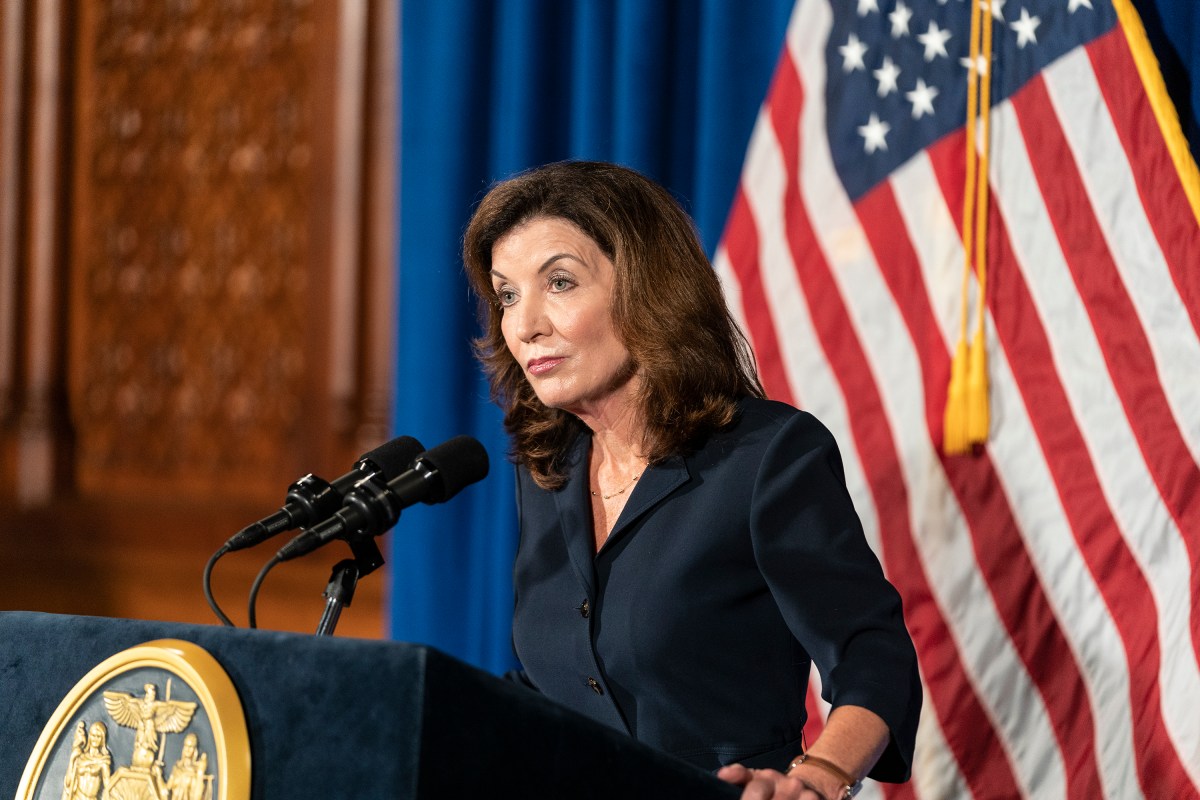
New York became the first state to halt data center construction after Governor Kathy Hochul signed an executive order today temporarily prohibiting the state from approving new permits for large projects.
Hochul’s order applies to data centers larger than 50 megawatts and could affect more than a dozen projects. The state Department of Environmental Protection will not issue permits that are not yet completed.
While resource concerns are fueling some of the backlash, much of it is also driven by broader concerns about AI. A recent Pew Research report found that only 10% of Americans are more excited than worried about the use of AI in their daily lives, and just 23% feel the technology will have a positive impact on the way people work. Less than a quarter of the public feels that AI will boost the economy, and less than a third are confident that governments will responsibly regulate the technology.
“Progress shouldn’t come by raising utility bills, cutting water services or noise pollution,” Hochul said at a news conference in Brooklyn. “These data centers can and should only be built where we want them to be. Therefore, these data centers will never be exempt from local zoning or local approvals.”
The moratorium will be lifted once the state completes the data center’s environmental review process, which Hochul expects to take about a year. Hochul’s office is also considering requiring data centers to pay into a fund that supports the state’s power grid, which would prevent hyperscale data centers from receiving tax incentives.
Hochul’s executive order comes as stricter measures are being passed by the New York Congress. Last month, Congress introduced a bill that would impose a one-year moratorium on construction of data centers larger than 20 megawatts, while another bill still in committee would create a three-year moratorium.
The average data center built in the past few years is less than 100 megawatts, but with the growing demand for computing driven by AI, data centers in development are expected to be even larger. According to BloombergNEF, by 2030, nearly a quarter of new data centers will be larger than 500 megawatts due to increased AI investment.
The idea of suspending data centers has been discussed at the state and federal level, but New York is the first state to do so. In December, more than 230 organizations called for a nationwide moratorium on new data centers. Sen. Bernie Sanders of Vermont has also proposed a national moratorium, but it has not received much support. The Maine State Legislature recently passed a bill that would suspend new data center construction until November 1, 2027, but Governor Janet Mills vetoed it.
Just a few years ago, data centers were popular with states eager to secure new development projects, but public sentiment has soured recently as new projects have grown in size. The scale and pace of construction is beginning to strain local resources such as water and farmland, as well as the power grid. Two-thirds of respondents in a recent poll said they were concerned that data centers would drive up electricity costs. Another study found that people would rather have an Amazon warehouse in their backyard than a data center.
Hochul’s order could set up a conflict with the Trump administration, which has supported data center development in the past. Last month, the Federal Energy Regulatory Commission, led by a Trump appointee, directed power grid operators to develop special high-speed lanes to speed up data center interconnections.
If you buy through links in our articles, we may earn a small commission. This does not affect editorial independence.
