


pepsico on Thursday reported mixed quarterly results, with the North American food and beverage sector’s struggles offsetting strong international demand.
“Our results slowed in the quarter as rising inflationary pressures tightened consumer budgets and weakened U.S. food and beverage performance,” Chief Executive Ramon Laguarta said in prepared remarks posted on the company’s website Thursday.
During Pepsi’s second quarter, global oil prices fluctuated dramatically due to the war between the United States and Iran. In the United States, the national average gasoline price hit a four-year high of $4.56 per gallon in late May, prompting many shoppers to watch their spending.
Pepsi shares fell more than 4% in morning trading.
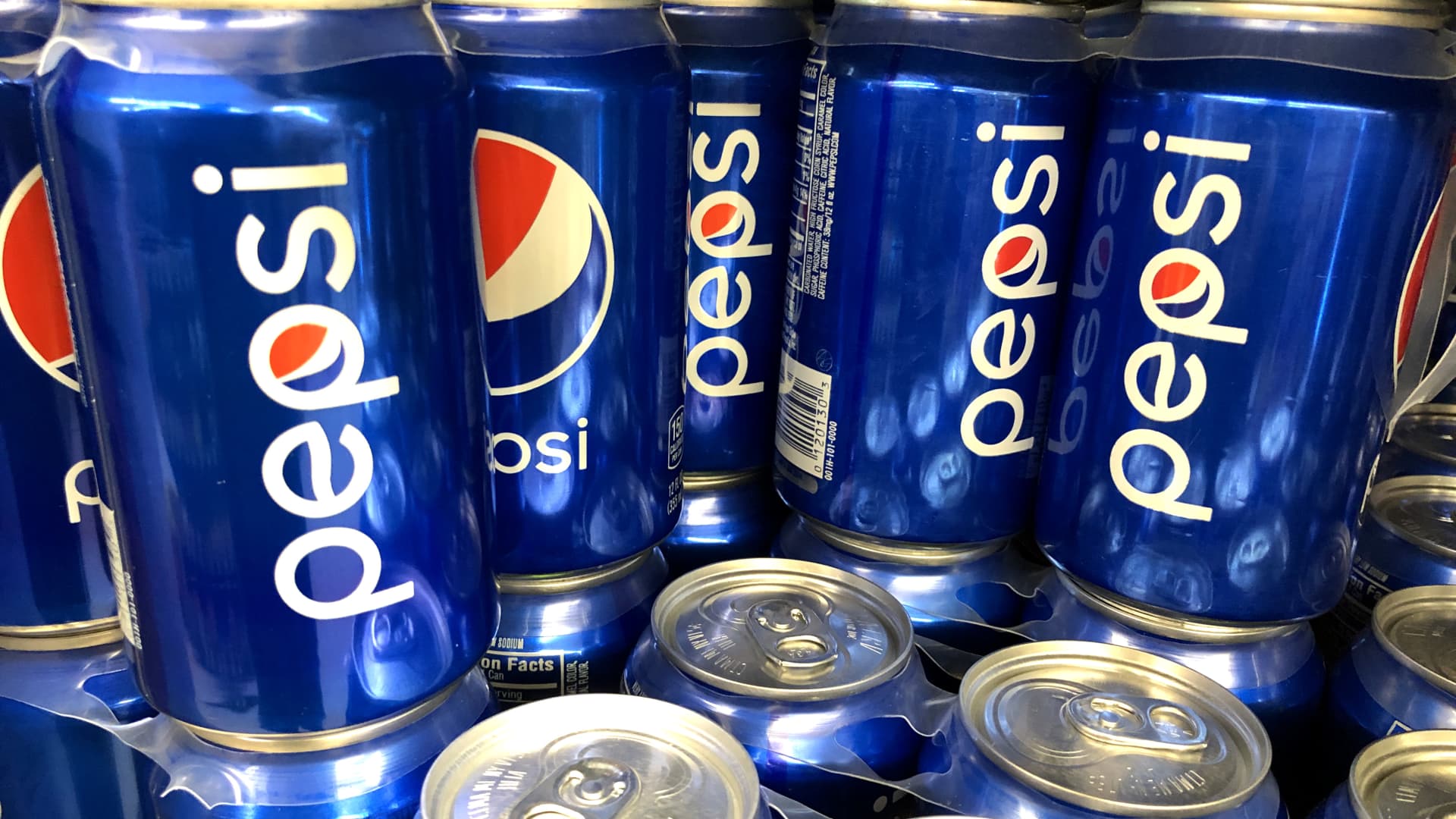
Pepsi soft drinks are displayed at a convenience store in San Francisco, California.
Justin Sullivan | Getty Images
Here’s how the company reported for the quarter ended June 13 compared to Wall Street expectations, based on a survey of analysts by LSEG.
Earnings per share: $2.20 adjusted vs. $2.21 expected Revenue: $24.18 billion vs. $23.95 billion expected
Pepsi reported second-quarter net income attributable to Pepsi of $2.98 billion, or $2.18 per share, up from $1.26 billion, or 92 cents per share, in the year-ago period.
Excluding restructuring and impairment charges, the company earned $2.20 per share.
Net sales increased 6.4% to $24.18 billion. Organic revenue, excluding acquisitions, divestitures and foreign currency, increased 2.4% in the quarter.
Globally, Pepsi’s food sales volume increased by 3% and beverage sales volume increased by 2%. To more accurately reflect demand, this metric excludes pricing and foreign exchange fluctuations.
However, the increase in Pepsi’s sales volume was due to the international market. Domestic demand has decreased significantly. The company’s North American Foods business reported flat sales volume for the quarter, while North American Beverage sales volume declined 4%.
“I think the consumer situation is worse than we anticipated, and that’s mainly due to gas prices,” Laguarta said at the company’s earnings conference.
Demand for convenience stores was particularly weak.
“We need to improve the convenience and gas channels, and we hope to see gas price tailwinds to help us do that,” Chief Financial Officer Steve Schmidt said.
Over the past two years, both sectors in North America have seen demand decline due to rising prices. In February, Pepsi lowered the prices of Lay’s, Tostitos, Doritos and Cheetos by up to 15% to win back shoppers. The company is also “re-creating” some of its iconic brands, such as Gatorade and Lay’s, with fresh branding to boost sales.
Pepsi expects sales volumes to recover in North America, but it will take time, especially after this quarter’s weakness.
“Our North American business was weaker than expected in the second quarter, and we expect operating trends for the rest of the year to improve more modestly,” Schmidt said in prepared remarks.
Pepsi reiterated its previous forecast for full-year organic revenue growth of 2% to 4% and core constant currency earnings per share growth in the range of 4% to 6%.
