

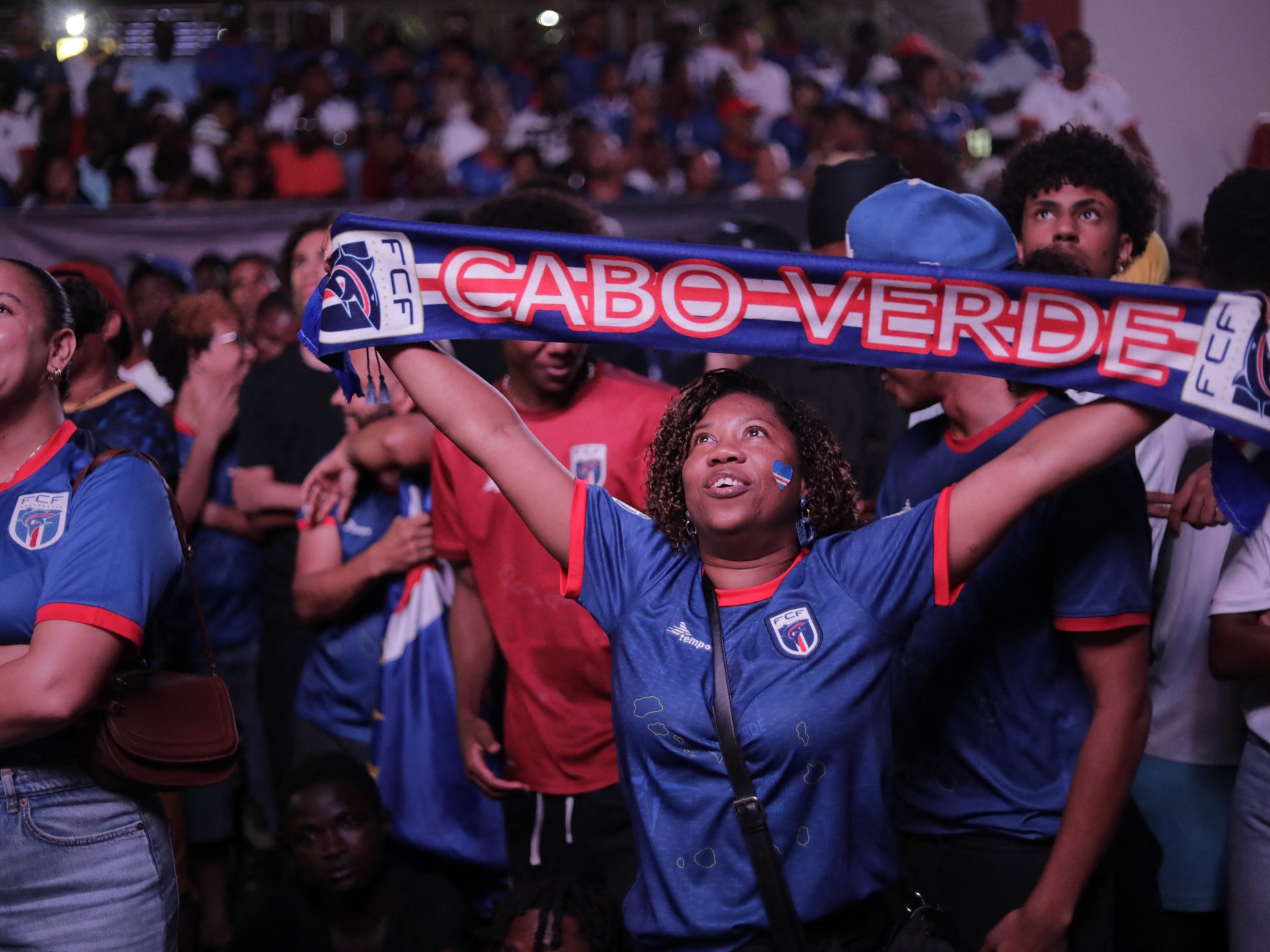
MIAMI, USA – When Prieto Fernandez first arrived in the United States 40 years ago, he discovered that few people had ever heard of his hometown of Cape Verde, and even fewer could locate it on a map.
On Friday, the 65-year-old left Miami Stadium wearing a proud look and a replica Cape Verde shirt, moments after his team left an indelible mark on the World Cup despite a heartbreaking 3-2 extra-time defeat to reigning world champions Argentina.
“Now the whole world knows about Cape Verde. It’s pronounced that way, not Cape Verde,” he says, using the country’s Portuguese name with a satisfied smile and a twinkle in his eye.
“We approach everything with an open mind, and everyone can see that.”
Fernandez and his family left with their heads held high, receiving congratulatory messages and handshakes from other fans passing by.
Despite being eliminated in the last 32, the debutant team’s journey from near obscurity to becoming World Cup darlings has made supporters proud.
“Words can’t express how big this moment is,” said Fernandez’s wife, Elizabeth Fernandez, 60, shaking her head.

Located in the Atlantic Ocean off the west coast of Africa, Cape Verde is made up of 10 volcanic islands known for their white sand beaches and crystal clear waters.
The archipelago is home to approximately 500,000 people, but there are hundreds of thousands of members of diaspora communities around the world. The late Grammy Award-winning singer Cesária Évora was Cape Verde’s most internationally renowned musician and is widely credited with introducing the country’s morna style of music to the world.
Last year’s historic World Cup qualifier for the Blue Sharks, nicknamed the Blue Sharks, coincided with Cape Verde’s 50th anniversary of independence from Portugal.
Cape Verde entered the soccer tournament ranked 64th in the world, but there was an element of mystery hanging over the team.
But mainstream soccer fans first took notice when Cape Verde held European champions Spain to a goalless draw in the World Cup’s opening match on June 15. The 40-year-old goalkeeper shot to stardom after making seven crucial saves, turning him into a social media celebrity with over 20 million followers.
After that, the team drew 2-2 with the first World Cup champion Uruguay, raising hopes of making it to the last 32. In their final group game against Saudi Arabia, Cape Verde once again played out a goalless draw, enough to book their place in the knockout stages and start wild celebrations in their homeland.
“Playing against great teams like Spain, Uruguay and Argentina, who have won multiple World Cups, and having a great performance in our first World Cup showed the character of our team,” said Jessica Fernandez, who grew up in the United States and frequently visits Cape Verde.
“The whole culture in Cape Verde is centered around football,” added Jessica, who played as a forward in college. “It was a beautiful sight to see the team qualify for the World Cup, but what they achieved with their performance was incredible.”

Doris Vega, a fellow Cape Verde fan nearby, was equally ecstatic.
Like many other Cape Verde fans based in the U.S., the team’s incredible performance at the World Cup gave the 33-year-old Florida resident a sense of belonging on the big stage when her country of origin hosts the tournament.
“I love what the team has done for our country,” said Vega, a lawyer with roots on Cape Verde’s Fogo Island.
Cape Verde lost to the defending champions, who are ranked second in the world, but Vega said his team’s performance put an end to those who expected an easy landslide victory for Argentina.
“People were doubting us,” Vega said. “They said we had a one percent chance of winning, but we matched Lionel Messi’s team.”

At present, interest in Cape Verde is increasing, and Vega spoke passionately about the small but rich culture of Cape Verde. She says many people are researching cachupa, the country’s most famous dish.
“It’s a mixture of corn and beans, cooked like a stew, and ready to eat,” she said.
“I like to eat it with eggs in the morning,” Vega said, adding that people back home probably also have it for breakfast after getting up to watch their team in the World Cup finals.
“There will be a lot of celebration back home after this incredible run,” she said.
But the sight of joy is not limited to this small island nation.
“Tonight, we’re going to conquer Florida,” Vega said, his voice hoarse as he cheered for his team.
“I don’t know where I’m going, but wherever I am, I’m going to represent Cape Verde in this outfit. We’ve been lighting up the World Cup for three weeks, and now it’s time to light up Florida.”
