

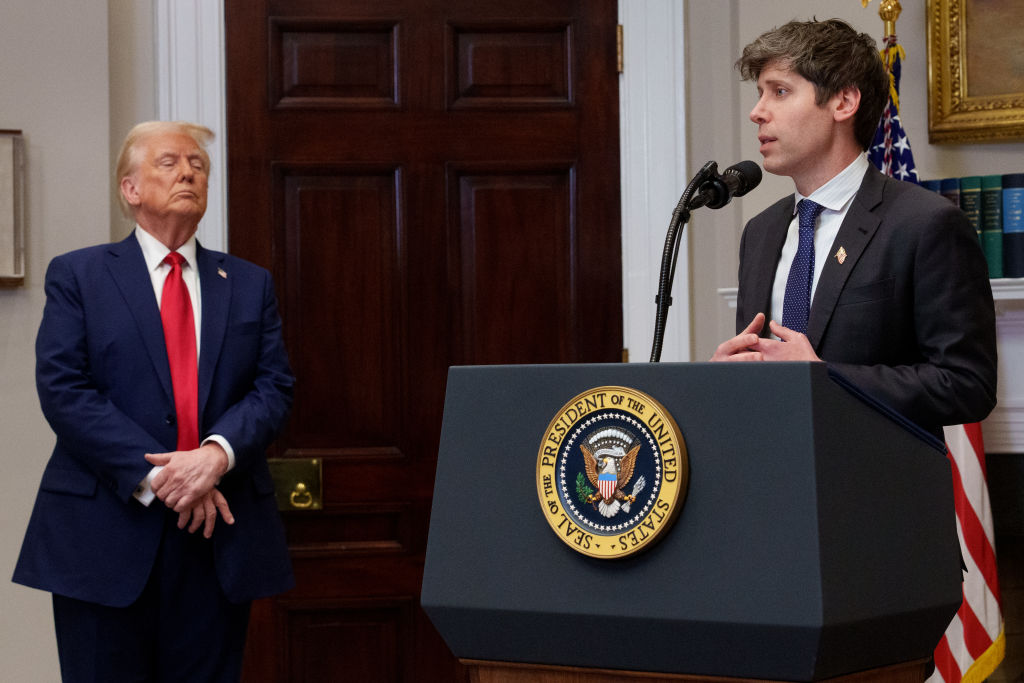
OpenAI CEO Sam Altman has proposed selling a 5% stake in the company to a U.S. sovereign wealth fund, the Financial Times reported Thursday, citing two people familiar with the matter. Under the proposal, other AI companies would contribute similar shares, but serious questions remain about the details.
The FT report said the donation was aimed at “ensuring good relations with the regime and…managing political headwinds.”
Similar discussions were reported by CNBC in June and later confirmed by President Trump, who said they discussed “concepts where we could give the work to the American people and where the American people essentially become partners in the business.” The specific size of the proposed stake was not disclosed at the time.
Talks are still preliminary, and the FT said any formal action would likely require parliamentary approval, which could significantly complicate matters.
The idea of a public AI fund has also been discussed publicly by Altman, and OpenAI is increasingly fleshing out its proposals for how such a fund might be structured. Most recently, OpenAI published a policy paper in April titled “Industrial Policy in the Age of Intelligence,” which proposed the creation of a public asset fund that could invest directly in AI research labs and companies deploying their technology.
“Proceeds from the fund will be distributed directly to citizens, potentially enabling more people to directly participate in the AI-driven growth turnaround, regardless of their initial assets or access to capital,” the document reads.
A more aggressive version of the policy, proposed by Sen. Bernie Sanders (I-Vermont) in June, calls for a one-time 50% tax on shares in AI companies and for the collected shares to be deposited into a public wealth fund. The bill, called the U.S. AI Sovereign Wealth Fund Act, would apply to all “systemically important” AI companies, including data center, infrastructure, and robotics companies. Under the proposal, companies like Google and SpaceX that incorporate AI only as part of their operations would be allowed to spin off non-AI parts of their companies to avoid tax.
The bill has not yet been submitted to committee.
If you buy through links in our articles, we may earn a small commission. This does not affect editorial independence.
