

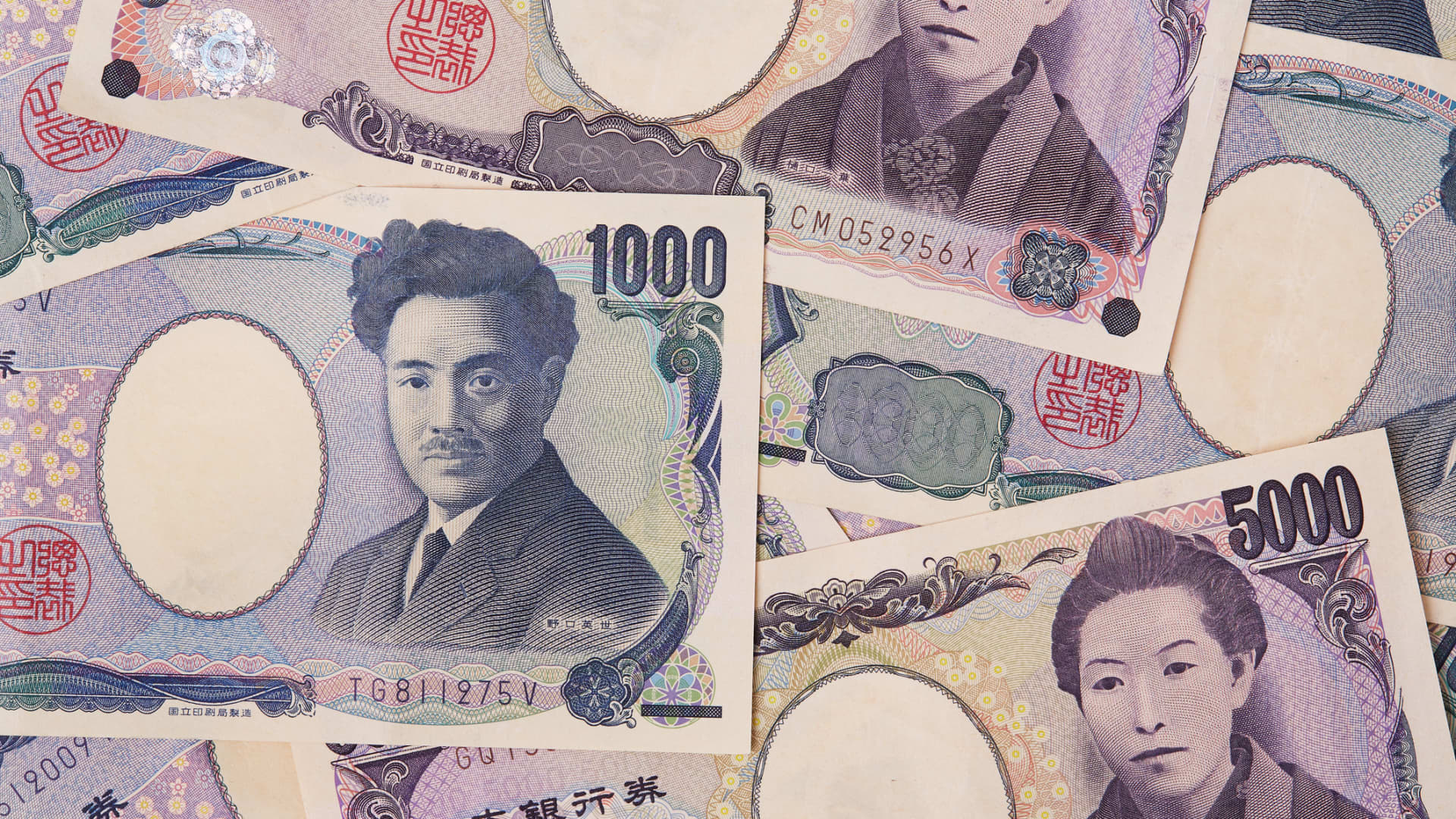
The yen rose on Wednesday on a rally in Japanese stocks after Prime Minister Takaichi’s election victory and bets on more fiscally responsible policies.
Evgen Romanenko | Moments | Getty Images
of JPY The currency fell to its lowest value against the dollar on Tuesday since 1986, with investors remaining wary of possible intervention by Japanese authorities.
The yen fell to 162.27 yen to the dollar in early Asian trading, hitting a 40-year low, according to LSEG data.
Japan’s Finance Minister Satsuki Katayama said on Tuesday that the government is ready to take appropriate measures against excessive currency fluctuations.
“That includes taking decisive action that has been confirmed between Japan and the United States,” Katayama said.
Chief Cabinet Secretary Minoru Kihara said at a regular press conference on Tuesday that the Japanese government will strive to build an economy that is less susceptible to exchange rate fluctuations, while remaining prepared to intervene in foreign exchange markets as necessary. Mr. Kihara also declined to comment on the current level of the yen.

Julia Wang, Nomura’s chief investment officer for North Asia, said Japan may intervene in the foreign exchange market after the yen fell to its lowest level in decades, but she expected the impact on the overall market to be short-lived.
In theory, he said, intervention would not be tied to any particular exchange rate level, but the yen’s move toward new cycle lows could heighten domestic concerns about a weaker currency and increase the likelihood of public action.
“Intervention should not depend on a certain level. It depends on the nature of the currency movement, the nature of the dollar-yen… This is a cycle high, a new cycle high. It is probably a sensitive level, and some of the worries about domestic currency depreciation will be reignited,” Wang said.
Wang added that the broader outlook for the yen remains weak as the interest rate differential and real yield spread between Japan and the US continue to favor carry trades.
“I don’t think it will be a significant factor that derails the market,” he said, insisting that any intervention is unlikely to change the long-term direction of the currency.
The Bank of Japan recently raised its benchmark interest rate to 1%, the highest level in more than 30 years, as policymakers continue the normalization of monetary policy that began in 2024.
The quarter-point hike was the first rate hike since December, when the central bank raised interest rates to 0.75%, pushing borrowing costs to their highest level since 1995.
The move comes as Japan grapples with rising inflationary pressures caused in part by soaring energy prices during the Iran conflict.
