

tel aviv —
From Washington to Tehran, all eyes are on Lebanon.
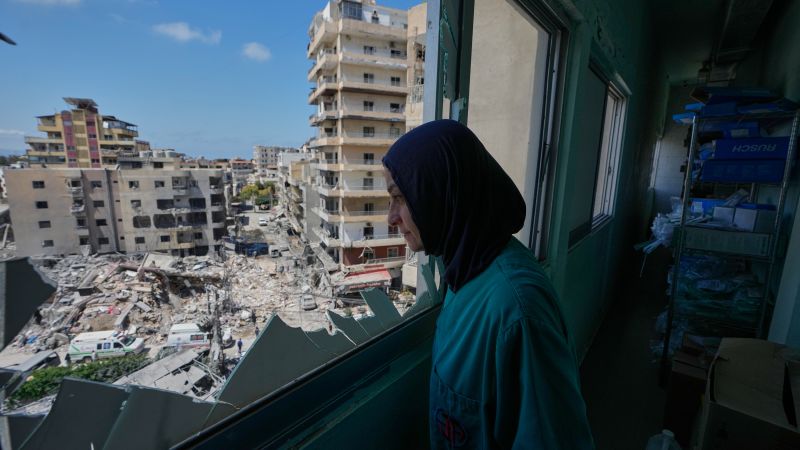
That’s because the future of the Iran war, and the prospects for a deal to end it, may depend on what happens in Lebanon, where the second front in the regional war takes center stage. This new reality is the result of Iran’s continued efforts to link the fates of both conflicts and the increasingly divergent priorities of the US president and Israeli prime minister.
As the 12-hour gunfight between Israel and Iran finally ended on Monday, Lebanon’s critical role was once again brought into focus.
Iran’s Revolutionary Guards announced it would stop shelling Israel, while also threatening to resume attacks unless Israel stops attacking Lebanon, home to Iran and Hezbollah, Iran’s most powerful regional proxy group.
“It is emphasized that if aggression and hostilities continue (including in southern Lebanon), far harsher and more overwhelming measures than have been taken so far will be taken,” the headquarters of Khatam al-Anbiya, the main wing of the Revolutionary Guards, said in a statement on Monday.
If Iran makes good on its threat, Israel and Iran could quickly return to war. Israel has already carried out several new airstrikes in southern Lebanon, as senior Israeli government officials reject Iranian efforts to coordinate the two fronts and vow to step up attacks on Hezbollah.
Not only is Iran re-strengthening its ties, it appears to be further reinforcing the strategy it has pursued since the United States and Iran agreed to a cease-fire in April.
The first days of the ceasefire were marred by disputes over whether it included Lebanon. Israel initially rejected efforts to force it to stop attacking its northern neighbor, even though Iranian officials and Pakistani mediators insisted Lebanon was also part of the deal. President Donald Trump called Israeli Prime Minister Benjamin Netanyahu to tell him to get in line to prevent the ceasefire with Iran from collapsing.
This was the first indication to Iran and the rest of the region that Israel’s war against Hezbollah would not stand in the way of its chance to end the economically and politically costly war with Iran.
As gunfire between Israel and Hezbollah escalated and Israel threatened to bomb Hezbollah targets in Beirut earlier this month, Iran vowed to halt negotiations with the United States if the Lebanese capital was attacked.
President Trump, again fearing his diplomacy would be upended by Israel, forced Prime Minister Benjamin Netanyahu to issue an expletive-filled call for Israel to call off a planned attack on Beirut. Prime Minister Netanyahu finally fulfilled his obligation.
It was the flashiest evidence yet of the divergence of interests between Mr. Trump and Mr. Netanyahu.
President Trump has been reluctant to resume war with Iran, but Prime Minister Netanyahu has privately dismissed the prospect of U.S.-Iranian diplomacy and is pushing for a return to war.
Both men plan to face elections in the fall. Mr. Trump is in the midterm elections, and Mr. Netanyahu is in the parliamentary elections that will decide whether he remains prime minister. The war has become a political drag on Mr. Trump because of rising U.S. gas prices, but the unfulfilled war objectives in Iran pose a serious threat to Mr. Netanyahu’s future.

Geopolitically, Israel also faces a much greater threat from an undefeated and perhaps even emboldened Iran and Hezbollah, while US interests lean toward economic concerns stemming from Iran’s blockade of the Strait of Hormuz.
Iran was quick to exploit that rift last week. When Israel warned that Hezbollah’s rocket attacks on northern Israel would trigger an Israeli attack on Beirut, Iran upped the ante again and threatened to attack Israel in retaliation.
Undeterred, Israeli officials refused to accept Iran’s new red line and were determined to maintain their freedom to operate against Hezbollah if necessary. Prime Minister Netanyahu, who distrusts American diplomacy and is anxious to return to war instead, has just been given another roadmap to go to war with Iran.
So on Sunday morning, Hezbollah fired two rockets into northern Israel (both of which were intercepted), Prime Minister Netanyahu authorized the attack on Beirut, and within hours, Iran launched its first ballistic missile into Israel since the ceasefire took effect in April.
President Trump was forced to intervene again to (unsuccessfully) prevent and ultimately limit Israeli retaliation against Iran, but he did not want to see diplomacy with Iran (which he once again claimed was in its final stages) derail.
There is no end in sight to the Lebanese conflict and the new red line between Iran and this loop is likely to repeat itself.
Israeli-Lebanese diplomacy aimed at disarming Hezbollah, preventing Israeli attacks on Lebanese soil, and ultimately withdrawing Israeli forces from southern Lebanon remains entirely dependent on Hezbollah’s cooperation. The latest Israel-Lebanon agreement called on Hezbollah to cease attacks on Israel and withdraw its militants from southern Lebanon.
Hezbollah rejected the agreement and demanded the withdrawal of Israeli forces from Lebanese territory.

Islamabad, where multiple rounds of talks between the United States and Iran have been held, is also paying increasing attention to Lebanon.
Pakistan’s Field Marshal Asim Munir, the main mediator in these talks, met on Friday with the top commander of Lebanon’s besieged national army, which is tasked with disarming Hezbollah and ensuring the return of Hezbollah forces to southern Lebanon.
Pakistani military officials said only that the two men discussed “strengthening bilateral relations,” but a local source said there were also “some discussions” about Pakistan supporting the Lebanese army in southern Lebanon, a key Hezbollah stronghold.
This is a small but eloquent acknowledgment from a key intermediary that resolving the U.S.-Iranian diplomatic conundrum involves more than just reaching an agreement on Iran’s nuclear program, the Strait of Hormuz, and Iran’s blockaded financial assets.
Lebanon is also an important piece of that puzzle.
Nic Robertson contributed to this report.
