

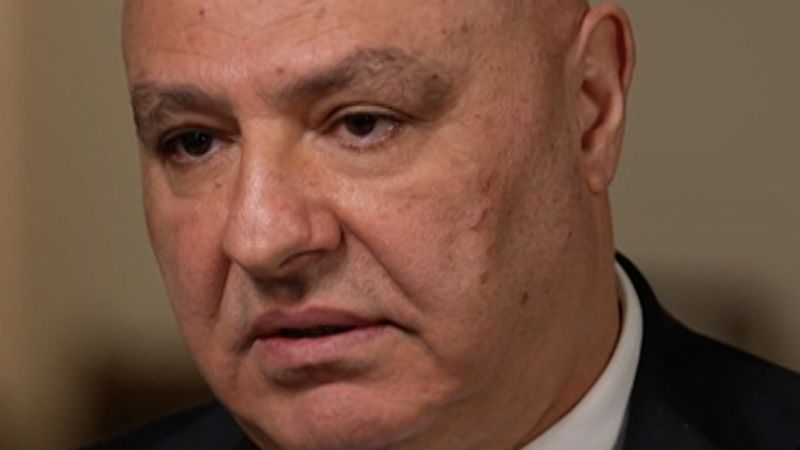
Lebanese President Joseph Aoun on Friday issued a scathing rebuke to Iran, accusing it of using his country as a bargaining chip in its conflict with the United States and Israel, against the wishes of the Lebanese people.
In a rare exclusive interview with CNN’s Christiane Amanpour, President Aoun vowed to do “whatever it takes” to save his country from conflict, declaring that Lebanese people are “sick and tired” of the war between Israel and the heavily armed Iranian-backed proxy group Hezbollah. Hezbollah has built strong domestic support by portraying itself as the defender of southern Lebanon and the Palestinian people.
“We are fed up and we want to live in peace,” Aoun said, adding: “(Lebanese people) have the right to live in peace and with dignity. It’s no wonder we see our homes destroyed every five to 10 years.”
Since its founding in the 1980s, Hezbollah has fought multiple wars with Israel. This year, the group fired rockets into Israel in retaliation for the joint US-Israeli attack on Iran that killed Supreme Leader Ayatollah Khamenei and many of his senior military commanders. Israel’s aggressive response left more than 3,500 Lebanese dead and nearly a fifth of the population displaced.
The Lebanese state, weakened by decades of foreign intervention, sectarian conflict and repeated embroilment in widespread wars, had vowed to take on the difficult task of disarming Hezbollah in order to dismantle its vast influence and halt Israeli advances.
Despite a ceasefire between Tehran and Washington in April and subsequent negotiations, Beirut has found itself increasingly drawn into the broader conflict, as Iran made Israel’s withdrawal from Lebanon a condition of its agreement to end the war with the United States.
“It’s not your country, it’s our country,” Aoun told Hezbollah’s main backer, Iran’s Islamic Revolutionary Guards Corps (IRGC). “(Iran) is using Lebanon as a bargaining chip in its negotiations with the United States.”
“You are not trying to help us… the Lebanese people… are paying the price for your own interests,” he said of Iran, adding: “Our interests… do not align with your interests.”
Faced with limited options and growing desperation to weaken Iran’s influence in Lebanon, US-backed President Aoun directed his government to negotiate a direct ceasefire agreement with long-time adversary Israel. This is an unprecedented move by the Lebanese government and appears to be intended to put further pressure on Hezbollah.
“We are ready and willing to[negotiate an end to the war],” Aoun told Amanpour at the presidential palace in Beirut. “Otherwise, we will never live in peace, safety and security,” he told the Israeli people and government.
He added that Lebanon and Israel have a “huge opportunity” to end hostilities and ensure that both Lebanese and Israeli citizens can live safely.
“They are both tired of the war since 1948,” he added. “This is a huge opportunity. Both countries will have to make a choice: war or…diplomacy.”
However, a ceasefire between Lebanon and Israel has hardly taken root, as Hezbollah continues to refuse any disarmament without Israel’s withdrawal from Lebanese territory.
Hezbollah leader Naim Qassem, in a statement Thursday, denounced the Lebanese-Israeli talks as a “surrender” and said the resulting ceasefire was “completely rejected by the broad Lebanese people.”
Aoun said he has spoken to Lebanese people across religious sects, including Shiites, who have told him they are “tired” of Hezbollah’s war with Israel.
“They are Lebanese. They are not Naim Qassem’s people,” he said in a rare public attack on the Iranian-backed Shiite extremist leader.
Still, the Lebanese president condemned Israel’s military strategy in dismantling Hezbollah, saying the group could only be “dealt with” by the Lebanese government after Israeli forces withdrew, and that the conflict could only be ended through negotiations.
“They can invade the whole country, they can flatten the whole country, but they will never be able to achieve their goals,” Aoun said of Israel. “Hezbollah is not a visible target… it is an idea.”
Aoun served as army chief for eight years before becoming president. He was injured in the battle and says he still has shrapnel in his body and damage to his hearing from close quarters combat. Still, he says he hates war.
“I prefer negotiation to war. I don’t want my children to suffer…and I don’t want the Lebanese people to suffer the same,” he said. “The best way forward is diplomacy.”
For almost three years, Israel and Hezbollah have been engaged in aggressive skirmishes. Israeli forces have captured dozens of villages in southern Lebanon to wipe out Hezbollah forces.
The Israeli government has made a condition for Hezbollah’s withdrawal from Lebanon that it lay down its weapons, and Aoun’s Lebanese government says it is fully committed to this.
But aside from vocal criticism and some symbolic steps to dismantle Hezbollah’s capabilities, the former military commander has not taken any concrete steps to disarm Hezbollah, fearing it could trigger what many observers believe to be a direct conflict with the heavily armed group and a repeat of the brutal 15-year civil war that tore the country apart.
Instead, Aoun has watched the presidential palace reel from Israeli attacks as Israel expands its military operations in Lebanon. At the same time, Iran continues to raise the price of a ceasefire with the United States while refusing to relinquish Lebanese sovereignty.
“I will… negotiate and persuade them,” Aoun said, referring to Hezbollah and disarmament. “Eventually they will be persuaded, but the price will be high.”
