

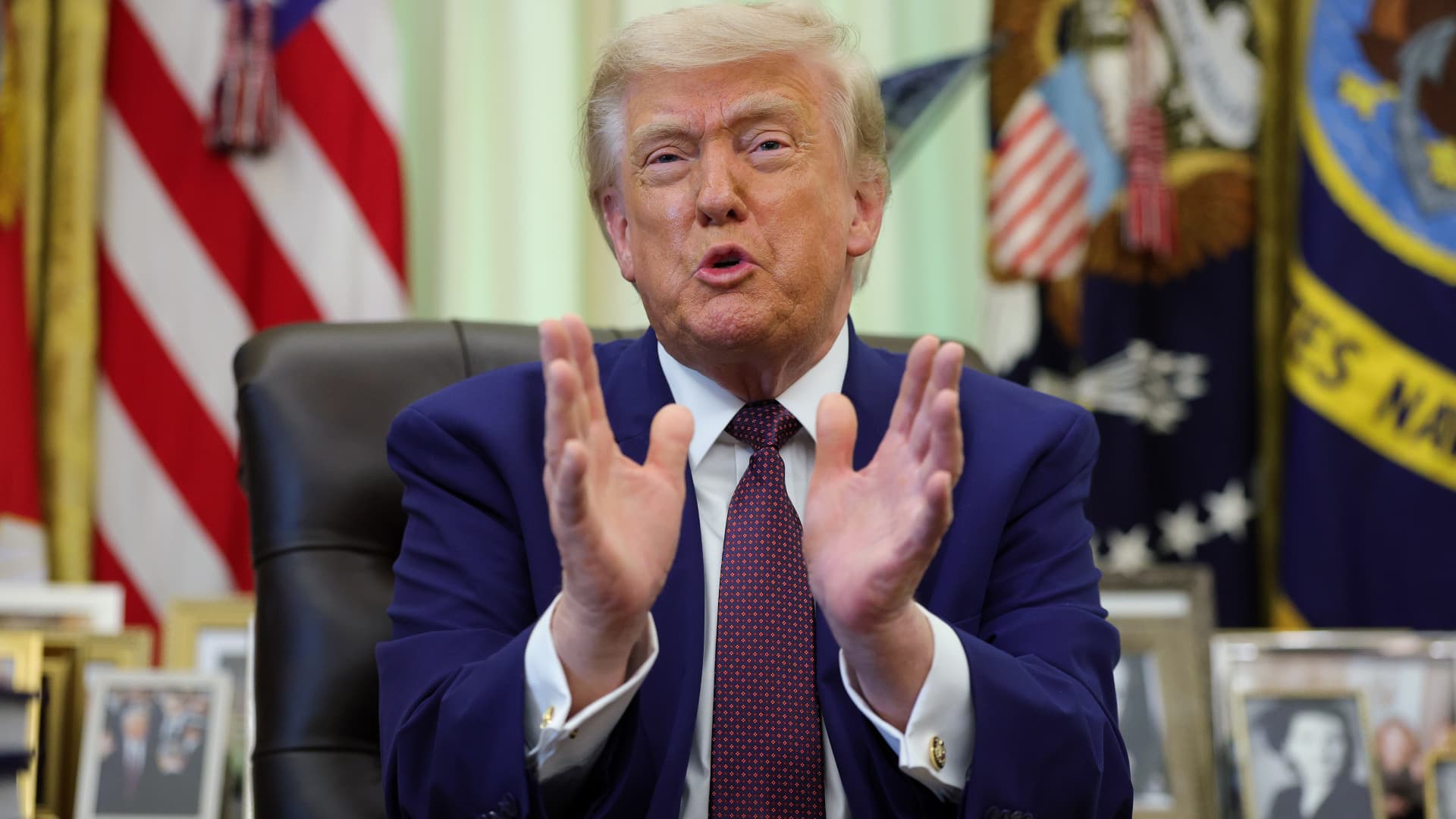
U.S. President Donald Trump speaks at an event in the Oval Office of the White House on June 3, 2026 in Washington, DC.
Kevin Dietch | Getty Images
Hello, my name is Dylan Butts from Singapore. Welcome to the latest edition of the Daily Open newsletter.
As the war between the US and Iran continues into its fourth month, Asian traders are assessing new mixed signals from the Middle East.
Israeli Prime Minister Benjamin Netanyahu said in an interview with CNBC that Israel and the United States are ready to return to military action against Iran if necessary.
The comments sent oil prices higher and stock futures lower, even as progress was reported on a ceasefire between Israel and Lebanon and the US House of Representatives voted to block further US military involvement.
What you need to know today
In an exclusive interview with CNBC that aired on Wednesday, Netanyahu said President Trump had warned Iran of a “full-scale return to military action” if necessary, stressing that ultimately the decision would be made by the U.S. president.
However, Prime Minister Netanyahu pointed out that while the United States and Israel were largely on the same page regarding Middle East strategy, there were differences of opinion on tactics.
The comments appeared to surprise oil traders, with Brent and WTI crude both rising on concerns about another spike in oil prices, although oil prices remain below the psychologically important $100 per barrel level.
S&P 500 futures were trading lower after the benchmark ended its nine-day winning streak.
In a more positive development towards a peace agreement, Israel and Lebanon agreed to implement a ceasefire. However, Asian markets opened lower on Thursday as concerns in the Middle East made investors nervous.
Signaling a decline in appetite for conflict in Washington, the U.S. House of Representatives voted in favor of a war powers measure that would direct a halt to U.S. military involvement in the Iran conflict unless Congress approves continued action.
The bipartisan vote underscores the strength of the opposition in Congress over the scope and duration of the Iranian operation, but the bill still needs to pass the Senate, where the final bill could face a presidential veto.
President Trump suggested on Wednesday that Iran had agreed not to have nuclear weapons, but added: “They could change their mind.” Iran’s Foreign Ministry declined to comment on Trump’s interview when contacted by CNBC. A government official who was not authorized to speak publicly told CNBC that Trump’s words were “misleading.”
The comments came a day after U.S. Central Command launched a “self-defense strike” on Qeshm Island in the Persian Gulf and after Kuwait’s international airport was attacked by Iran.
Corporate America made its own headline Wednesday, pouring cold water on the recent tech-driven Wall Street rally.
Broadcom shares plunged nearly 14% in after-hours after the company reported lower-than-expected software revenue and did not raise its full-year AI chip sales target. CrowdStrike’s stock also fell about 10% in after-hours trading, even though the company’s first-quarter results narrowly beat Wall Street expectations.
In some major capital market developments in the tech industry, SpaceX’s IPO price was $135 per share, implying a valuation of about $1.77 trillion.
The offering could raise about $75 billion through the sale of 555.6 million shares, making SpaceX the largest U.S. company by market capitalization, ahead of Tesla.
— Dylan Butts
And finally…
As Bitcoin price hits new lows, high-conviction Bitcoin holders are turning into sellers.
According to Compass Point, Bitcoin’s most convicted holders have also joined in the cryptocurrency’s sharp decline, which could mark the beginning of the end of the ongoing crypto recession.
Compass Point analyst Ed Engel said in a note on Tuesday that long-term holders (defined as those who have held a coin for at least 155 days, or about five months) were largely inactive from February to April, but have turned sellers in recent weeks.
In the past two days, they have sold about $2.4 billion in Bitcoin, “which has a significant impact on the balance of supply and demand for BTC,” Engel said.
He also highlighted that 26% of Bitcoin sold in the past 30 days were from investors who bought Bitcoin for $90,000 or more.
— Tanaya Machel
