

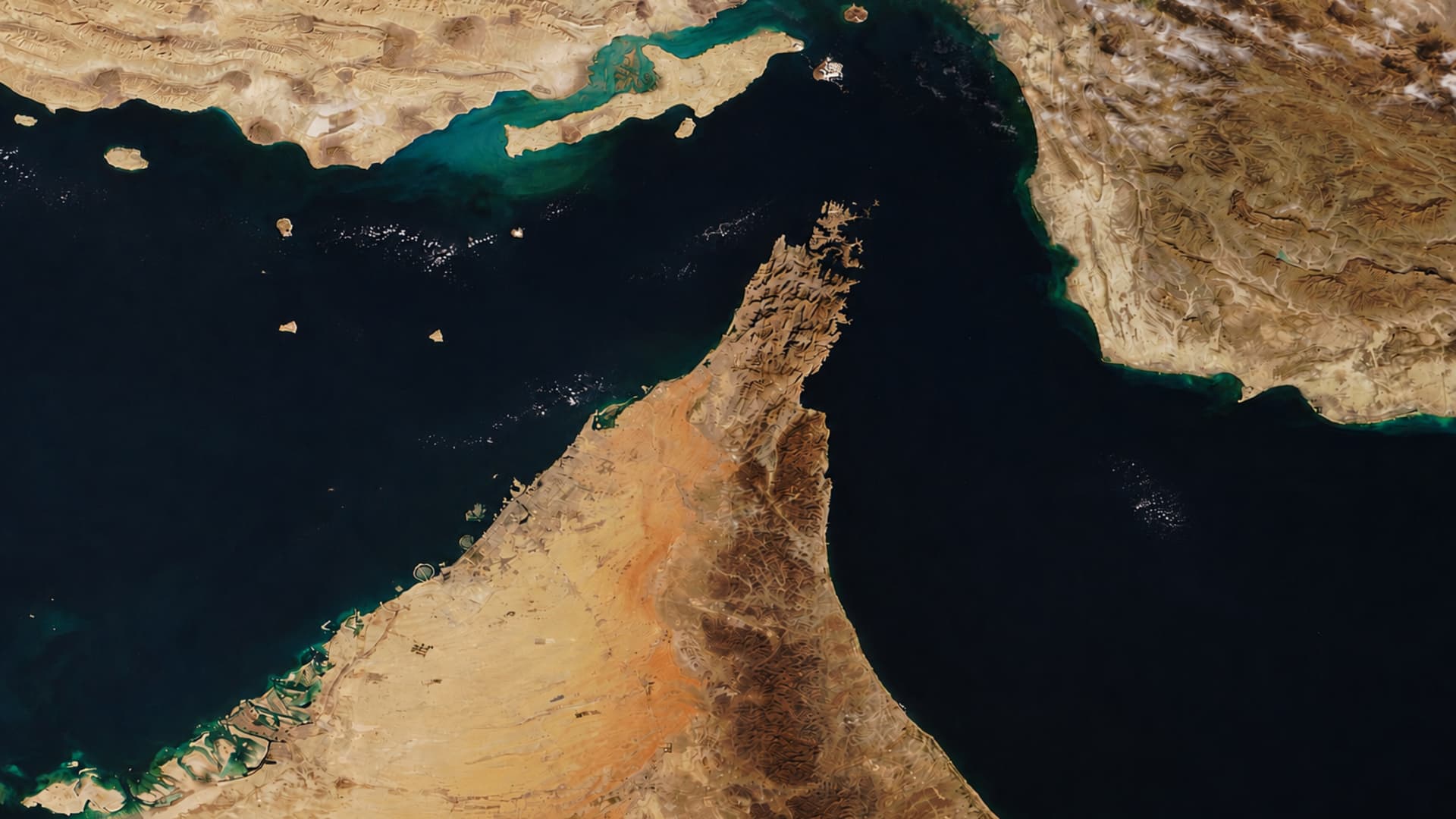

After the Iran war, oil markets may face the new reality that exports through the Strait of Hormuz will not return to levels once considered normal. Shipowners now have to consider the risk of sudden fighting erupting in the volatile Persian Gulf.
Additionally, if Hormuz is under Iran’s de facto control, Western commercial ships are likely to be reluctant to transit through Hormuz, especially if they have to work with the Revolutionary Guards, putting them at risk of violating U.S. sanctions.
Given the important role Holmes plays in global energy markets, this is a scenario with consequences that are difficult to predict. Freedom of navigation in the strait was not seriously challenged until Iran essentially closed the sea lanes in response to the war launched by the United States and Israel on February 28.
Iran’s blockade of Hormuz has caused the biggest oil supply disruption in history, putting pressure on the US to reach a deal as the threat to the global economy grows by the day. It appears that the Iranian government intends to use this leverage to strengthen its control over the strait through a settlement aimed at ending the war.
Amos Hochstein, former senior energy and national security adviser to former President Joe Biden, said Middle Eastern leaders believe Iran has already taken control of Hormuz.
“No matter what happens, Iran will be in control of the Strait of Hormuz for the foreseeable future,” Hochstein told CNBC’s “Squawk Box” on Thursday. “It doesn’t even matter what is written in the agreement; everyone in the region believes in it.”
Helima Croft, head of global commodity strategy at RBC Capital Markets, said the oil tanker traffic that passed through Hormuz before the war could be the pinnacle of transit for the foreseeable future.
“Once the conflict ends and Iran is able to exercise operational control and influence over the strait, in our view, flows through the waterway will be significantly reduced,” Croft told clients in a note Thursday.
Lloyd’s List Editor-in-Chief Richard Meade told a May 21 press conference that under this scenario, traffic would return to 60% to 70% of pre-war levels, allowing Chinese-linked ships to travel freely, while Western ships could require a bilateral agreement with Iran.
“It won’t trigger a recession as some of the doomsday scenarios we’ve been talking about would suggest, but it won’t allow for a pre-war economic recovery,” Meade said. Lloyd’s List is one of the world’s oldest shipping industry trade publications.
“It creates something much more insidious,” Mead continued. “It is a permanently bifurcated strait, access to which depends on political alignment rather than freedom of navigation.”
red sea crisis
The crisis, which has restricted shipping traffic through the Red Sea, shows that geopolitical instability can disrupt the trade chokepoint for much longer than initially expected.
Yemen’s Houthi militants, allied with Iran, launched attacks on commercial ships in November 2023 in response to Israel’s war in Gaza. The attacks began on November 19 with the hijacking of a cargo ship and continued for two years with missile and drone attacks.
Daily traffic through the Bab el-Mandeb Strait, which connects the Red Sea and the Gulf of Aden, has more than halved, from 75 vessels on November 19, 2023 to 31 vessels by January 30, 2024. More than two years later, traffic in the strait still hasn’t returned to levels once considered normal.
Tomer Raanan, a maritime risk analyst at Lloyd’s List, said one of the key lessons from the Red Sea crisis is that “you don’t need a large navy to cause large-scale disruption to maritime chokepoints.”
Jack Kennedy, head of Middle East country risk at S&P Global Market Intelligence, said the Houthis have not attacked ships in the Red Sea since late last year, but not enough for shipping traffic to return to 2023 levels.
It is unclear whether the disruption to traffic through Hormuz will last as long as the disruption in the Red Sea. Shipowners will need to decide whether they believe the U.S.-Iran deal, if indeed cemented, will provide sufficient security for commercial ships.
Kennedy said the Trump administration appears to be prioritizing expanding commercial shipping access through Hormuz, and the current ceasefire is likely to remain in place for some time.

Even if Iran agreed to open the port of Hormuz without transit conditions, it would likely take a long time for traffic to return to pre-war levels, Kennedy said. For example, he said there would be security concerns about land mines that may have been placed in the strait.
President Kennedy also said there was a serious risk of renewed hostilities over the next year unless a durable solution to Iran’s nuclear and ballistic missile programs is found. These were the key issues that led to the war, especially from the perspective of Israel’s national security, analysts said.
Mr Kennedy said ship operators needed to consider whether they were prepared to risk their ships and assets being trapped on one side of Hormuz for months if war broke out again.
There are few alternatives to Holmes.
But Raanan and Kennedy also said the Red Sea differs from Hormuz in important ways. One reason Red Sea traffic remains low is because ships can circumvent the Red Sea by sailing around South Africa’s Cape of Good Hope, avoiding safety risks altogether. In contrast, Hormuz Island is truly a choke point with no comparable alternatives, analysts said.
Hormuz is also far more important to global energy markets than the Red Sea. Before the war, about 20% of the world’s oil and liquefied natural gas supplies passed through Hormuz.
Saudi Arabia and the United Arab Emirates use pipelines to divert millions of barrels of oil per day from the Persian Gulf to export terminals in the Red Sea and Gulf of Oman. These pipelines have eased supply disruptions but cannot fully compensate for Hormuz.

“We can take some things out of the pipeline, but not everything can go through the pipeline,” Raanan said. “We’re not just talking about oil that needs to come out of Hormuz.”
For example, the whole point of LNG as a product is that it can be loaded onto ships and transported around the world. Hormuz is also an important location for fertilizers and other products. In the absence of alternatives, shippers may have to accept and adapt to the situation in Hormuz differently than in the Red Sea.
Still, Middle Eastern exporters are looking for further alternatives. For example, the UAE is accelerating construction of a second pipeline that will bypass Hormuz. It is scheduled to begin operation in 2027.
U.S. Energy Secretary Chris Wright believes the importance of Hormuz in global energy markets will decline after the war as Gulf states such as the UAE build more pipelines to avoid Hormuz.
“This is a card you can play once,” Wright said of the Iran blockade. “There may be other routes to extract energy from the Persian Gulf.”
“The importance of the Strait of Hormuz will decline, but the importance of energy production and energy supply for these countries will not decline,” he said.
