

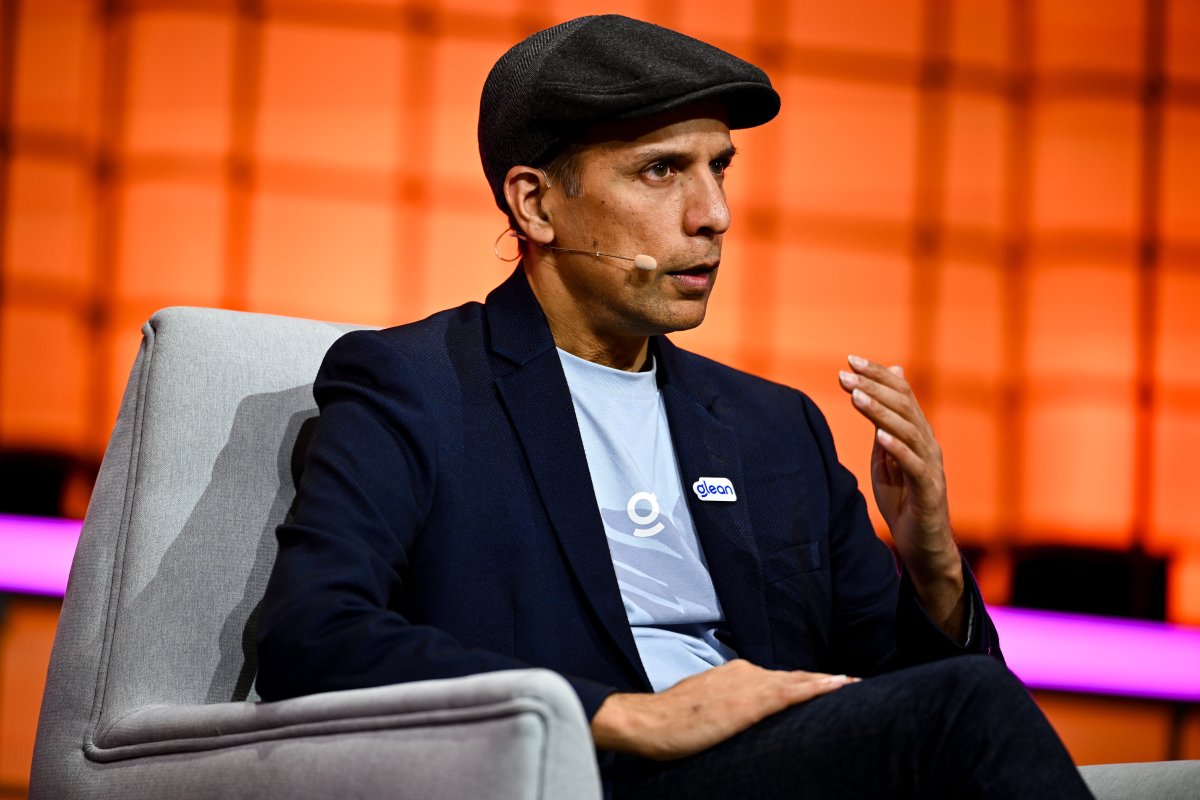
Glean, often referred to as the enterprise version of Google, announced annual recurring revenue (ARR) of $300 million. This is a three-fold increase from the $100 million milestone reached just 15 months ago.
Many AI startups are growing at a breakneck pace, but Glean’s progress is particularly notable. The seven-year-old startup, which has remained virtually the only player in the space for years, is accelerating growth as tech giants enter the enterprise AI search market with competing products.
“For the first four or five years, we didn’t have any competition,” Glean CEO Arvind Jain told TechCrunch. “Every company in the world wants to be in this space, given how important search is to making AI work within the enterprise.”
Tech heavyweights building tools like Glean include Google, Microsoft, OpenAI, Anthropic, Salesforce, and Atlassian.
Jain argues that while there is value in being a first mover in this space, it is equally important to offer a better product.
Jain said Glean’s advantage over its competitors is that its AI tools deeply understand customers’ business needs. Glean’s AI achieves this knowledge (a concept captured by the new popular term “context graph”) by connecting to and learning from a company’s internal software systems.
Jain claims that Glean’s context graph can also help companies reduce AI computing costs.
“When you connect your AI to Glean, it has all the information it needs to work. As a result, the AI consumes far fewer tokens than if you were to release it directly into your system,” said Jain. That’s because with Glean, the AI ultimately has fewer operations to perform, he added.
At a time when many companies are exhausting their AI budgets, this reduction in token costs is a major selling point for the company.
“One of the things our customers really like about Glean is the fact that they can significantly reduce their AI fees,” he said.
The company, which was last valued at $7.2 billion when it raised $150 million in Series F last June, offers a variety of pricing structures to customers including Databricks, Reddit, Pinterest, and Samsung.
According to Jain, Glean offers both a pay-as-you-go model, where clients pay per usage, and a hybrid model, which combines a fixed monthly fee for active users with individual usage fees based on consumption of the model.
Glean is definitely not the first company to do this, but it’s worth pointing out that the company’s $300 million milestone can’t be fully explained as traditional ARR, since its consumption model, by definition, doesn’t have a strictly iterative element.
Because a pure pay-as-you-go model relies on fluctuating user activity rather than predictable subscription renewals, a portion of Glean’s revenue is more accurately expressed as an annual revenue run rate.
Glenn did not immediately respond to a request for comment. This post will be updated if we hear back from the company.
If you buy through links in our articles, we may earn a small commission. This does not affect editorial independence.
