

Editor’s note: Call to Earth is a CNN editorial series dedicated to reporting on the environmental challenges facing our planet and their solutions. Rolex’s Perpetual Planet Initiative has partnered with CNN to promote awareness and education on key sustainability issues and inspire positive action.
The river arrived quickly.
When a dam collapsed on the Hitlanjoki River in Finland, the flow of water began to change. The flow of water sped up and cooled, making it sound more like a river than a reservoir. Then came the fish.
For the first time in more than a century, salmon have pushed upstream past the former site of three hydroelectric dams, reclaiming water in an area that had been cut off for more than a century.
Similar changes are underway across Europe, with countries removing aging dams and weirs. Once used to power mills and factories, they are now often of little use.
“Once you remove the barrier, the river takes over,” Angela Ortigara, senior advisor and freshwater strategist at WWF-Netherlands, told CNN. “This is one action that has immediate and long-term benefits.”
According to the latest annual report from Dam Removal Europe, a group of six organizations working to restore river connectivity, 603 barriers will be removed in 21 countries in 2025, the highest number ever.
The removal will reconnect more than 3,740 kilometers (2,324 miles) of rivers across the continent and ties in with the European Union’s goal of restoring 25,000 kilometers (15,534 miles) of free-flowing rivers by 2030.
The number of barriers removed was 11% higher than the previous record set in 2024, according to a report released last week.
The number of removals in 2025 was also six times higher than the first count conducted in 2020.
The numbers show that river restoration is becoming more widely adopted, but also reflect a broader reassessment of how rivers function in times of extreme climate. What was once seen as progress is increasingly seen as an increasing environmental responsibility.

An estimated 1.2 million barriers, including dams, weirs, culverts and sluices, divide Europe’s rivers, according to the Adaptive Management of Barriers in European Rivers (AMBER) research project. This project is one of the most comprehensive assessments of river connectivity ever carried out on the European continent. Many of the structures were built decades ago for hydroelectric power, navigation, and agriculture, but thousands of them are now dilapidated.
Scientists and environmental groups say the effects could be far-reaching.
“When rivers are dammed, waterways that were once protected by riparian vegetation are transformed into sun-exposed ponds and still-water reservoirs. This significantly increases water temperatures,” said Pao Fernández Garrido, senior grants manager at the European Open Rivers Program, a pan-European funding initiative that supports the removal of small dams and river barriers to restore natural river ecosystems.
Large amounts of water in reservoirs can also be lost to evaporation. Organic material trapped in the reservoir accumulates and decomposes over time, releasing methane, a powerful greenhouse gas that contributes significantly to global warming, Fernández Garrido told CNN.


According to the European Environment Agency, fragmented ecosystems are also far less able to cope with increasing floods, droughts and climate extremes. Over the past decade, nine out of 10 natural disasters on the continent were water-related, the report said.
“Due to drainage, sealing and degradation, approximately 80% of wetlands have been lost over the past 1,000 years,” the agency told CNN. “Wetlands reduce these risks by acting like natural sponges, absorbing water during floods and slowly releasing water during droughts.”
Dam Removal Europe said river fragmentation was the main cause of the decline in Europe’s freshwater biodiversity, citing a recent European Commission assessment that found more than 42% of the continent’s freshwater fish species are at risk of extinction, and nearly two-thirds are considered to be at or already close to extinction.
Species such as Atlantic salmon and European eel, and some trout populations, may be prevented or delayed from reaching the upstream habitat they need to breed, potentially leading to population declines and even local extinctions.
Even where fish ladders are installed, their effectiveness varies and they often fail to accommodate species with weak swimming abilities, leaving large swathes of river ecosystems partially disconnected.
The impact is not limited to fish. River connections support entire aquatic ecosystems, from insects to birds and mammals. Disruption of sediment flow simplifies riverbeds and makes them unsuitable for spawning, and changes in temperature and flow reduce habitat diversity.

There is also growing concern about the aging of Europe’s water infrastructure. Many aging seawalls are not properly maintained and, as they deteriorate, can pose a safety risk, especially during extreme weather events.
“Construction of river embankments poses a long list of safety and environmental issues,” Fernández-Garrido said. “It is always safer and more cost-effective to work with nature than against it.”
The growing momentum for river restoration is also currently being reinforced by the EU’s nature restoration policy.
However, the policy has also faced criticism from some farming organizations and policymakers concerned about the potential impact on land use and rural livelihoods.
The EU’s Restoration Regulation, which came into force in 2024, sets a binding target to restore at least 20% of the EU’s land and sea areas by 2030, including restoring at least 25,000 kilometers of rivers to free-flowing conditions. The law aims to restore nearly all ecosystems in need of restoration by 2050. This law marks the first time that river connectivity and barrier removal has been incorporated into EU law.
“This regulation has the potential to bring about real change. It’s not just about protecting what’s left; it’s about reclaiming nature and reclaiming rivers,” the European Environment Agency said.
But removing a dam is rarely as simple as demolishing concrete.
Projects can take years of environmental assessments, engineering studies, and negotiations with dam owners and local governments. After demolition, sediments must be carefully managed, riverbanks stabilized, and ecosystems monitored.
But when barriers are removed, change can happen surprisingly quickly.


In Finland, the removal of three hydroelectric dams along the Hitlanjoki River from 2021 to 2023 will reopen migratory routes for endangered inland salmon, restoring access to spawning grounds that had been cut off since the early 1900s. Salmon returned to some parts of the river within the first migratory season.
Further east, attention is currently focused on the Parokki hydroelectric dam in Finland’s Vuoksi River basin. There, plans are underway to restore connectivity across another largely fragmented basin.
“If implemented, this project will be the largest Open Rivers Program project ever supported,” Fernandez-Garrido said. “The removal of this dam will open up 1,523 kilometers (946 miles) of the river.”
Similar restoration efforts are accelerating in other parts of Europe.
In France, nearly 90 kilometers (56 miles) of free-flowing river was restored with the removal of the Vousin Dam in 2020 and the La Roche-Qui-Bois Dam in 2022 on the Cerne River, which operated in the 1920s and 1930s, in one of the largest dam removal projects ever undertaken in Europe.
In England’s Lake District, the Bowston Weir on the River Kent will be demolished in 2022, restoring a more natural river flow and improving conditions for migratory fish and the surrounding ecosystem.
In Belgium, the removal of culverts in the Henri Forest has reconnected small tributaries that play an important role in local biodiversity.
Spain, Denmark, Sweden, Germany and Estonia have undertaken barrier-removal projects in recent years, although the scale of these efforts varies considerably.
Sweden removed the most barriers in 2025 with 173, followed by Finland with 143 and Spain with 109.
Ortigara noted that countries in southern and southeastern Europe have also begun removing barriers in recent years, including Slovakia, Croatia, Bosnia and Herzegovina, Greece and even war-torn Ukraine.
In the United States, large-scale dam removals have shown how quickly rivers can recover after a levee failure.
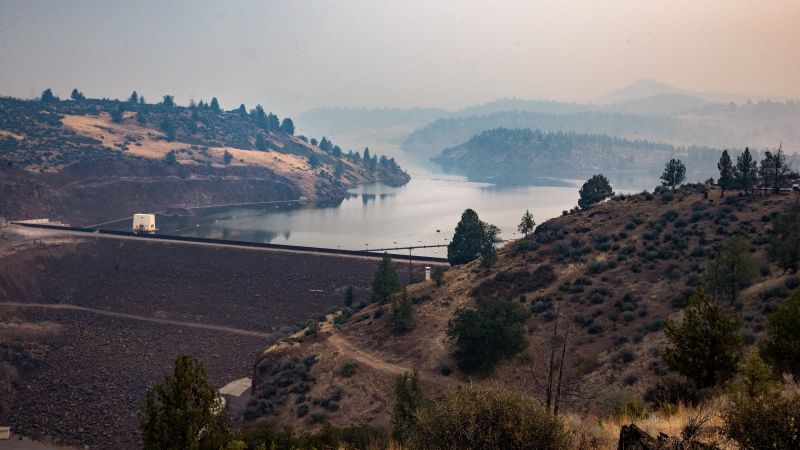
On California’s Klamath River, the largest dam removal project in U.S. history will be completed in 2024, reopening hundreds of miles of migratory fish habitat. In Washington’s Elwha River, early dam removal restored sediment flow and triggered the return of fish and vegetation after more than a century of disruption. While much work is still being done in Europe to remove much smaller structures such as low weirs, culverts and aging hydropower barriers, experts say their cumulative impact is growing.
“There are more than a million barriers in Europe,” Ortigara said. “Cutting a few hundred jobs each year is a start, but it’s not enough.”
Experts say success will depend on restoring entire rivers and basins, working closely with local communities, and ensuring that once the connections are restored, they are maintained over the long term. “The real challenge now is to implement at scale and in a strategic way,” the European Environment Agency said.
“When a river is alive, it makes sounds,” Ortigara said. “You can hear the water flowing down the rocks. You can see plants growing around it. This is the flow of life.”
Across Europe, that sound is starting to return.
