

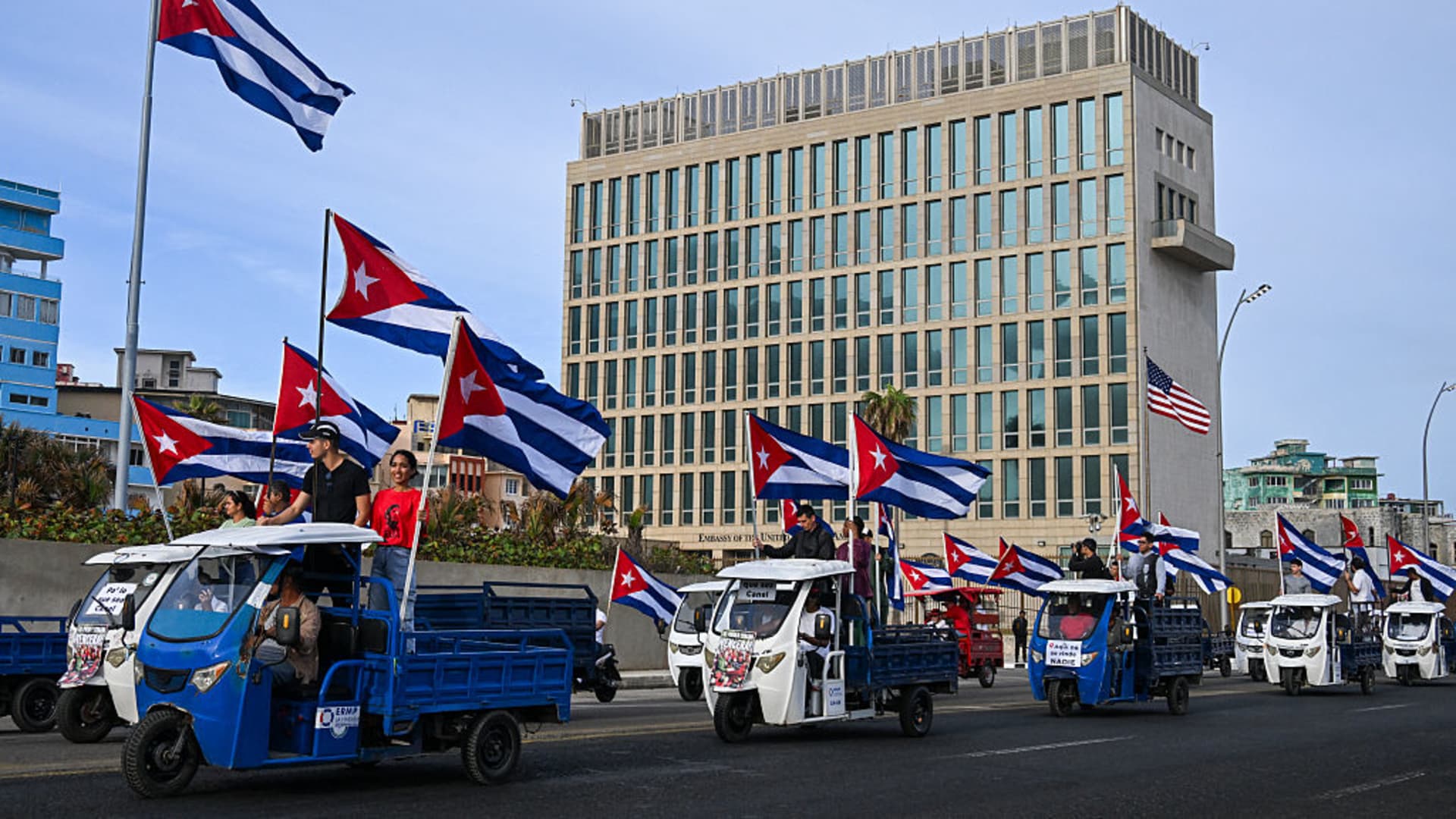
Cubans riding motorized tricycles decorated with the Cuban flag pass by the U.S. Embassy during the Anti-Imperialist Youth March in Havana on April 2, 2026.
Yamil Raji | AFP | Getty Images
The United States reiterated its offer of aid to Cuba in exchange for “fundamental changes” to the communist political system after CIA Director John Ratcliffe visited the Caribbean island nation on Thursday.
Ratcliffe’s visit is believed to be the second time a U.S. intelligence chief has visited the country since the country’s 1959 communist revolution.
According to Reuters, the CIA director said in a message to leading Cuban lawmakers that Washington would “engage seriously” with the Cuban government, but “only if we make fundamental changes.”
On Thursday, the CIA posted a photo of Ratcliffe in the Cuban capital Havana on social media without any context.
CNBC has reached out to the CIA for comment.
The Cuban government said in a statement that during Thursday’s meeting, “both sides … emphasized their interest in developing bilateral cooperation between law enforcement agencies in the interests of the safety of both countries and regional and international security.”
Separately, CNN reported that the US military has conducted dozens of intelligence gathering flights near Cuba’s largest city since February.
Cuba is located approximately 160 miles off the coast of Florida. The Trump administration called the Cuban government an “unusual and extraordinary threat” and suggested the White House could turn its attention to Cuba once the Iran war ends.
The country was heavily dependent on oil imports from Venezuela, but the communist-ruled Caribbean island has been effectively cut off since early January by a U.S. military operation to remove Venezuelan President Nicolas Maduro. The White House has also imposed new sanctions against a number of Cuban officials and organizations in recent weeks.
Protests have erupted in Havana as the oil blockade drags on, leaving Cubans without power for up to 22 hours. On Wednesday, Cuba’s energy minister, Vicente de la O Levi, told state media that the country was running out of fuel oil and diesel and had no reserves.
The Cuban government has long condemned the U.S. blockade of the island, insisting it poses no threat to U.S. national security.
The U.S. State Department announced Wednesday that it stands ready to provide $100 million in aid to Cuba, adding that the U.S. government “continues to seek meaningful reforms to Cuba’s communist regime.”
“It is up to the Cuban regime to accept our offer of assistance or deny critical life-saving aid, and ultimately it will be held accountable to the Cuban people it stands in the way of critical assistance,” the statement said.
