

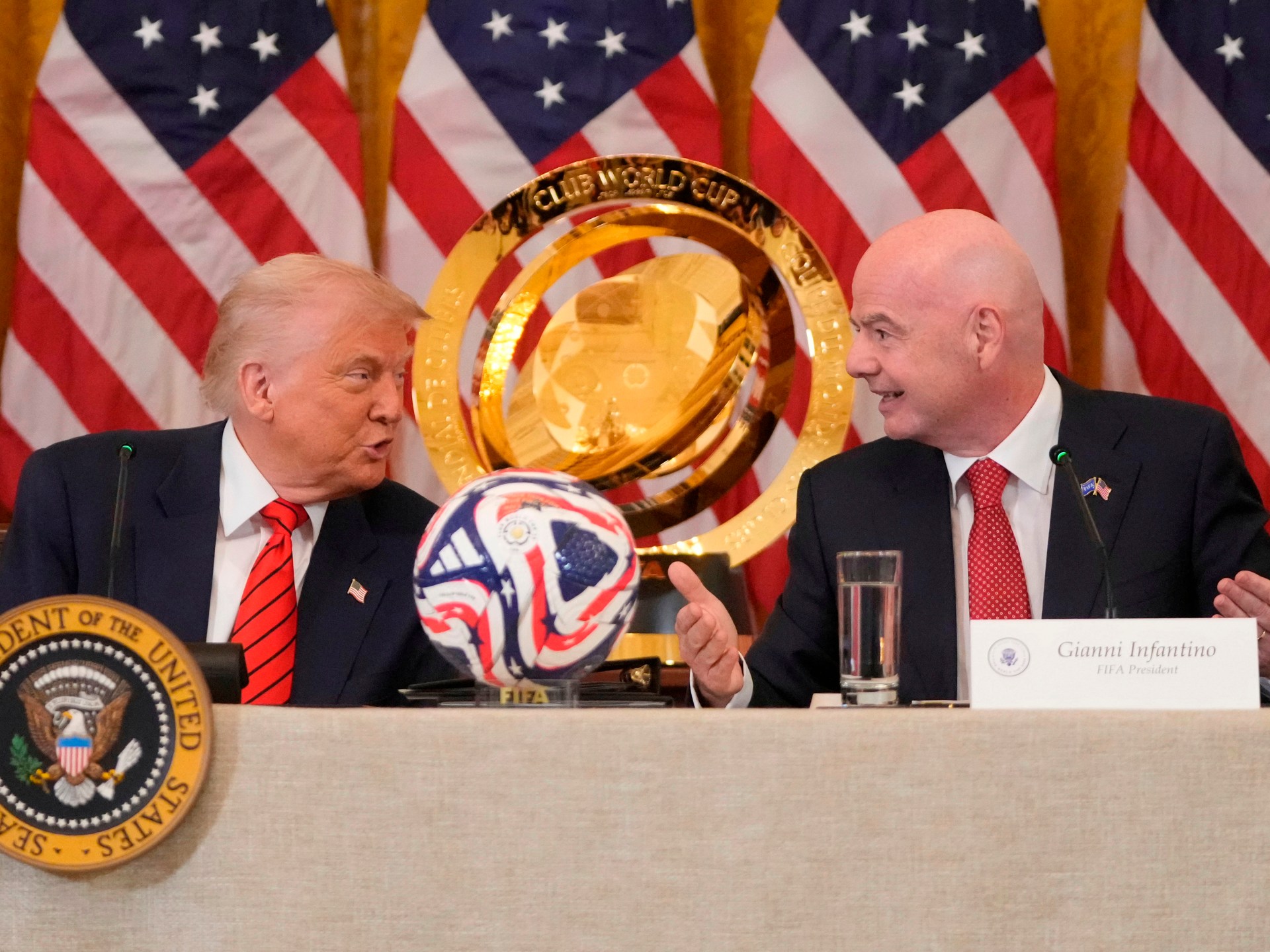
The Trump administration’s visa guarantee program had raised concerns about rising costs for World Cup travelers to the United States.
Published May 13, 2026
WASHINGTON, DC – The United States has announced it will waive the high visa deposits imposed on World Cup ticket holders by President Donald Trump’s administration.
Wednesday’s announcement followed concerns that some international travelers to the 2026 FIFA World Cup could be forced to pay deposits of between $5,000 and $15,000, adding to the already prohibitive cost of attending soccer matches.
Recommended stories
list of 3 itemsend of list
under policy The system, launched in August last year, required citizens of 50 countries to obtain bonds by issuing them. US temporary visa. Refunds will be issued after the visitor leaves the United States.
Molla Namdar, the U.S. assistant secretary of state for consular affairs, said in a statement to Al Jazeera that the administration is “waiving visa deposits for eligible fans who purchase World Cup tickets and opt-in to FIFA PASS as of April 15, 2026.”
She referred to a previously announced program to speed up visa processing in the run-up to the World Cup. The administration had also previously waived bond requirements for “eligible team members, including players, coaches, and support staff who meet all requirements for entry into the United States,” Namdar added.
“We remain committed to strengthening America’s national security priorities while facilitating legal travel for the upcoming World Cup tournament,” she said.
The US State Department added that ticketed visitors will continue to be subject to regular visa checks.
At least five countries participating in the World Cup – Algeria, Cape Verde, Ivory Coast, Senegal and Tunisia – will be subject to the visa deposit policy.
The State Department said the event is expected to draw up to 10 million visitors in the United States. Games will begin on June 11th in cities across the United States, Mexico and Canada.
Concerns about immigration restrictions
Critics say the Trump administration’s hardline policies on legal immigration and deportations run counter to FIFA president Gianni Infantino’s pledge that the upcoming World Cup will be the most inclusive in history.
Beyond visa guarantees, at least 39 countries remain subject to broad travel bans. This includes competitors Iran and Haiti. Two other competing countries, Ivory Coast and Senegal, are subject to partial travel bans.
Rights groups have also raised concerns about the role of Immigration and Customs Enforcement (ICE) in World Cup matches to be held in the United States. The Department of Homeland Security told U.S. media that it is working with “local and federal partners” to provide security.
In April, the American Civil Liberties Union (ACLU) and Amnesty International led a group of organizations in issuing a “travel advisory” for the United States during the World Cup, pointing to the “deteriorating human rights situation in the United States” and the “lack of meaningful action and concrete assurances from FIFA, the host city, and the U.S. government.”
The report noted several areas of concern, including “increased restrictions and restrictions on travel to and entry into the United States.”
The warning also cited “violent and unconstitutional immigration enforcement, including racial profiling and other forms of discrimination by law enforcement.”
At the time, the White House press secretary dismissed the warning as a “ridiculous fear tactic by liberal activist groups and left-wing media.”
