

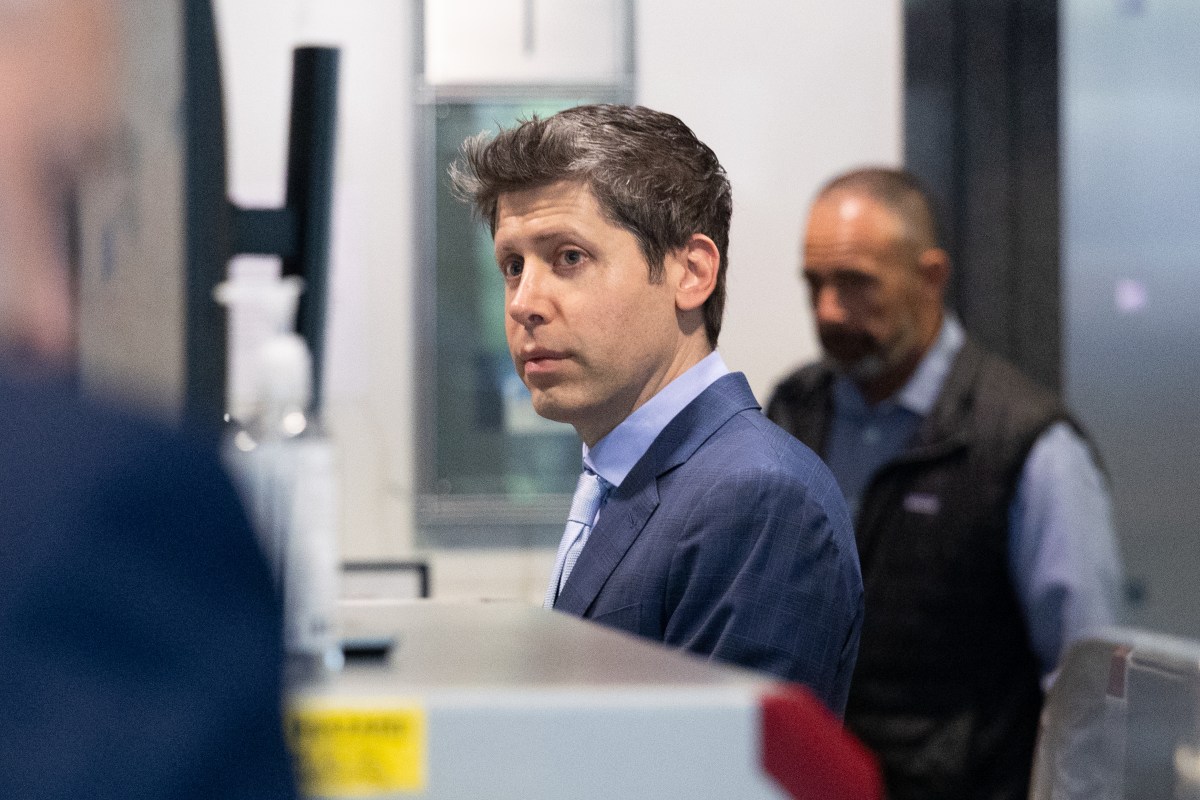
In May 2023, OpenAI CEO Sam Altman was sworn in and testified before Congress on the regulation of artificial intelligence. Sen. John Kennedy of Louisiana heard his thoughts on licensing advanced models and asked if Altman might be qualified to run a hypothetical AI regulator.
“I love what I do now,” Altman said with a laugh.
“You make a lot of money, right?” Kennedy asked him.
“No, I get paid enough for my health insurance. I don’t have any OpenAI stock,” Altman declared.
“I need a lawyer,” Kennedy replied.
Mr. Altman now has a number of lawyers who have watched their client endure chilling questioning and were sworn in Tuesday in federal court in California. They were investigating much the same issues as Kennedy. Is Altman qualified to control cutting-edge AI models?
“You didn’t reveal to the U.S. Senate that you had an interest in OpenAI through a stake in the Y Combinator fund, did you?” barked Steve Moro, the combative lawyer who led Elon Musk’s effort to shut down OpenAI’s commercial operation.
Mr. Altman acknowledged that he was financially involved in OpenAI through an LP position in the Y Combinator fund. “I didn’t mention it in my testimony, but again, I think there’s a good understanding of what it means to be a passive owner of a lot of venture funds,” Altman said.
“When Sen. Kennedy asked you that question, did you think he was a very sophisticated investor?” Moro replied.
Altman’s decision to volunteer that he had no capital, when he could have avoided the question, was interesting. While that’s technically true, Altman, who emphasized his expertise investing in early-stage startups, certainly understood that he had financial exposure to OpenAI through investments in Y Combinator and other AI companies that worked with OpenAI.
Mr. Altman’s credibility, at least in the eyes of the plaintiffs, was at stake on Tuesday. OpenAI’s lawyers argued that little was being done to advance Musk’s case and accused their opponent of character assassination. But jurors and Judge Yvonne Gonzalez Rogers are weighing Altman’s credibility as a central figure in the case they are investigating.
Mr. Moro investigated a series of people who accused Mr. Altman of lying or misleading. These include accusations made under oath in court by former OpenAI board members Helen Toner and Tasha McCauley, Elon Musk, and OpenAI co-founder Ilya Sutskeva. He also brought up a recent New Yorker article detailing concerns about his honesty.
The OpenAI board’s “miscommunication” when it temporarily fired Altman and removed OpenAI president Greg Brockman as chairman of the board for not being candid was a key topic of discussion in the case. Mr. Toner and Mr. McCauley, who were executives at the time, testified that Mr. Altman misled them, with Mr. McCauley citing a “pernicious culture of lies.”
“I doubt that was the entire reason for his dismissal,” Altman said. Asked again to acknowledge that the Altman board said he had not been upfront with them, Altman replied, “They asked me to come back the next morning.”
The focus of his firing is not just on questioning Altman’s credibility. One of the key issues in this case is whether OpenAI’s structure is fulfilling its mission, and specifically whether the nonprofit board can exercise real control over the for-profit organization. From the perspective of Mr. Musk’s lawyers, the 2023 episode presents evidence that Mr. Altman’s influence over the company exceeded that of the board of directors.
Witnesses brought in by OpenAI and Microsoft argued that the current nonprofit board exercises control over the for-profit organization. Microsoft CEO Satya Nadella called Altman’s firing “amateur city.”
Brett Taylor, who joined OpenAI’s board as chairman after Mr. Altman’s rehiring, said he found nothing to warrant firing him and that Mr. Altman had been “straightforward with me.” Dr. Zeko Kolter, an OpenAI board member who specializes in AI safety, said no one had interfered with the effort since it started in 2024.
However, Taylor also made it clear that the company chose to rehire Altman in 2023 because his departure would effectively mean the end of OpenAI as a going concern, and that most of the company’s employees intend to follow Altman’s lead. Now, when juries and judges consider whether the current structure is fulfilling the organization’s mission, they will wonder whether the board can really fire or discipline the CEO.
Asked if he had any intention of firing the CEO, Altman said he had no intention of doing so. When asked if he could be trusted, he replied, “I think I’m an honest and trustworthy businessman.”
If you buy through links in our articles, we may earn a small commission. This does not affect editorial independence.
