

Tenerife, Canary Islands —
Starting around 8 a.m. this morning, small boats carrying passengers from the MV Hondius to the coast were plying back and forth.
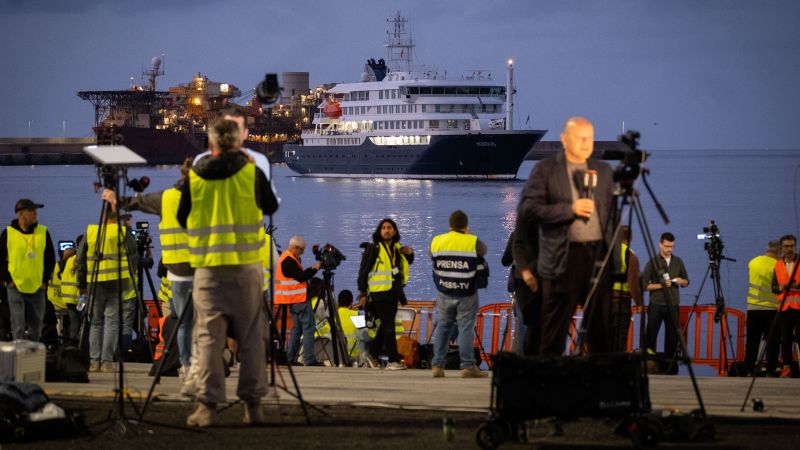
Parked not far from the port of Granadilla, the 100 or so journalists watched a steady and carefully orchestrated ballet as the boat carried five passengers at a time to the port that finally agreed to accept them. This followed five weeks at sea and nearly 10 days of anxiety and fear after the Andean strain of hantavirus was identified on board.
Spanish health authorities had reassured local residents that those disembarking the ship would only encounter military and medical personnel who had gathered here to take them on their flights home. And so far, that has proven to be the case. From the CNN post, tents were visible where passengers were guided by people in full protective gear — a scene reminiscent of the coronavirus era.

In a message to the people of Tenerife, World Health Organization Director-General Dr. Tedros Adhanom Ghebreyesus acknowledged on Saturday that six years since the start of the pandemic, fear is natural for all of us.
But this is not the case, he explained.
Since this outbreak began, the organization has been studying how this strain of hantavirus behaves, piece by piece. On Sunday, one of the WHO epidemiologists at the port told CNN that the virus appears to only spread to people who have had very close contact with someone who is showing symptoms. So far, it’s very different from Covid.
Still, judging by the size of the press corps gathered today at the tiny port of Granadilla on Tenerife’s southern tip, the fears were genuine.
Not only journalists from the American network were present, but also from many European countries, judging by the languages spoken. The cruise had 23 nationalities on board, and what was supposed to be a once-in-a-lifetime trip to St. Helena Island in the South Atlantic, where Napoleon died, as well as penguin colonies in Antarctica, turned into hell. The fact that so many journalists came shows how anxious people are.

That is why the sense of relief felt by everyone in Granadilla Port today is so real. The authorities have ensured that the process is not only thorough but also transparent, allowing media access very close to the process.
Given the attention Hondius has received so far, the journalists here this morning must certainly have felt a sense of relief. After more than five weeks on board, some passengers have finally returned to land. One trial is over.
Currently, each country has its own protocols in place, but all Hondius passengers face the next step: quarantine and isolation for at least six weeks.
Life may not be back to normal, but at least we can live on dry land again. And I hope things get back to normal soon.
