

Published May 6, 2026
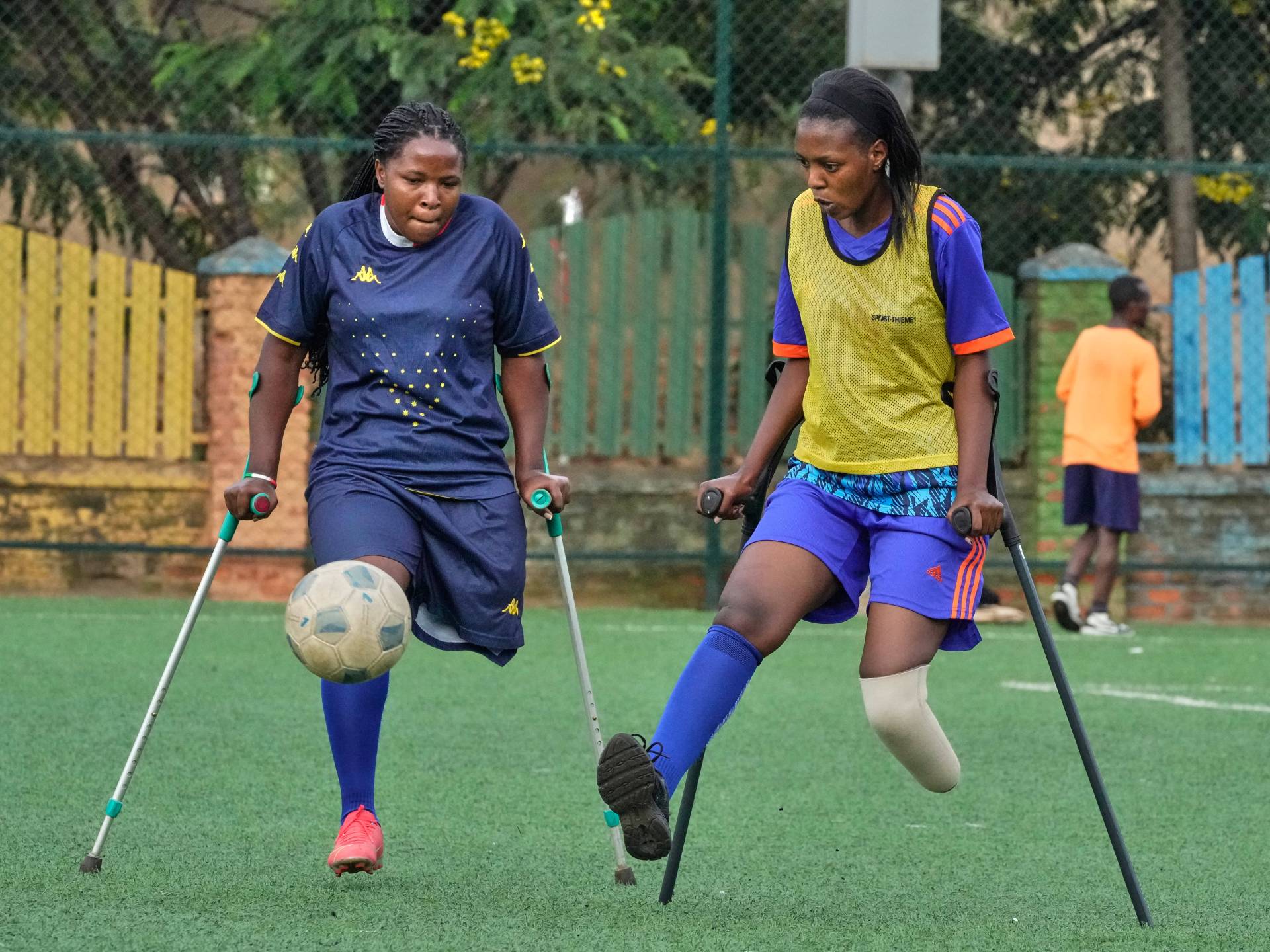
The players chased their big dreams of playing soccer and competing at the world level, each on crutches. The children cheered as the goalkeeper dove in and blocked the attempt with his remaining hand.
Amputee football, in which players walk around the field on crutches and goalkeepers play with one arm, has grown steadily in Rwanda over the past decade. The players say they took up a sport they never imagined they could play and found community on the field.
For many, it provides not only physical rehabilitation but also a sense of belonging.
In the capital, Kigali, amputees play to promote healing and social cohesion after trauma, including some of the country’s darkest moments. In the 1994 genocide, approximately 800,000 Tutsis and moderate Hutus were slaughtered by the Hutu majority over a period of 100 days.
Nyiraneza Solange was born two years after the massacre and lost the use of one of her legs at the age of five after falling and contracting an infection. She said she was drawn to Amputee Football because of the resilience shown by those who lost limbs in the genocide.
She was encouraged by the former coach of the country’s first amputee soccer team, who told her she could play using crutches. She quickly cast aside her fear.
“I never thought about not having a leg,” Solange said, explaining that she felt free while playing and overcame the stigma associated with being an amputee.
It is estimated that there are more than 3,000 lower limb amputees in Rwanda. Some are victims of genocide. Some people survived car accidents or illnesses.
Louise Kwizera, vice-president of the Rwanda Amputee Football Federation, said the sport allows players to learn to trust again and build unity in a “once divided” society.
“In communities affected by conflict and trauma, the stadium becomes a place of peace. People with different pasts come together as teammates,” Kwizera told The Associated Press.
