

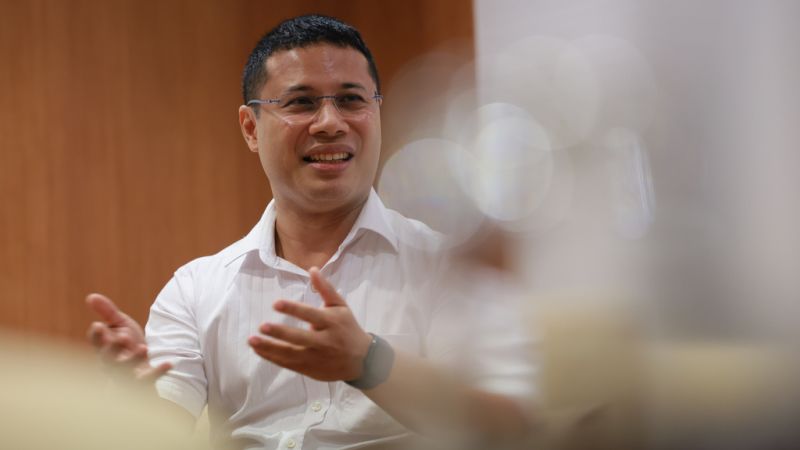
Singapore’s Education Minister has confirmed that teachers are now allowed to use caning to discipline unruly students in certain cases.
“Given the seriousness of the misconduct, our schools are using caning as a disciplinary measure,” Desmond Lee told parliament on Tuesday, in response to a question about new anti-bullying measures announced on April 15. These included questions about the mental health effects of caning a nine-year-old child.
“We follow strict protocols to ensure student safety. For example, caning must be approved by the principal and only carried out by authorized teachers,” he told MPs.The new framework will be rolled out across Singapore’s schools from 2027.
“Schools will consider factors such as the student’s maturity level and whether caning will help the student learn from his mistakes and understand the seriousness of his actions,” Professor Lee said.
“The school will exercise its discretion as to whether to administer caning as a disciplinary result after assessing the circumstances of the offense committed,” he added.
“This approach is based on research showing that children and young people learn to make better choices when there are clear boundaries enforced by firm and meaningful consequences,” Lee said, arguing that it helps reduce bullying.
Guidelines posted on the Ministry of Education’s website specify that only boys can be punished with the cane.
“Caning is a disciplinary option reserved for juveniles and is used as a last resort when absolutely necessary for serious offences,” the report said.
In recent decades, corporal punishment in schools has become increasingly rare in many parts of the world.
However, the World Health Organization (WHO) estimates that between a quarter and half of children worldwide experience corporal punishment at school, and has called for an end to the practice.
“The effects of corporal punishment in children can last a lifetime and impair physical and mental health, education, social and occupational functioning,” the WHO said in a report published in August 2025.
“There is now overwhelming scientific evidence that corporal punishment of children carries a wide range of risks of harm and has no benefit for children, parents or society,” it added.
Singapore is a small, highly developed and wealthy financial hub in Southeast Asia, well known for its strict laws.
In late April, a French teenager was indicted on two charges, punishable by up to two years in prison, for allegedly licking a straw from an orange juice vending machine and then returning the straw to the dispenser.
This is not the first time foreign teenagers have fallen foul of Singapore’s strict laws.
One of the most high-profile cases occurred in 1993 when American Michael Fay was arrested on charges of possessing stolen property and vandalizing several cars with spray paint.
Fay, then 18, was sentenced to four months in prison and six strokes of the cane, but the sentence was commuted to four after the incident caused an international uproar and then-US President Bill Clinton intervened.
Singapore insisted that it was important for even foreigners to abide by its own laws, and carried out the flogging despite strong pressure from the United States, which temporarily strained relations between the United States and Singapore.
