

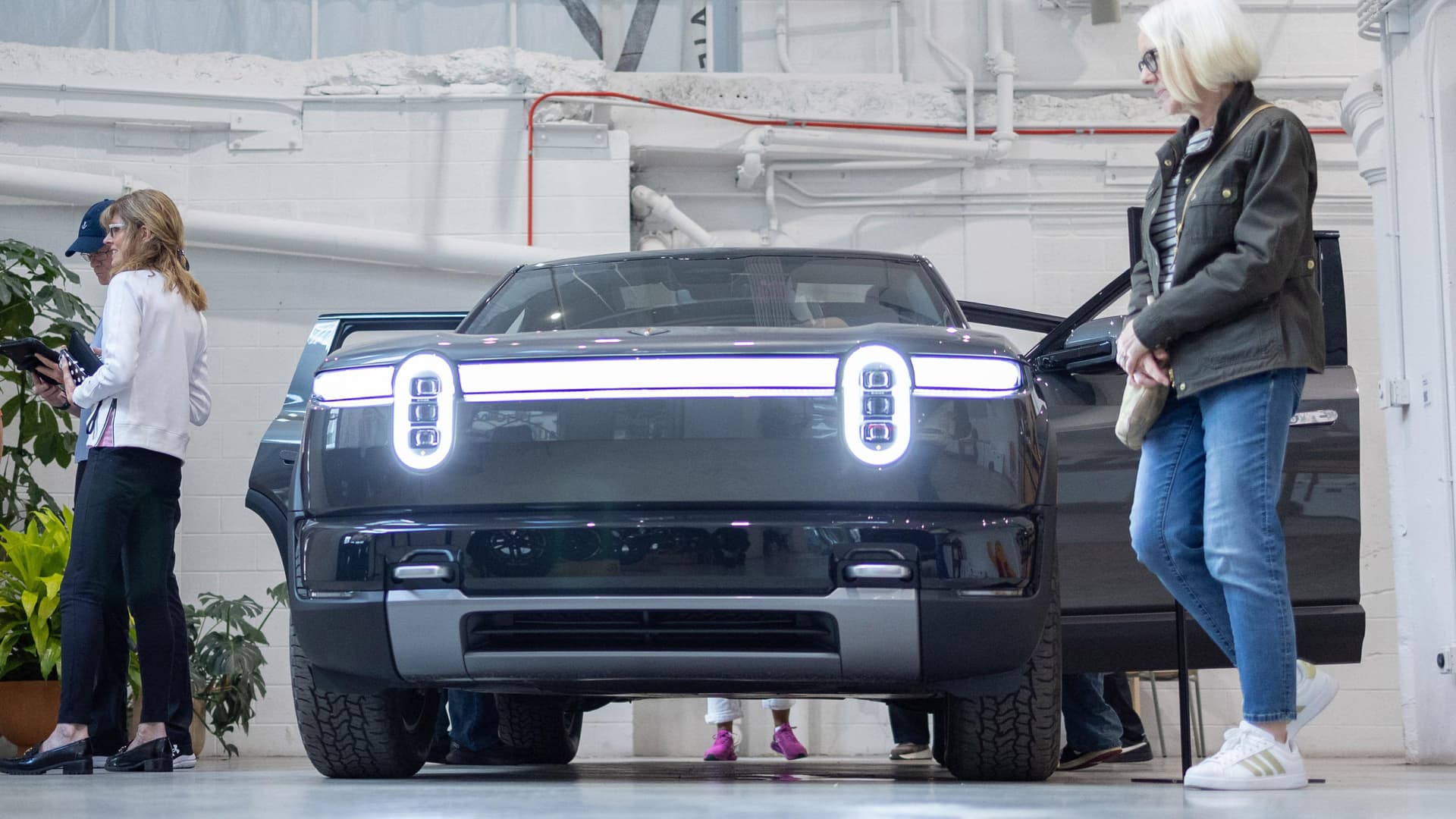

Rivian Automotive announced Thursday that it is renegotiating a $6.57 billion loan from the U.S. Department of Energy to $4.5 billion and adjusting production projections at a plant it is building in Georgia.
The DOE loan was previously scheduled to support two stages of production totaling 400,000 units per year. The company announced Thursday that the revised loan will cover one phase of production with a total production capacity of 300,000 units.
The changes will allow Rivian to access financing sooner and increase initial production, but will reduce the factory’s total production capacity amid uncertain demand for all-electric vehicles.
The terms of the initial loan were negotiated under the Biden administration. The company was at a standstill under the Trump administration, which cut back on these loans and withdrew government investment to promote EVs.
Rivian said it plans to utilize the loan in 2027, a year earlier than previously planned. The company also said production of its next electric vehicle, the R2, is scheduled to begin at the facility in late 2028, following the recent start of production at its current facility in Normal, Illinois.
Rivian CEO RJ Scaringe told CNBC’s Phil LeBeau on Thursday that the company will fund future expansions at the Georgia plant. volkswagen and Uber.
The EV maker announced new financing details in conjunction with its first-quarter results, which included a net loss of $416 million, or 33 cents per share, down from a loss of $541 million, or 48 cents per share, a year ago. This per share result did not match Wall Street expectations.
Rivian’s revenue for the quarter was $1.38 billion, up from $1.24 billion in the year-ago period and slightly ahead of analysts’ expectations of $1.36 billion, according to LSEG.
The company’s gross profit, which investors are watching closely, was $119 million, down $87 million in the first quarter from a year earlier. Of this amount, the Automotive division had a loss of $62 million, and the Software and Services division had a profit of $181 million.
Rivian said the decline in auto profits was primarily due to a $100 million decline in auto regulatory credit sales and lower production volumes.
