

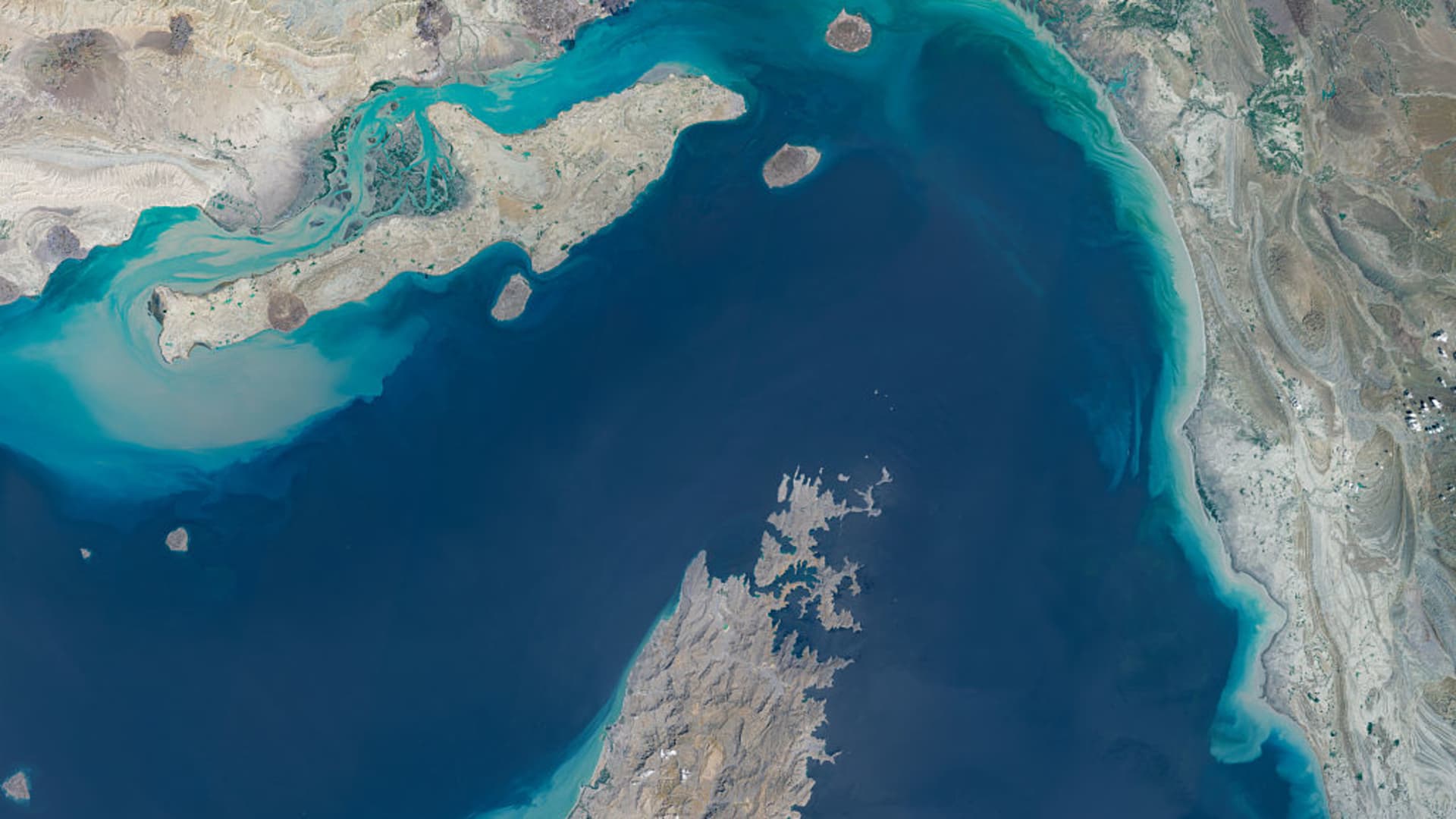

Oil tankers remain on alert navigating the Strait of Hormuz after Iran declared it would open its sea lanes to commercial ships on Friday, video footage showed.
Oil futures contracts fell on Friday as markets interpreted the Iranian government’s announcement as a major step forward in easing major disruptions to global energy supplies. US benchmark, west texas intermediate crude oil It fell 12% on Friday to $83.85 per barrel. brent crude oil futures It ended the day down 9%.
But statements from Iranian officials and President Donald Trump have created confusion about whether the strait is truly open.
Iranian Foreign Minister Seyyed Abbas Araghchi initially said the strait would be “fully open” for the remainder of the ceasefire between the United States and Israel. But Iranian media aligned with the Revolutionary Guards issued conditions for safe passage similar to rules the Iranian government has imposed for weeks.
“False Dawn”
Matt Smith, Kpler’s director of commodity research, said a number of tankers and cargo ships on Friday attempted to exit the strait via an Iranian-designated route around Larak Island, but suddenly turned back.
“It’s clearly not cleared for passage,” Smith said.
Sources close to Iran’s Supreme National Security Council told Tasnim News that commercial vessels must follow routes specified by the Iranian government and coordinate with the Iranian military. According to Tasnim’s report, vessels will not be allowed to pass if the vessel or its cargo has ties to a hostile country.
“It’s unclear whether there’s going to be a dramatic change here,” said Tomer Raanan, maritime risk analyst at Lloyd’s List Intelligence. “Iran still wants ships to pass through its territorial waters.”
Meanwhile, President Trump said the US naval blockade against Iran remains in place. Tehran threatened to close the strait if the blockade was not lifted.
All of this means the strait remains functionally closed, said Matthew Wright, senior cargo analyst at Kpler. “It’s a false dawn,” Wright said.
“Not declared safe”
BIMCO, the world’s largest shipping association, on Friday advised ships to avoid the strait due to the threat of mines. BIMCO’s chief security officer, Jakob Larsen, said the area was “not declared road safe at this time”.
A diplomatic deal between the US and Iran can calm oil futures markets, but it cannot resolve the physical disruption to energy supplies. If the strait remains closed, the chaos will only worsen by the day.
The last oil and product tankers to leave the Persian Gulf before the strait closed completed weeks-long journeys to destinations in Asia, Europe and North America.
One of the final shipments will be a tanker of Iraqi crude oil scheduled to arrive in Long Beach, Calif., next week, said Wright, the Kpler cargo analyst.
Mr Smith said the domino effect would start falling as oil stopped coming from the Straits. Asian refineries that rely heavily on Middle Eastern oil will have to cut production, he said. This means countries that import products such as jet fuel from Asian refineries could face supply shortages, he said.
“The supply shortage in Asia is bigger than anywhere else,” Wright said. “They’ve already drawn down their domestic inventory significantly.”
Mr Wright said it would take several months for traffic in the Straits to return to normal. Big shipping companies will likely sit on the sidelines and watch before the first movers jump in, he said.
Correction: This article has been corrected to reflect that Tomer Raanan is a maritime risk analyst at Lloyd’s List Intelligence. In the previous version, Raanan’s name was misspelled.
