

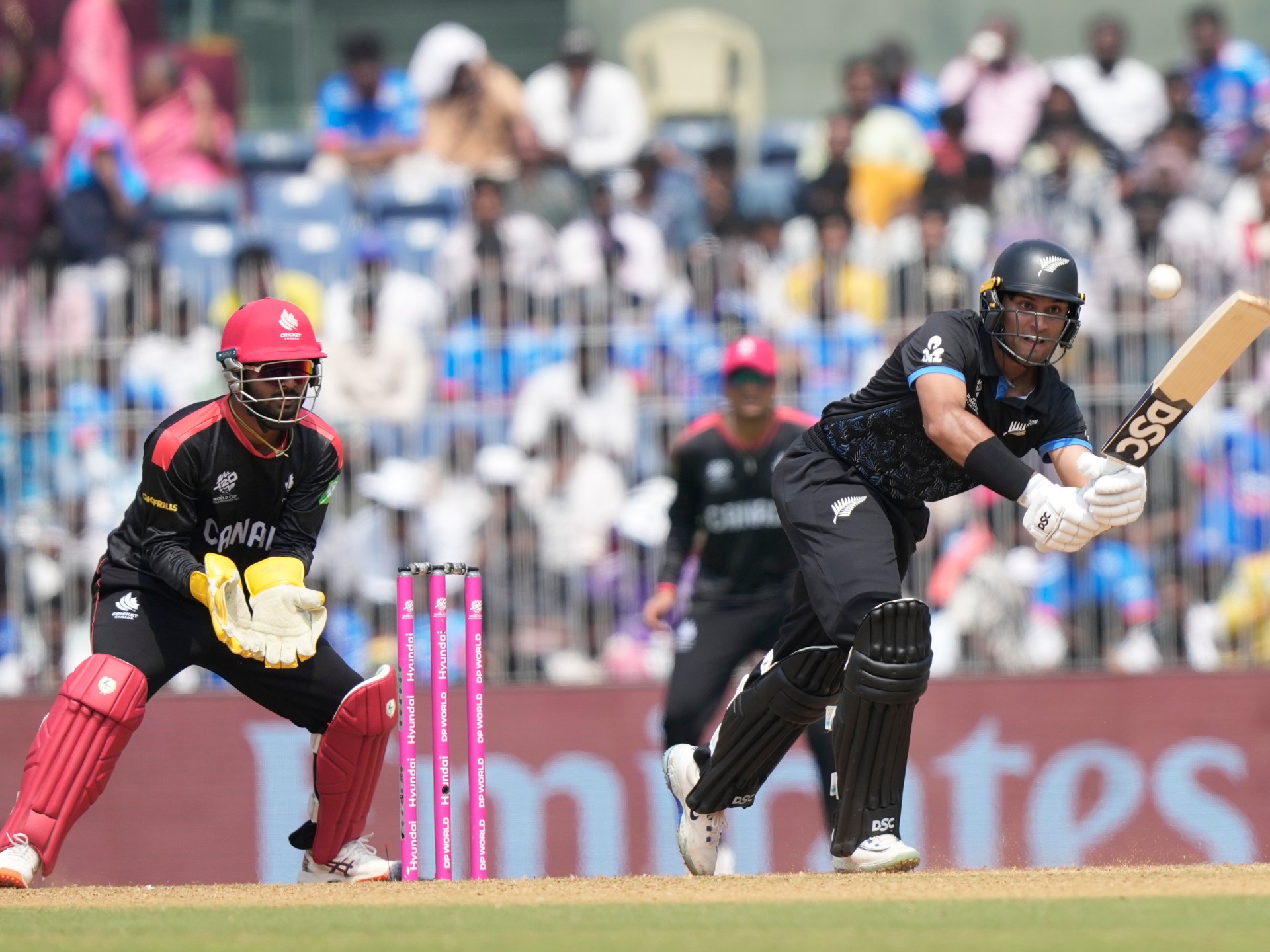
Corruption allegations against the country’s cricket establishment surface during the T20 World Cup match between Canada and New Zealand.
Published April 17, 2026
The International Cricket Council (ICC) is investigating Cricket Canada over allegations of match corruption, including the team’s loss to New Zealand in the recent T20 World Cup hosted by India and Sri Lanka.
The match in Chennai, which Canada lost by eight wickets, has come under intense scrutiny after allegations of corruption were highlighted in a documentary aired by the Canadian Broadcasting Corporation (CBC) on Thursday.
Recommended stories
list of 4 itemsend of list
“The ACU (Anti-Corruption Unit) is aware of the program aired by CBC,” Andrew Ephgrave, interim general manager of the ICC’s integrity unit, said in a statement.
The public broadcaster’s documentary made widespread accusations of corruption and poor governance at Cricket Canada.
According to the ESPN Cricinfo website, suspicions are focused on the fifth over of the match against Chennai that was bowled by captain Dilpreet Bajwa during New Zealand’s chase.
He started with no balls, bowled wide and ended up conceding 15 runs in his overs.
Canada scored 173 for four wickets in 20 overs, while New Zealand scored 176 for two wickets in 15.1 overs.
Cricket’s world governing body, the ICC, is also investigating a phone call from Canada’s then-coach Khurram Chauhan in which he claimed he was pressured by senior Cricket Canada directors to select certain players.
“Governance issues relating to ICC member states, where they fall under the ICC’s jurisdiction, will be considered by the ICC in accordance with the ICC’s standard constitutional procedures,” Efgrave said.
Cricket Canada said it is treating the issue with “extreme importance.”
“Recent promotional materials allude to allegations related to organized crime and match-fixing. Cricket Canada takes this matter very seriously,” the group said on its website.
“When issues are raised, we are committed to responsibly reviewing them and taking appropriate action where appropriate.”
