

The lives of millions of people across the Middle East and the fate of the global economy depend on the outcome of the make-or-break negotiations between the United States and Iran in Pakistan this weekend.
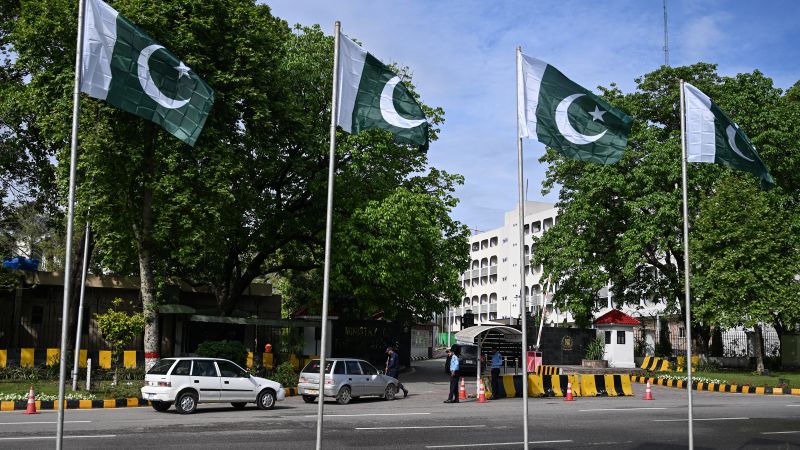
Tight security was declared for the arrival of US and Iranian delegations for the first talks since the start of the war, and the streets of the capital Islamabad were empty during the sudden two-day holiday.
A fragile two-week ceasefire that paved the way for talks has so far remained in place. But talks could still derail due to Israel’s heavy and deadly shelling of Hezbollah and disagreements over whether Lebanon should be included in the cease-fire agreement.
Here’s what we know:
Talks between Iran and the United States are scheduled to begin Saturday morning local time in Islamabad, the White House said.
The U.S. delegation will be led by Vice President J.D. Vance, Special Envoy Steve Witkoff, and Jared Kushner, President Donald Trump’s son-in-law.

Tehran has not officially announced its delegation, but some local media reports say it will be led by Mohammad Bagher Ghalibaf, speaker of Iran’s parliament. Ghalibaf, a regime insider with a reputation for suppressing dissent, has emerged as a key interlocutor with the Trump administration throughout the war. In recent weeks, a number of Iranian leaders have been killed in US and Israeli attacks.
Coordinating an agenda for talks may be difficult, given that the two sides are unlikely to be able to agree on the terms of a ceasefire.
President Trump listed “10 proposals from Iran,” which he said were “a viable basis for negotiations.”
But then Iran began sharing a 10-point list of demands that the United States could never agree to, including recognition of control of the Strait of Hormuz, compensation for war damage, and the lifting of all sanctions. Other versions published in state media included recognition of the country’s right to nuclear enrichment.
White House press secretary Caroline Levitt said Trump was referring to another 10-point plan that was “more reasonable.”
Meanwhile, Trump and his team have their own 15-point proposal. The full details of the plan have not been disclosed, but it is said to include a commitment by Iran to ban nuclear weapons, hand over highly enriched uranium, limit Tehran’s defense capabilities and reopen the Strait of Hormuz.
The key question now is whether the talks will produce any compromise or whether they will collapse and restart the war that has already devastated parts of the Middle East and sparked a historic global oil crisis.
Lebanon’s participation in the ceasefire is an ongoing issue that risks upending talks over the weekend.
Iran has repeatedly said the ceasefire would also cover attacks against Iran’s Lebanon-based Hezbollah proxy group, echoing the position of Pakistan, which helped broker the deal. However, Israel and the United States say the ceasefire does not include Lebanon.
On Wednesday, just hours after the ceasefire took effect, Israel launched its largest attack in Lebanon since the war began, storming a busy city without warning, killing at least 303 people and wounding more than 1,000, according to the Lebanese Health Ministry.

The attack quickly sparked a global backlash and anger from Iran. Iranian Parliament Speaker Ghalibaf said Thursday that Lebanese and Iranian proxies form “an inseparable part of the ceasefire” and that “time is running out.”
Criticism of Israel has also poured in from around the world, including from Europe and the Gulf states, which feared the ceasefire would break before talks began.
Vance said there was a “legitimate misunderstanding” about Lebanon’s participation in the ceasefire. He also said Israelis might “check themselves a little bit” about the ongoing attacks.
According to the White House, part of the deal was also to reopen a vital waterway that has wreaked havoc on global oil markets and been effectively shut down by Iran for weeks.
But since the ceasefire, only a handful of ships have been able to pass through the difficult area. Hundreds of ships with thousands of crew members remain stranded in the Persian Gulf.
Iran has suspended tanker traffic through the Strait of Hormuz after Israel attacked Lebanon, the semi-state news agency Fars reported. Mohammad Berger Ghalibaf, the speaker of Iran’s parliament, emphasized this stance, saying, “Violations of the ceasefire will have clear costs and strong responses.”
Vance reiterated Thursday that the ceasefire will end if Iran does not fulfill its promise to reopen the strait. President Trump also warned Iran not to impose fees on oil tankers plying its main shipping lanes.

Despite the confusion, U.S. officials were moving quickly Thursday to prepare for negotiations, a person familiar with the matter told CNN.
If Iran chooses to withdraw, “that would be foolish, but that’s their choice,” Vance said.
Despite the differences, President Trump told NBC he was “very optimistic” about a peace agreement at this weekend’s talks in Islamabad and said Iranian leaders appeared open to peace in private talks.
“They’re much more reasonable,” he told NBC. “They agree on everything there is to agree on. Remember, they were conquered. They don’t have an army.”
Iran’s public message is markedly different, with state media claiming the country has survived the US and Israeli onslaught and has won a major victory by bringing the US to the negotiating table.
And even if negotiations progress, it is difficult to say whether the rift between the two countries will be bridged over the weekend in Pakistan.
The weekend talks are expected to be the first of several intense negotiations over a long-term, lasting agreement to end the war, according to people familiar with the ceasefire negotiations.
