

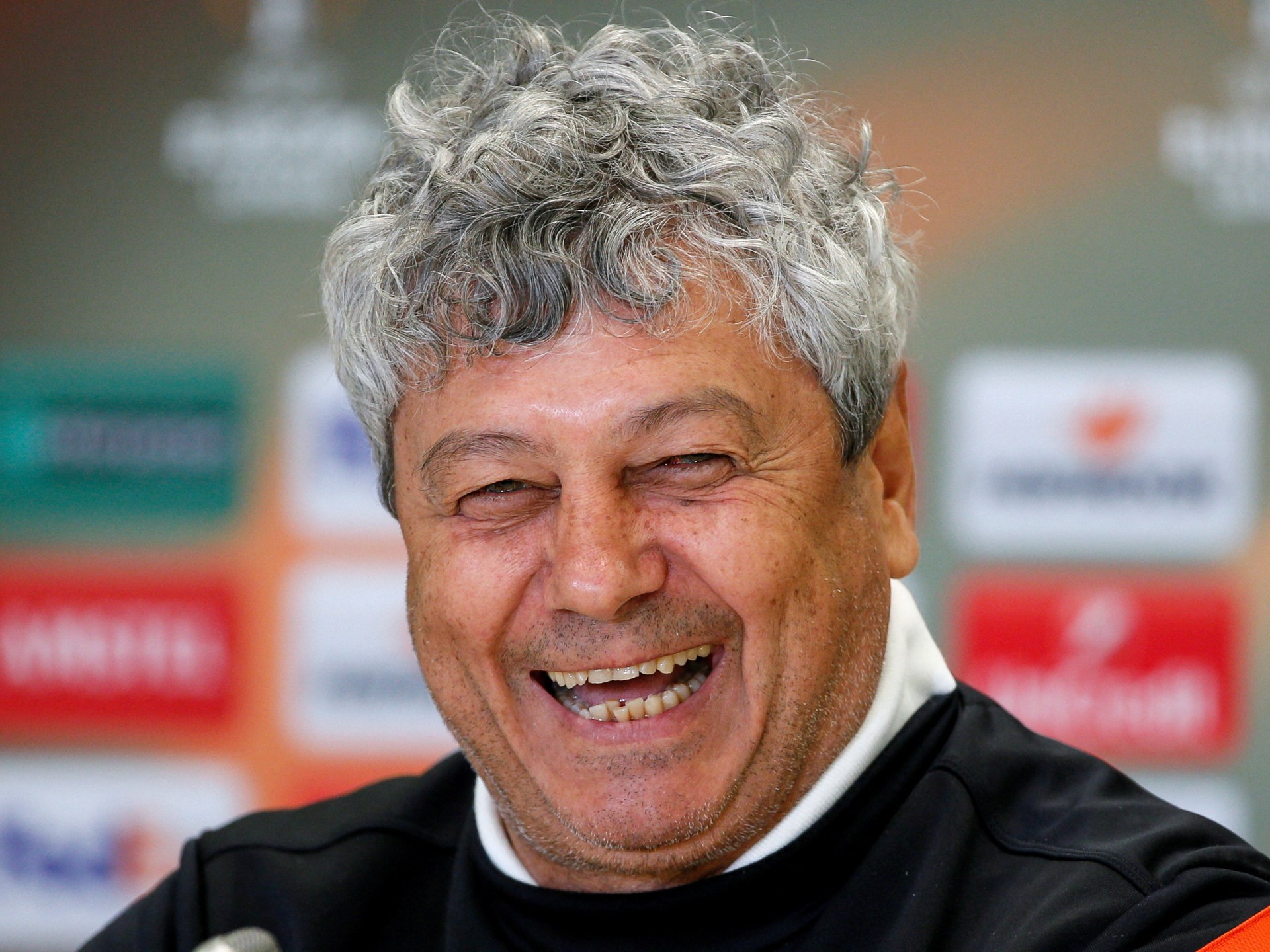
Mircea Lucescu, one of Romania’s greatest soccer players, who won numerous trophies both as a player and as a coach, has died at the age of 80.
Lucescu’s death was confirmed by the Bucharest University Emergency Hospital on Tuesday, and he was admitted to the hospital on Friday morning after reportedly suffering a heart attack.
“Mircea Lucescu was one of the most successful Romanian football coaches and players, helping the Romanian national team qualify for the European Championship for the first time in 1984,” the hospital said in a statement. “Generations of Romanians have grown up with his image in their hearts as a national symbol.”
Lucescu was born on July 29, 1945 in Bucharest and became a central figure in Romanian football, first as a player and then as a coach.
He has a long coaching career and was in his second spell with the Romanian national team before resigning on Thursday after falling ill during training. Three days earlier, Romania had lost to Turkiye in the play-offs, missing out on qualifying for the World Cup.

As a player, Lucescu captained his national team at the 1970 World Cup.
Lucescu’s coaching career spanned almost half a century, from the late 1970s to the 2026 World Cup qualifiers, and Eastern European football was transformed by the political and economic changes that followed the fall of communism and the subsequent impact of Russia’s war with Ukraine.
Lucescu spent 12 years as manager of Shakhtar Donetsk, where, with the support of billionaire Rinat Akhmetov, he assembled a team packed with promising Brazilian talent. Lucescu built a team that became regulars in the Champions League and won the UEFA Cup in 2009.
By the time Lucescu stepped down in 2016, Shakhtar had fled his hometown of Donetsk in eastern Ukraine, which had been taken over by Russian-backed separatists.
He then moved to Zenit St. Petersburg in Russia and Shakhtar’s arch-rivals Dynamo Kyiv in Ukraine, but he was not well-received by Shakhtar fans.
Internationally, Lucescu coached Turkiye and Romania. His second season in Romania began in 2024, 38 years after he left the national team for the first time.
Lucescu coached Pisa, Brescia, Reggiana and Inter Milan in Italy, and despite his ups and downs during his tenure, he is fondly remembered in northern Italy, particularly Brescia.
His team was called Brescia Romeno after Lucescu signed four of his compatriots, including one of Romania’s best ever players, Gheorghe Hagi, during his spells at Barcelona and Real Madrid.

“An inspired generation”
In a message of condolence sent to the family, Romanian President Nixol Dan paid tribute to “one of the most respected figures in the history of Romanian and European football”, whose death “deeply saddens Romania”.
“Mircea Lucescu made a decisive contribution to the rise of Romanian football, inspired generations of players and was a true ambassador for Romania in the world’s largest stadium,” he added.
UEFA, European football’s governing body, sent tributes from the world of football, with president Alexander Ceferin calling Lucescu “one of the true originals of the game – a man of rare football intelligence, amazing dignity and passion.”
Lucescu’s former clubs – from Romania to Italy to Turkiye to Ukraine – have posted tributes to their former manager.
Shakhtar’s obituary listed the achievements of the “great coach”, chief among them the 22 trophies he won with the Ukrainian side.
“Lucescu holds the record for most seasons, matches and titles won and is the most successful manager in Shakhtar’s history,” the club wrote in a post for X.
“We are very sorry to hear of the passing of Mircea Lucescu, UEFA Super Cup-winning manager and 15th Turkish league champion,” his former club Galatasaray said in a post on social media.
“Rest in Peace, Luce, we will never forget you.”
