

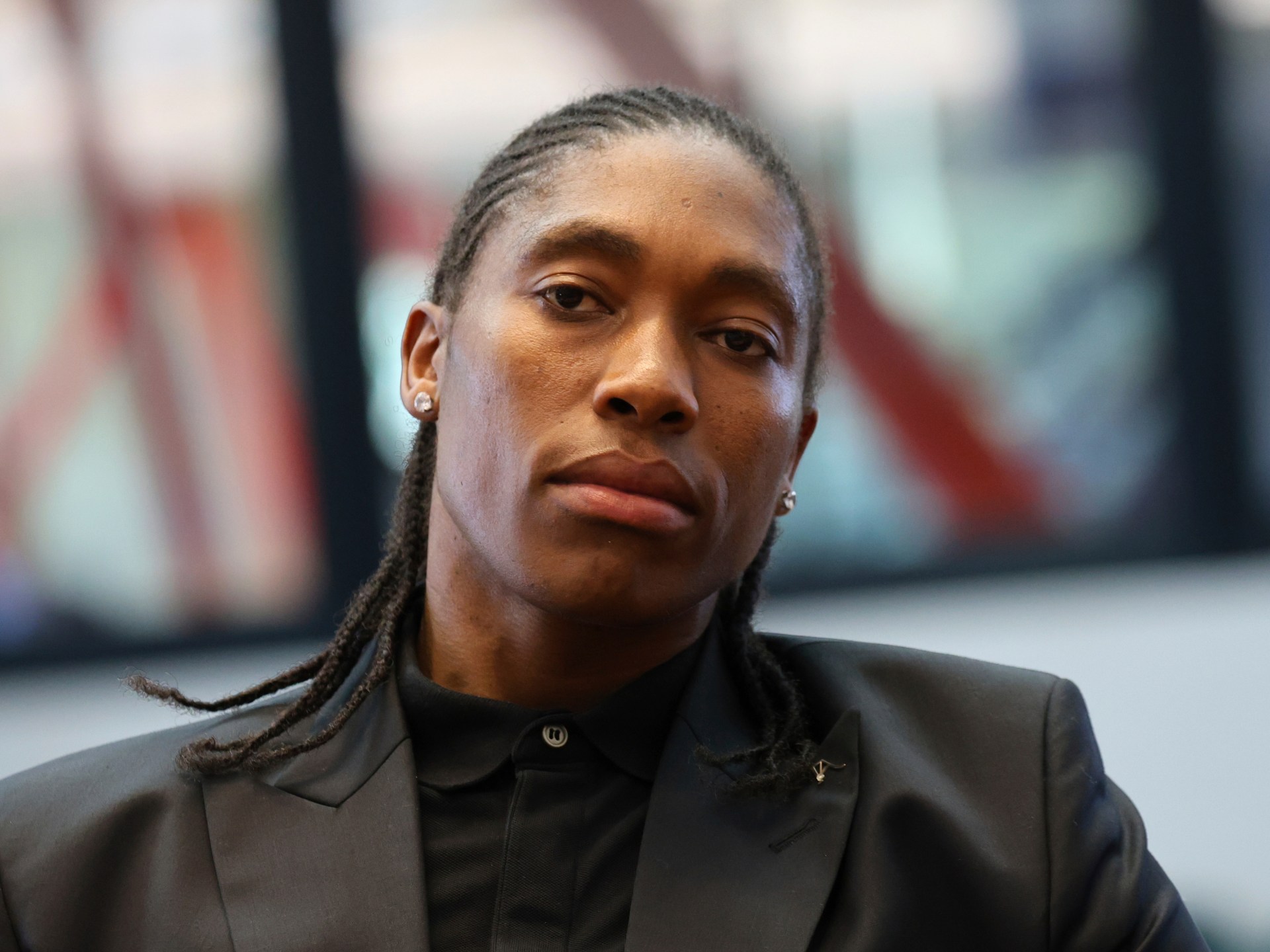
“We’re going to be loud about this and make noise until we’re heard,” says the South African gold medalist.
Published March 31, 2026
Two-time Olympic champion Caster Semenya says she will fight against the introduction of gender testing in the women’s category at the Olympics, a policy that South Africa claims will “undermine women’s rights”.
The International Olympic Committee (IOC) announced the policy last week, and there are hopes that it will become a universal rule for athletes in elite women’s sports after years of fragmented and controversial regulations.
Recommended stories
list of 4 itemsend of list
Semenya is at the center of these controversies due to her long-running lawsuit against World Athletics over her right to compete on the track despite having a difference in sexual development (DSD).
“We’re going to be loud about this and make noise until we’re heard,” the 35-year-old athlete told Reuters on Monday.
“It’s now about women standing up for themselves and saying, ‘Enough is enough.’ We’re not going to be told how to do things.
“If we really are allowed to participate as women, why should my appearance, my voice, my inner self be an issue for me to participate in sports?”
Disorders of sexual development are a group of rare diseases related to genes, hormones, and reproductive organs. Some people with DSDs have XY sex chromosomes and blood testosterone levels in the male range, even though they were raised female.
The IOC’s policy document said the inclusion of “androgen-sensitive XY-DSD athletes” in the women’s category for events that rely on strength, power and endurance “fundamentally contradicts ensuring fairness, safety and integrity in elite competition.”
Semenya, who won two Olympic and three world titles in the 800 meters before being limited to shorter events, believes the IOC got the science wrong.
Semenya said there is “no scientific basis” that XY-DSD provides an advantage for athletes. “I’ve been there, I’ve done that. That’s not true,” she said.
“There are people who are delusional. They say that women are masculine, that women are born with intersex conditions, that they are born with developmental disorders, all of these things (that they have an advantage), so they believe it.
“But my point is, it takes effort to be a great athlete.”
The test, which applies to all athletes wishing to compete in the women’s class, will be conducted by cheek swab or saliva analysis.
Athletes who test positive for the SRY gene will undergo further investigation. This gene is located on the Y chromosome and is responsible for the development of male characteristics in mammals.
“What this decision does is it hurts women. It undermines women’s dignity. It violates women’s rights, because historically we know that these (tests) have failed in the past,” Semenya said.
“Women need to be celebrated. Women shouldn’t be questioned about their gender. Why are they the way they are? Why do they look the way they do? That doesn’t matter. So do hormone levels. Those are clearly genetics and things you can’t control.”
Semenya said Kirsty Coventry, the first woman and first African to become IOC president, had not properly consulted her and other athletes living with DSDs on policy.
“They sent us a letter the day they were supposed to announce (the new policy),” she said.
“If you’re going to consult someone, do it with heart. Don’t consult someone just because they’re checking a box. Unfortunately, they’re checking the wrong box.”
