

A joint U.S.-Israel attack on OPEC member Iran risks major oil supply disruptions in the Middle East and, in a worst-case scenario, could trigger a global recession.
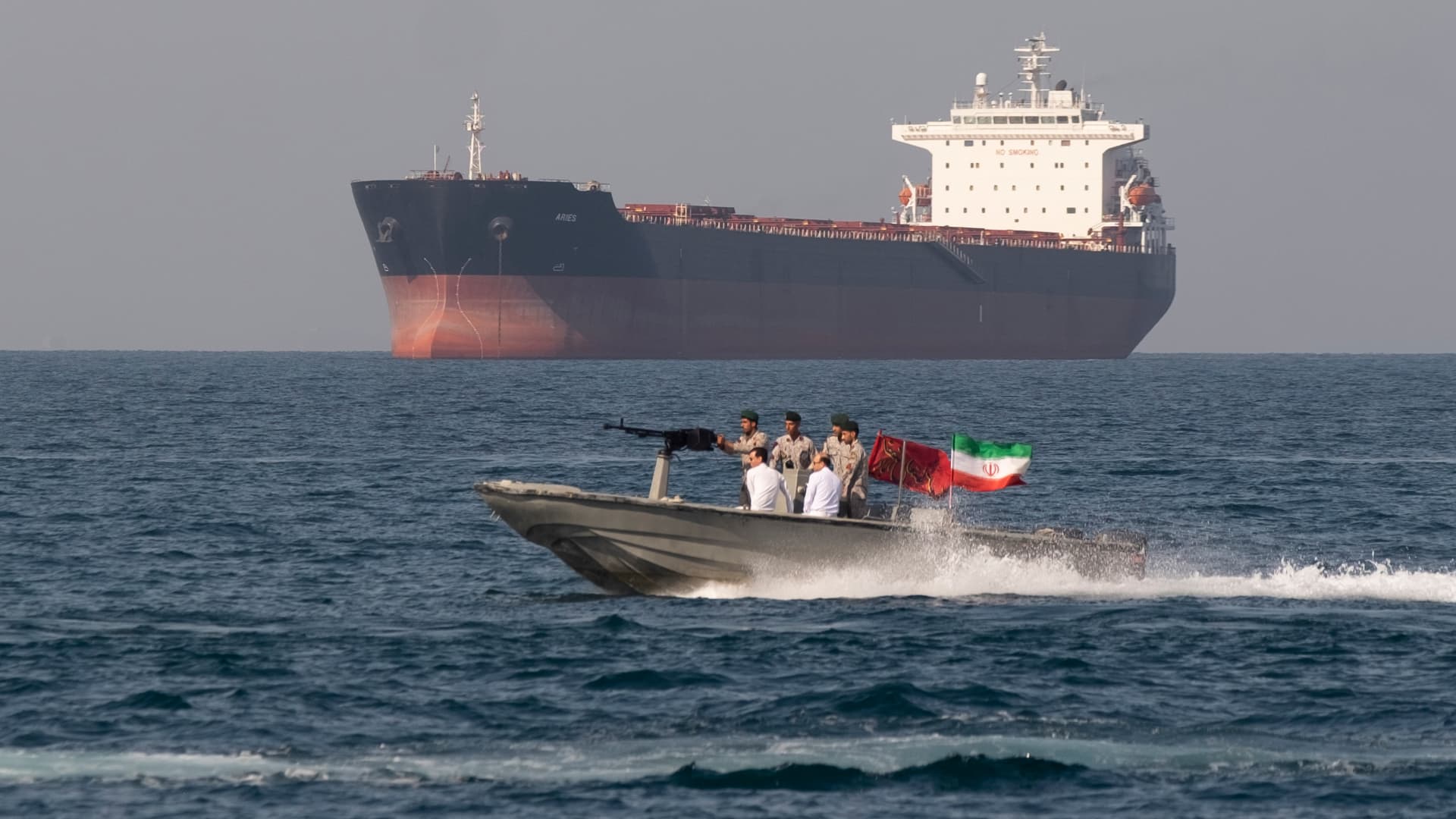
Iran is OPEC’s fourth largest oil producer, producing just over 3 million barrels per day in January. The Islamic Republic shares coastline with the Strait of Hormuz, the world’s most important waterway for global oil trade.
Oil markets have long shunned the risk of oil supply disruptions in the Middle East. Bob McNally, a former energy adviser to former President George W. Bush, said traders underestimated the threat to markets from Iranian retaliation for the U.S. attack.
“This is the real deal,” said McNally, founder and president of Rapidan Energy. He said there is some risk in market prices, so oil futures prices are likely to rise by $5 to $7 per barrel at the start of trading at 6 p.m. ET on Sunday.
On Friday, Brent crude oil prices rose $1.73, or 2.45%, to settle at $72.48 per barrel, while US West Texas Intermediate crude oil rose $1.81, or 2.78%, to end at $67.02 per barrel.
McNally said Iran could try to scare President Donald Trump by making the Strait of Hormuz unsafe for commercial traffic, which could push oil prices above $100 a barrel. He said the market does not appreciate the fact that the Iranian government has a large stockpile of landmines and short-range missiles that could seriously disrupt waterway traffic.
More than 14 million barrels per day will pass through the strait in 2025, representing a third of global seaborne oil exports, according to data from energy consultancy Kpler. About three-quarters of those barrels were sent to China, India, Japan and South Korea. China, the world’s second-largest economy, receives half of its crude oil imports through the Strait.
“If the Strait of Hormuz remains closed for an extended period of time, a global recession is certain,” McNally said.
More than 20 million barrels of crude oil is currently being loaded for export in the Gulf from Saudi Arabia, Iraq, the United Arab Emirates, Kuwait and Qatar, according to Kpler oil analyst Matt Smith. Smith said some tankers have been observed detouring in an attempt to pass through the strait.
McNally said much of the world’s oil reserves come from Gulf states, which would be unable to pass through the strait if it were closed, effectively cutting them off from the market. About 20% of the world’s liquid natural gas exports also flow through the strait, most of which comes from Qatar, and will not be able to be replaced, he said.
“We’re going to see some hoarding, especially by Asian countries that were big importers of oil and gas when they realized that Hormuz was on lockdown,” McNally said. “We’re going to see the mother of all bidding wars.”
The analyst said that for the market to remain balanced, oil prices would need to rise enough to cause an economic downturn and reduce demand. “There just isn’t enough discretionary or elastic demand for oil,” he said.
McNally said only a small portion of the oil passing through the strait may be able to be diverted. Saudi Arabia has a pipeline that runs through the country from the east to the west coast of the Red Sea. The UAE has a pipeline that bypasses the Strait of Hormuz and ends in the Gulf of Oman.
According to state media reports, Iran has launched missile attacks on US military bases in Qatar, Kuwait, the UAE and Bahrain. Tom Kloza, president of oil and gas consulting firm Kloza Advisors, said such an attack could affect traffic through the Strait of Hormuz.
“Iran’s attacks on other neighboring countries in the Persian Gulf have changed the calculus, and the scale of the attack is putting pressure on insurers to either aggressively increase tanker rates for the Strait of Hormuz or be hesitant to underwrite any shipments,” Kloza said.
Kevin Book, managing director of research at Clearview Energy Partners, said the Trump administration could tap into the Strategic Petroleum Reserve if oil prices spike. There are currently about 415 million barrels of reserves in stock, according to Department of Energy data.
“But again, in a supply crisis, duration matters. Scale matters,” Book told clients in a note Saturday. “If the Hormuz crisis becomes serious, it could outweigh the offset by strategic stakes in the U.S. and International Energy Agency (IEA) member countries.”
