

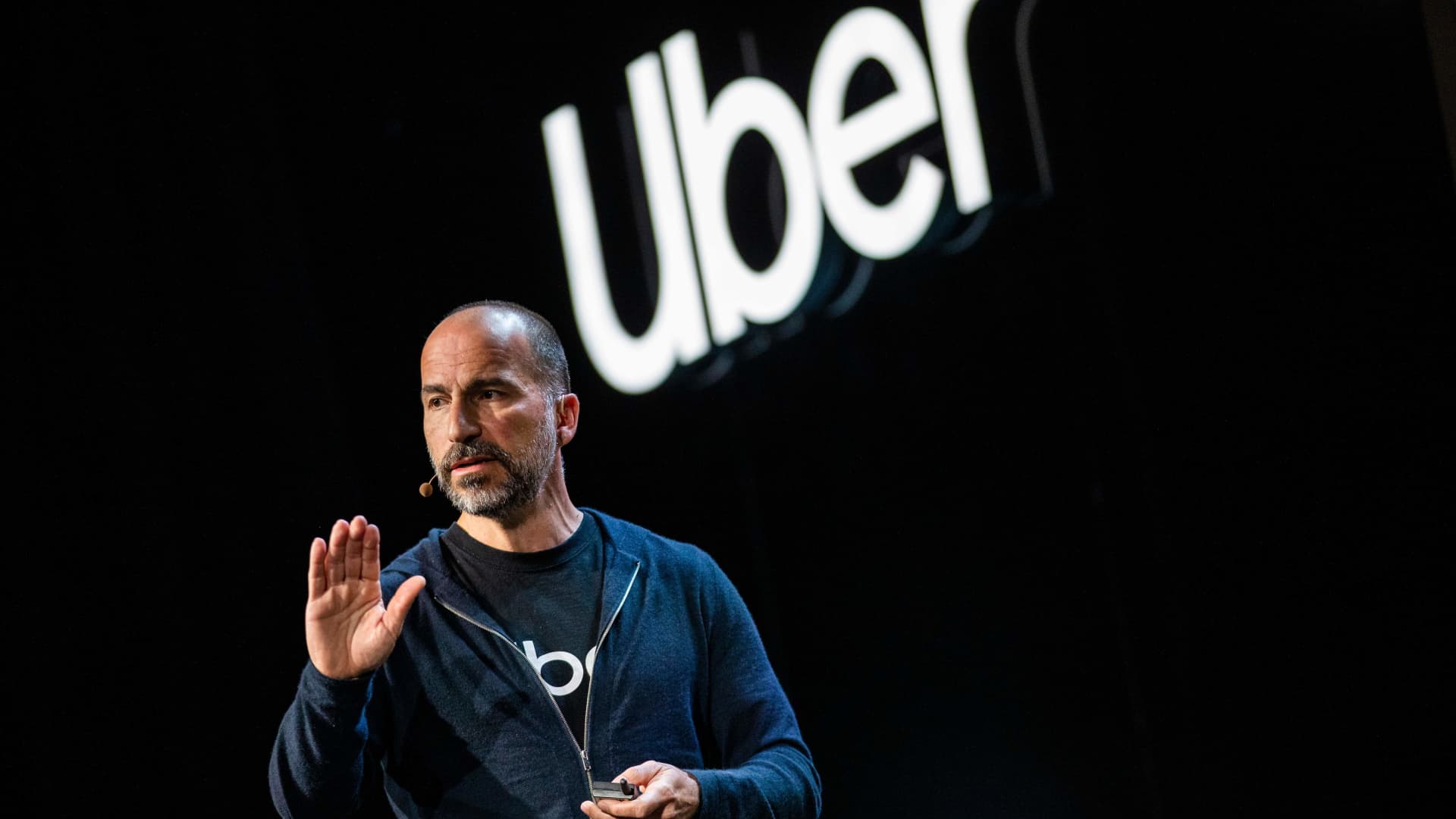
These leadership takeaways are part of a new primetime series, “CNBC Leader’s Playbook,” premiering January 7 at 10pm ET/PT. Hosted by Julia Boorstin, this series goes inside the minds of the world’s top business leaders to reveal how lasting success is built.

1) Accept the risk
When Dara Khosrowshahi took over as CEO in 2017, Uber was one of the most recognizable brands in the world. And one of the most difficult things.
The company faced ongoing scandals, a spate of executive resignations, and strained relations with regulators and city officials. On top of that, the platform was losing billions of dollars.
Leaving a stable and successful CEO job at Expedia to take over Uber was a big gamble, both personally and professionally. But Khosrowshahi saw something bigger than the crisis: Uber’s impact on everyday life and its potential to change the way we move around cities.
Rather than shying away from risk, he chose to take the risk, believing that the challenge itself was worth taking.
I remember talking to my dad and he told me that if you were asked to run a verbal company, you should just say yes.
Dara Khosrowshahi
Uber CEO
2) Review of culture
When Khosrowshahi took over as CEO, his first task was to fix Uber’s culture and rebuild trust with regulators and drivers.
Instead of rushing, he says he slows down, listens, gives drivers a real voice, and sets a simple rule: “Do the right thing. Be on time. No exceptions.”
He believed that trust was earned through action, not PR.
So he took an open initiative and backed it up with real safety and product changes.
Leadership is about the heart. It’s about showing someone that you can be greater than yourself.
Dara Khosrowshahi
Uber CEO

3) Wartime leadership
When the pandemic hit, about 85% of Uber’s mobility rides disappeared almost overnight. If nothing changed, Uber was on track to lose $5 billion a year.
Khosrowshahi switched to “war mode.” He cut costs by laying off about 25% of the company and moved quickly to rely on Uber Eats.
Demand for delivery doubled overnight, giving restaurants a lifeline and forcing many drivers to switch from moving people to moving food.
Over time, the delivery volume grew to almost the same size as the ride-sharing business. This pivot kept Uber afloat through the crisis and provided a platform for dramatic growth.
I never imagined coming to Uber to make such large-scale layoffs. It was really hard, but I had to reset.
Dara Khosrowshahi
Uber CEO
4) He took the wheel
Post-pandemic, Uber has struggled to win back drivers, making it more important than ever to improve the driver experience.
Although many employees regularly used the app as riders, Khosrowshahi realized that very few people in the company, including himself, really understood what it was like to use the app as a driver.
So the CEO got behind the wheel of the Tesla and started riding the vehicle himself.
What he discovered was shocking. The app worked much more smoothly for riders than drivers. Having experienced the platform firsthand, he clearly recognized the gaps and urged the team to make changes that were important for drivers returning to the platform.
If you want to build great products, you need to put yourself in your customer’s shoes.
Dara Khosrowshahi
Uber CEO
5) Swim against the current
Post-pandemic, Uber had a choice: protect its profits or spend heavily to bring back drivers.
Mr. Khosrowshahi chose to invest hundreds of millions of dollars in promotional incentives to ensure healthy long-term growth, even at the risk of disappointing Wall Street expectations in the short term.
That mindset led to other tough demands. These include exiting markets where Uber can’t win, focusing on organic growth rather than large-scale acquisitions, and partnering instead of developing self-driving cars on its own.
The result is a stronger, more disciplined Uber built over time.
Leadership doesn’t just go with the flow. Leadership sometimes involves swimming against the current.
Dara Khosrowshahi
Uber CEO
Watch Dara Khosrowshahi’s interview on CNBC Leaders Playbook. This is a new prime-time series hosted by Julia Boorstin, featuring candid conversations with the world’s top business leaders about how to build lasting success.
Episode Premiere (Uber): January 14 at 10pm ET/PT on CNBC.
All new episodes are released on Wednesdays.
