

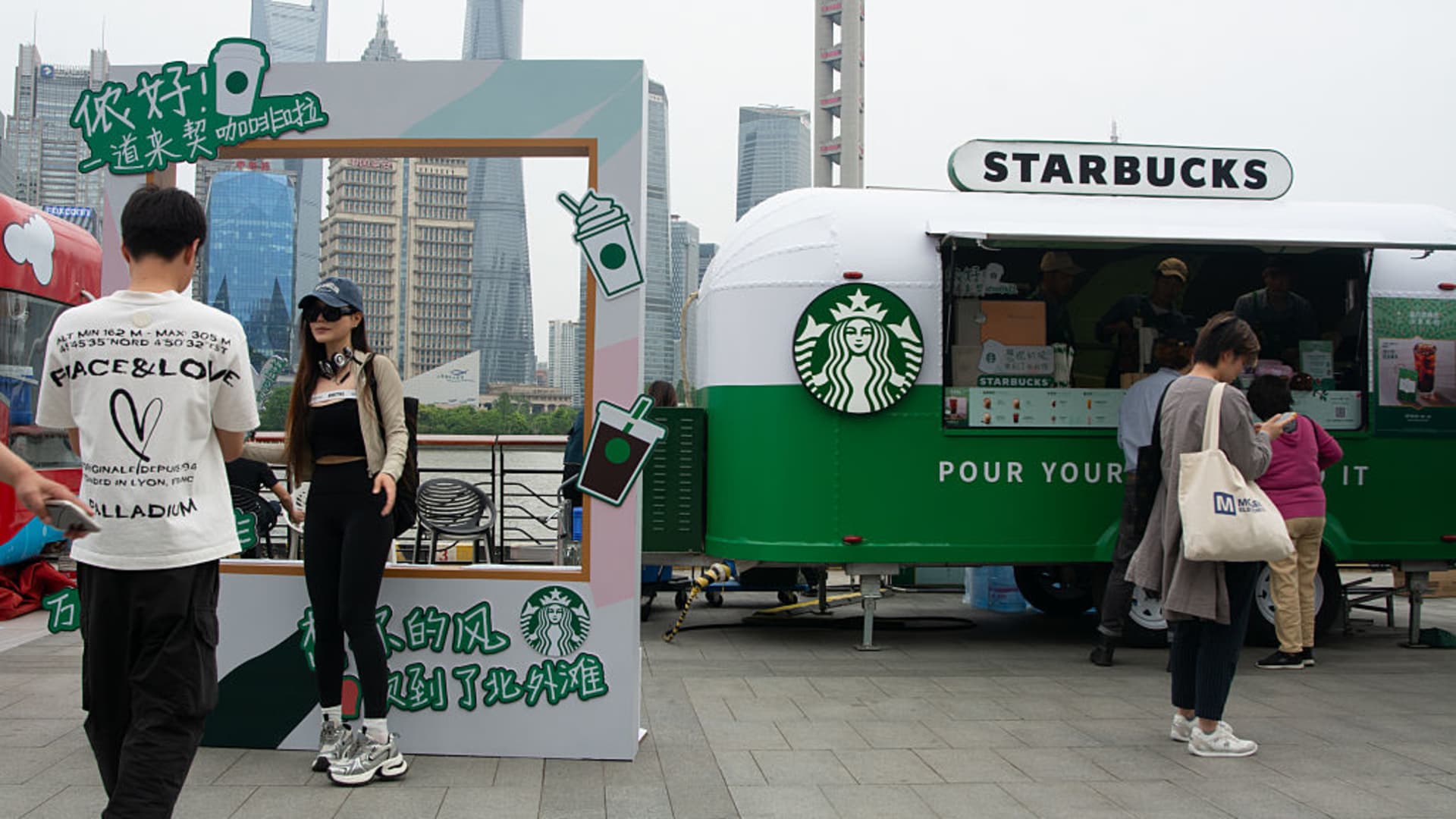
Despite Starbucks CEO Brian Nicol’s efforts to revitalize the coffee brand through his “Back to Starbucks” initiative, structural challenges continue to undermine its performance. Once touted as a major growth driver, the second-largest market, China, grew at a nominal rate of just 5% year-on-year in US dollar terms. However, after adjusting for the appreciation of the renminbi and inflation over the same period, China’s growth rate was flat to slightly negative. Same-store sales in fiscal 2025 decreased by 1%. Part of the problem is competition from domestic rival Luckin Coffee. Starbucks announced in November that it would sell a 60% stake in its China operations to private equity firm Boyu Capital for $4 billion. Starbucks will maintain a 40% stake as it moves to an asset-light model. The sale signals a strategic retreat in a region once touted as a major driver. Domestically, Starbucks is facing a decline in consumer customers due to tight consumer finance, high prices, and long wait times for orders. Comparable store sales decreased 1% in fiscal 2025, and 2% in North America. Pedestrian numbers fell by 2% globally, but by 4% in North America. The consensus is that the trend could reverse in the financial year ending September 2026. The price pressure wasn’t just the company’s fault. Rising costs, including coffee, are putting pressure on profits. Benchmark NYB Arabica is up 23% from a year ago, although far from its mid-year high of 401.10 cents a pound. The company has decided to close unprofitable stores. The number of stores in North America decreased by 113 stores to 18,311 stores in fiscal 2025. Of this decline, there were 77 net store closures in the United States. Against this backdrop, it’s no surprise that analysts continue to lower their earnings estimates for the first and second quarters of the fiscal year. At the beginning of 2024, the consensus was that Starbucks would earn about $1.30 per share in the quarter ending Dec. 31. Current expectations are 54% lower, with earnings expected to be just 60 cents per share. Not all news about Starbucks is bad. Free cash flow is expected to increase by just under 6%.I love Starbucks coffee. The stock has been below its 200-day moving average since Liberation Day, but it is now testing it, closing just barely above it for the second day in a row. Let’s see if that’s the case. Measures taken to stabilize the business, coupled with longer-term headwinds and valuations, could keep the coffee giant in a range for months to come. Combining a short put with a short call spread (sometimes referred to as the “Jade Lizard”) would provide some static yield without significant upside risk, but would take the risk of buying the stock at an effective price of just under $80 per share, near recent lows. Disclosure: None. All opinions expressed by CNBC Pro contributors are solely their own and do not reflect the opinions of CNBC, NBC UNIVERSAL, its parent or affiliate companies, and may have been previously disseminated on television, radio, the Internet, or another medium. The above is subject to our Terms of Use and Privacy Policy. This content is provided for informational purposes only and does not constitute financial, investment, tax, or legal advice or a recommendation to purchase any securities or other financial assets. The Content is general in nature and does not reflect any individual’s unique personal circumstances. The above may not be appropriate for your particular situation. Before making any financial decisions, you should strongly consider seeking the advice of your own financial or investment advisor. Click here for full disclaimer.
