

Denmark’s biggest exports include Ozempic, Carlsberg, and Lego. But now European leaders believe Europe has something even more valuable to sell. An immigration system strong and effective enough to neutralize the hard right and keep mainstream parties in power.
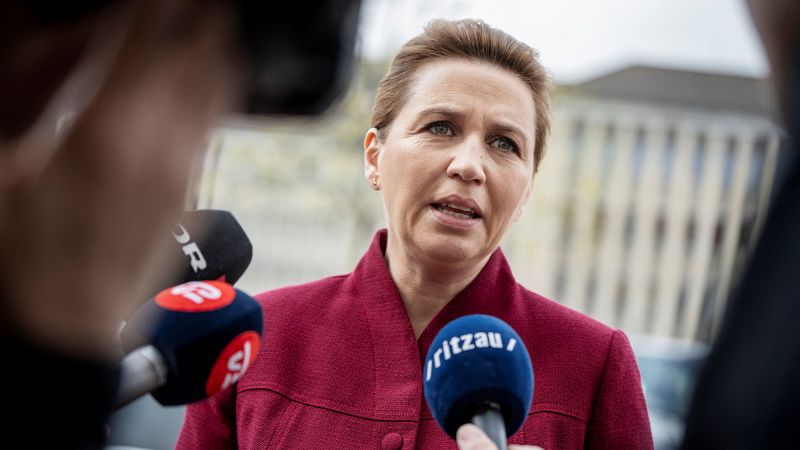
Danish Prime Minister Mette Frederiksen has achieved what many centre-left governments in recent years have felt impossible: re-election. At a time when incumbent politicians continue to be beaten down at the ballot box, many in Europe are looking to Frederiksen’s Social Democratic Party’s asylum policy, which won elections in 2019 and 2022 and is on track to win again in 2026, according to polls, as a model to emulate.
Britain’s Labor government, hounded by the populist Reform Britain Party over the fight to control illegal immigration, was impressed by the Danish model and sent officials to investigate how the system works.
Home Secretary Shabana Mahmoud announced a sweeping review of the UK’s asylum system on Monday, saying the UK “has stubbornly stuck to the old model, while other countries are strengthening it”. She cited Denmark as a representative country.
The older model to which Mahmoud referred is a product of Europe’s post-war environment. The 1951 United Nations Refugee Convention applied only to Europe and sought to resettle wartime refugees, primarily Jewish survivors of the Holocaust, Germans expelled from Eastern Europe, and dissidents fleeing the Soviet regime. The treaty was extended to universal application in 1967 as part of reparations for colonialism.
However, the prevalence of conflict and climate disasters, combined with cheap travel, rising literacy rates, and the ease of online communication, are placing enormous strain on post-war asylum systems. According to the United Nations, 123 million people were forcibly displaced around the world at the end of last year, up from about 44 million in 2010. “Our asylum system is not designed to deal with this,” British Prime Minister Keir Starmer said bluntly on Monday.

Britain is now embarking on a policy path first charted by Denmark a decade ago. In 2015, Europe received the most asylum applications in a single year since World War II, as the civil wars in Syria and Libya prompted around 1.3 million people, mainly from the Middle East, to travel to the region. German Chancellor Angela Merkel famously said, “Wir schaffen das (we can do it)!” Although the Germans were urged to take in refugees, Denmark took a different approach.
Under Frederiksen’s predecessor, Lars Lökke Rasmussen, who then led the centre-right Venstre party, Denmark sought to reduce the number of asylum seekers, improve social integration and expedite the deportation of illegal immigrants.
Mr. Rasmussen, now the foreign minister, first made refugee status temporary rather than permanent. Before 2015, refugees could stay in Denmark for five years, after which their residence permit would automatically become permanent. Currently, residence permits are valid for only one or two years, and refugees must wait eight years before they can apply for permanent residence. Still, there are no guarantees. Refugees must be fluent in Danish and have had a full-time job for several years.
Denmark also makes it difficult for refugees to join their families. Both candidates must be at least 24 years old and have passed a Danish language test. Refugees must not have claimed any government benefits in the past three years and must provide financial security.
Michala Klante Bendiksen, head of the refugee advisory group Refugees Welcoming Denmark, said removing the assumption that refugee status would be permanent would be detrimental to integration.
“Attachment to the labor market, learning the language, understanding society – these are very important things for successful integration,” Bendiksen told CNN. But she feared the tougher requirements would be “too high of a hurdle” for many new arrivals, discouraging some people, especially older people with lower levels of education, from trying altogether.
“It creates a sense of hopelessness. I’ve met many refugees who say, ‘No matter what I do, it’s not enough. I’ve done everything they ask, but it’s still not enough,'” she said.

Denmark has also been criticized for its policy on “ghettos” (now called “parallel societies”), which allows the state to sell or demolish housing estates where more than 50% of the residents are of “non-Western” origin. Successive Danish governments were concerned about the low level of integration in certain regions. In 2004, then-Prime Minister Anders Fogh Rasmussen warned of a region where “men are unemployed, women are isolated, and families speak only their own language.”
A charitable interpretation of the “ghetto” law, introduced in 2018, is that it supports integration by encouraging people from different backgrounds to live together, not just next to each other. But not everyone is convinced. A senior adviser to the EU’s top court said in February that the policy amounted to discrimination on the basis of ethnic origin.
Other laws have also been criticized by human rights groups. Under the so-called “Gem Act”, authorities can seize assets worth more than 10,000 Danish kroner (about $1,500) to cover the cost of asylum assistance. The measure was only applied 17 times in its first six years, but echoes of its dark history still linger, with comparisons to the confiscation of valuables by the Nazi regime.
Few would dispute that Denmark’s policy achieved its stated objectives. In 2014, Denmark granted refugee status to 6,031 people. By 2019, that number had dropped to 1,737.
Denmark now grants far more residence permits than it did 30 years ago, but the majority are given to students and workers rather than refugees. Of the 99,811 residence permits Denmark granted last year, just 859 went to asylum seekers, less than 1%.
“Denmark in recent decades has shown that it is politically and practically possible to move towards an immigration system that is more employment- and education-intensive, with overall higher levels of immigration,” said a report last month from Brussels-based economic think tank Bruegel.
Over time, this has deterred refugees from seeking asylum in Denmark. The UK Home Office said Denmark’s policy had led to asylum claims falling to the lowest level in 40 years, with 95% of those whose claims were rejected being deported. In 2024, there were four new asylum applications per 10,000 people in Denmark, compared to 16 per 10,000 in the UK and 20 per 20,000 in the European Union as a whole.
The Danish model has won the admiration of social democrats abroad, but some are growing disillusioned at home. In Tuesday’s local elections, Frederiksen’s party lost control of Copenhagen for the first time in more than a century. Much of the dissatisfaction centers on the high cost of housing in the capital, but analysts say the party’s hardline stance on immigration is alienating its more progressive urban base.
It remains to be seen whether the Danish model will be available wholesale to other governments. The UK plans to quadruple the waiting time for permanent residence from five to 20 years, far longer than the eight-year wait for refugees in Denmark. Refugee status is reviewed every two and a half years. If their home country is deemed safe during that time, they will be deported. Asylum seekers may also be stripped of their assets, including jewelry, to cover accommodation costs.

Mr Bendixen warned that a new 20-year path to permanent residence would destroy refugees’ sense of their future and leave them “feeling as if they are second-class citizens forever”.
“Integration fails when you give young people the feeling that they don’t belong. That’s where you see gangs and crime and neighborhoods where people have their own rules, because they don’t feel like they’re part of society. Rules like this will make (that feeling) much stronger,” she said.
Many British Labor politicians would agree. Starmer, like Frederiksen, argues that a stricter asylum system is compatible with progressive values of compassion and tolerance, but others argue that the proposals are unnecessarily cruel and will not have the desired effect.
“Plans to leave refugees in a state of perpetual uncertainty about where and whether they will be able to rebuild their lives are not just an act of cruelty, they are counterproductive to integration and the economy,” Labor MP Stella Creasy said on Monday.
Labor MP Alf Dubs, who came to Britain on the Kindertransport in 1939 after fleeing persecution of Jews in Nazi-occupied Czechoslovakia, told the BBC he was “demoralized” by Labour’s hardline stance and called the new measures “shabby”.
