

The recent arrival of the USS Gerald R. Ford aircraft carrier near Central and South America has accelerated the buildup of U.S. naval forces in the Caribbean, raising speculation that both the United States and Venezuela are preparing for a larger conflict.
The United States aims the build-up to combat drug trafficking, but some experts question why so much firepower is needed if the sole purpose is to target drug-trafficking vessels. The ship’s arrival marks the largest U.S. military presence in the region since the 1989 invasion of Panama, they noted.
In addition to the aircraft carrier itself, dubbed the U.S. Navy’s “most lethal combat platform,” the U.S. has about 15,000 personnel in the region, along with more than a dozen warships, including cruisers, destroyers, air and missile defense command ships, amphibious assault ships, and attack submarines. The United States also deployed 10 F-35 fighter jets to Puerto Rico, where the US military is based, as part of its efforts to increase interest in the Caribbean.
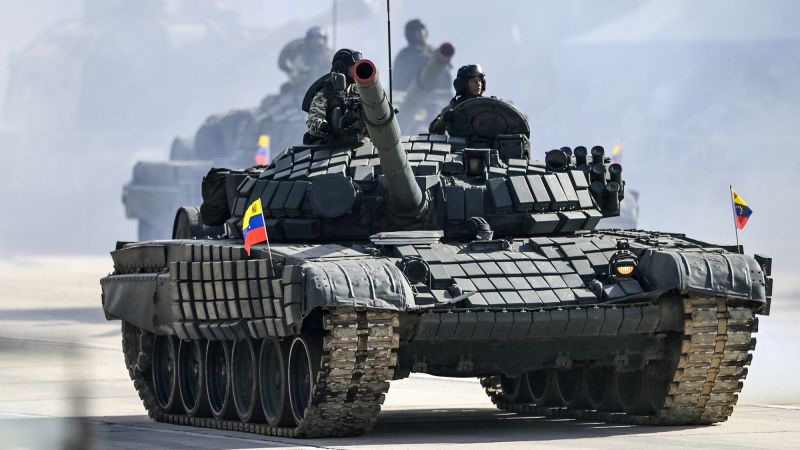
This type of firepower puts into sharp relief what experts characterize as the aging Soviet-era equipment that Venezuela will rely on if US President Donald Trump decides to take military action in the country.
Here’s what we know about the military Caracas has at its disposal.
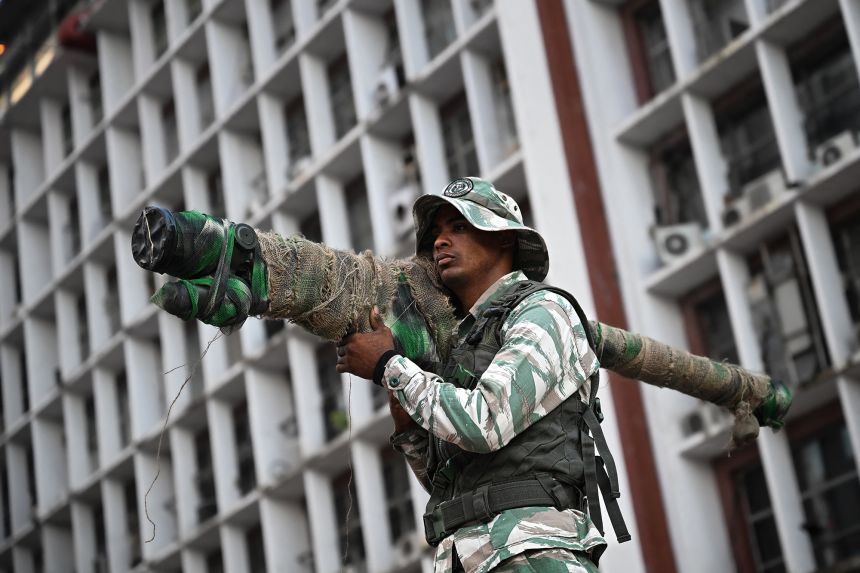
Over the past two decades, Venezuela’s conventional military, the Bolivarian National Armed Forces (FANB), has built a reputation as a regional military power, surpassing most of its Latin American neighbors.
Much of that image was built on Maduro’s continued acquisition of Russian equipment under his predecessor, the late President Hugo Chávez. Chavez is a former professional soldier who rose to power thanks to the revolutionary movement he founded within the military.
When Chávez became president in 1999 (seven years after orchestrating a failed military coup), he poured the country’s vast oil resources into the military, bought Russian equipment under an unofficial U.S. embargo, and placed military personnel in key government positions.
As a result, weapon systems such as the Su-30 fighter, the T-72 combat tank, the S-300, the Pechora and Buk anti-aircraft missiles, the portable Igla-S system, and the Kalashnikov rifle were all designed during the Soviet era and came to define the image of FANB. This arsenal distinguishes the Venezuelan military from other militaries in the region, which tend to rely heavily on American and European weaponry (though Venezuela still has aging equipment designed by the United States in the pre-Chávez era).
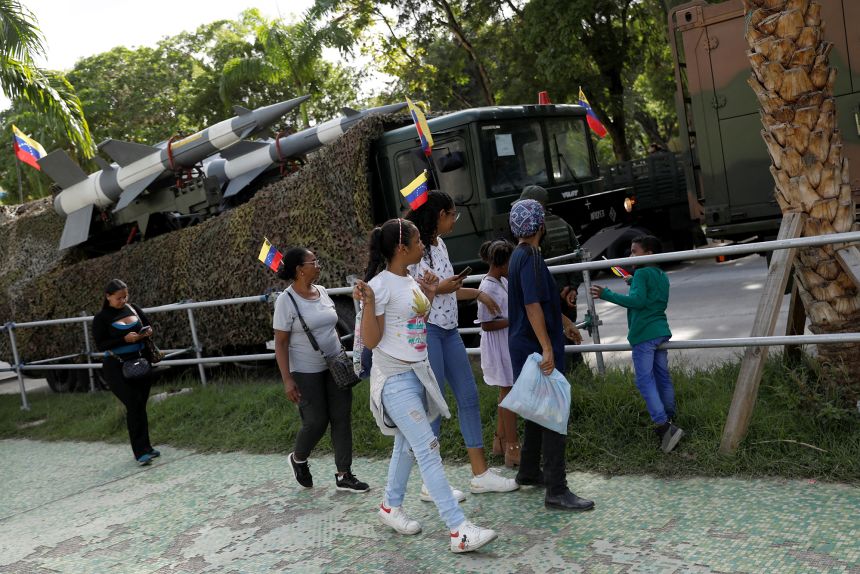
The problem for Venezuela is that while it has a relatively well-equipped military on paper, there can be question marks over maintaining equipment and training personnel. Especially since the country has suffered more than a decade of economic hardship, some of the highest inflation rates in the world, and declining oil production, all of which have been made worse by U.S. sanctions.
According to United Nations data, some 7.9 million Venezuelans, many of them of military age, have left the country due in part to the economic collapse.
Although the government has “recently resumed modest maintenance and modernization efforts,” years of underinvestment are taking their toll, according to a 2024 report from the International Institute for Strategic Studies (IISS).
“FANB’s operational capabilities and asset availability are at a fairly low level. One of the reasons is that FANB has been through an economic crisis for more than a decade,” Andrei Servin Pont, a defense analyst at the CRIES think tank, told CNN.
Armed Forces and Militia: By the Numbers
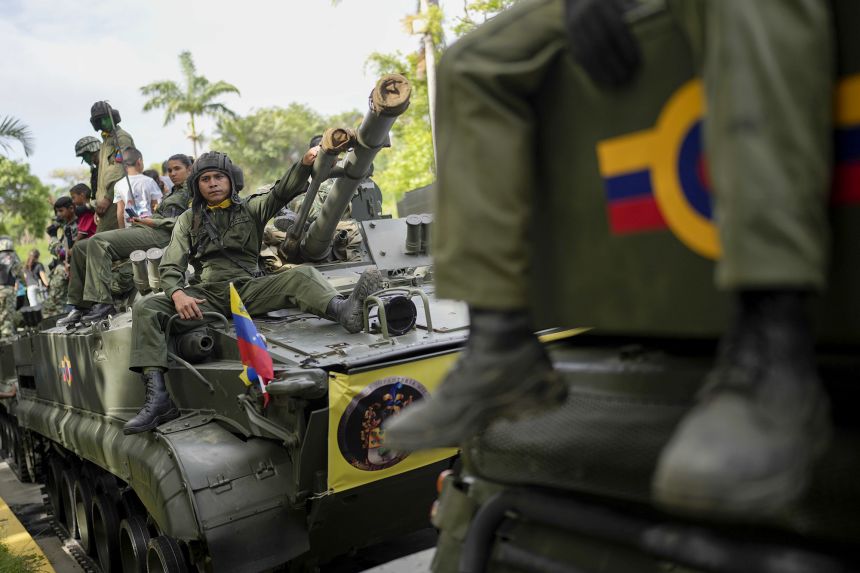
Currently, FANB has approximately 123,000 active employees. According to IISS, there are 63,000 Army personnel, 25,500 Navy personnel, 11,500 Air Force personnel, and 23,000 National Guard personnel. These are supplemented by approximately 8,000 reservists.
In addition to its regular military forces, Venezuela can call up the Bolivarian militia, a reserve force made up of civilians. It was founded by Chávez and named after Simón Bolívar, the revolutionary who led many Latin American countries to independence from Spain.
But the true size of the militia is unclear. Prior to the recent U.S. increase, the IISS had estimated the number at 220,000, but in August Maduro claimed he would deploy 4.5 million militia members in response. Weeks later, he said he expected to call in a total of 8.2 million people, but experts have questioned the numbers and the quality of training.
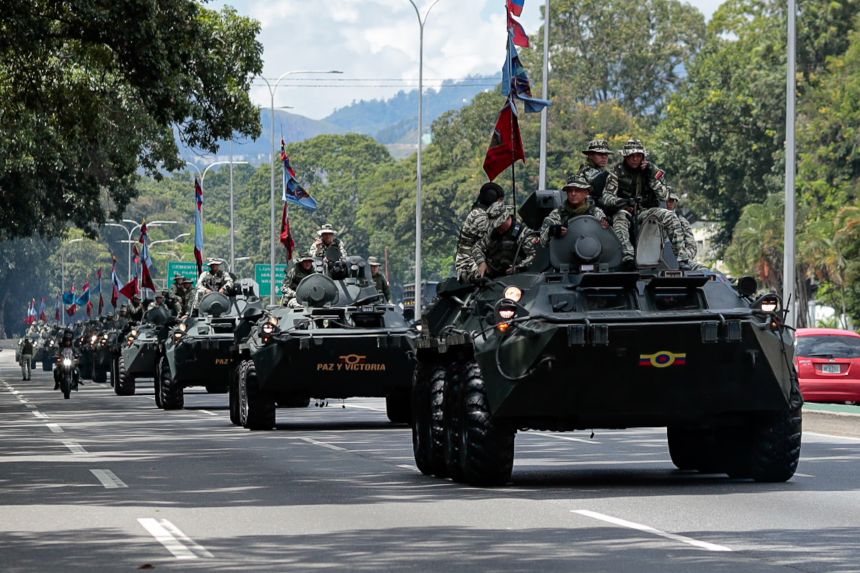
Human Resources: With 63,000 members, Venezuela’s ground forces make up the largest portion of active-duty personnel. They also have the longest history and are politically the most aligned with the Venezuelan government.
In addition to Chávez, current Interior Minister Diosdado Cabello and Defense Minister Vladimir Padrino López also have military backgrounds, with Padrino still an active four-star general.
One indicator of how close the government and military have become is the unusual number of generals and admirals who are given promotions for political loyalty. In 2019, Adm. Craig Farrar, then commander of the U.S. Southern Command, estimated the number at about 2,000 in a speech to the U.S. Congress. “More than all of NATO,” he noted. (By comparison, in 2025, the United States had about 850 people for a military ten times the size).
Bolívar’s old saying, “Ecuador is a monastery, Colombia is a university, and Venezuela is a barracks,” sums up the relationship between Venezuelans and the military.
Weapons: According to the IISS, notable systems purchased from Russia in recent years include 92 T-72B1 tanks, similar to those used in Ukraine, and 123 BMP-3 infantry fighting vehicles, which are being equipped to armored brigades along with 81 AMX-30 tanks previously acquired from France. Artillery systems include the Russian Musta-S self-propelled howitzer and Smerch rocket launcher.
Commander: Domingo Antonio Hernández Lares is the operational and strategic commander of all Venezuelan armed forces. His younger brother, Major General Johan Alexander Hernández Lares, commands the army.
Air Force: High standard
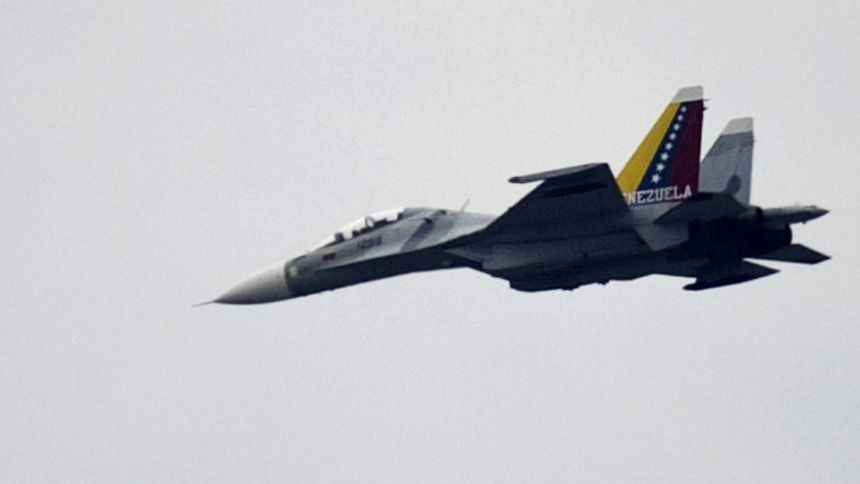
Human Resources and Weapons: At 11,500 members, the Bolivarian Military Air Force (Air Force) is the smallest of the Bolivarian Armed Forces, but its acquisition of Russian equipment sets it apart from its competitors in the Caribbean and most of Latin America.
At the heart of this arsenal is the Sukhoi Su-30MK2, a high-performance twin-engine fighter that is unique in Latin America despite being developed by the Soviet Union in the 1980s.
In mid-September, FANB shared a video of two of its Su-30s equipped with Kh-31 anti-ship missiles, also made in Russia, to show what remains the most advanced weapon system.
Venezuela is believed to have had 24 such planes at one time, but at least three have crashed, according to the IISS. Venezuelan NGO Control Ciudadano said the accident highlighted “issues with the aging system, maintenance and lack of spare parts.”
The Su-30 coexists with several older US-made F-16 fighter jets that Venezuela purchased before Chavez took power.
Venezuela also has Russian-made air defenses, including 12 squadrons of long-range S-300 missiles. 9 Buk systems and 44 Pechora units, both medium range. There are also a number of portable Igla-S launchers, the IISS said.
CRIES analyst Selvin Pont said that while these defenses are advanced, they are likely to be the first targets of adversaries in the event of a conflict.
Led by: Major General Lenin Lorenzo Ramírez Villasmil.
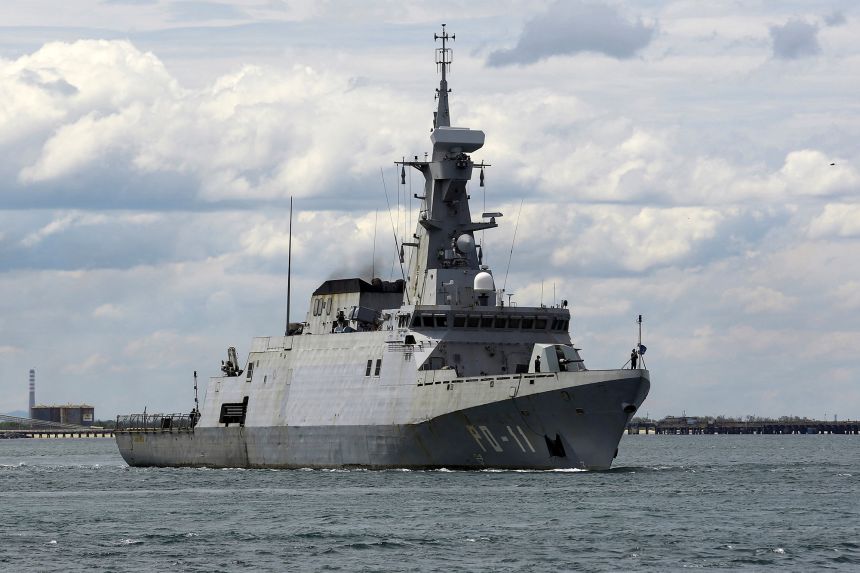
Manpower and Weapons: The Bolivarian Navy, which has 25,500 members primarily tasked with operations in the Caribbean, has lagged behind other navies in purchasing weapons in recent decades.
According to IISS, the company currently operates just one Mariscal Sucre-class frigate (made in Italy) and one Type 209 submarine (made in Germany) in its maritime fleet. It also owns nine marine and coastal patrol vessels, including four purchased from Spain.
“The Navy lost many of the assets it had (before President Chávez), and they were not fully replaced. The corvettes purchased from Spain were not equipped with weapons until a few years ago when Chilean and Iranian anti-ship missiles were installed, but there was no viable air defense system,” Servin Ponto said.
Led by: Admiral Ashraf Suleiman Gutierrez.
And what about the militia?
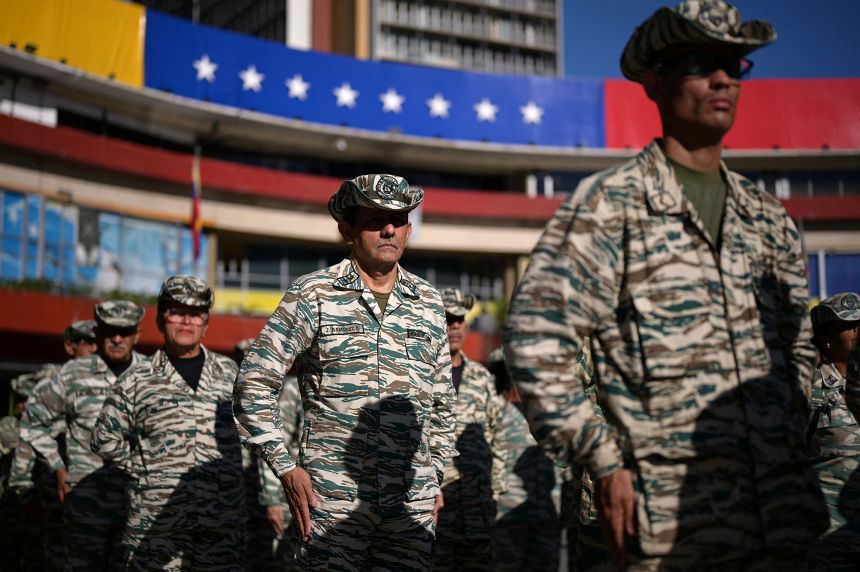
In recent weeks, President Maduro has repeatedly played the role of the Bolivarian militia, created by President Chávez in 2008, providing a loyal militia under the president’s direct command, although technically part of the military.
A clear account of how many people belong to the Bolivarian militia (a collective term for a variety of groups with a wide range of experience and capabilities) is difficult to obtain.
Days after news of the U.S. naval deployment broke, President Maduro said in August that he intended to mobilize “more than 4.5 million militiamen” who had been taken from “all factories and workplaces in the country.”
“These are missiles and rifles for the working class to defend their homeland,” he said.
He later suggested that the number of militia members exceeded 8 million.
Selbin Pong said that apart from differences in numbers, there are also some traditional militias made up of reservists with military experience, but most of the groups the government presents on television and social media are too inexperienced to play a decisive combat role.
“These people are not well trained. There is no real armed organization to mobilize these elements, and those elements are not effective in combat,” he said.
Their actual use, Selvin Pont suggested, was to serve as “a repressive threat to information networks and civilian populations, precisely because they are based on networks that permeate society as a whole.”
