

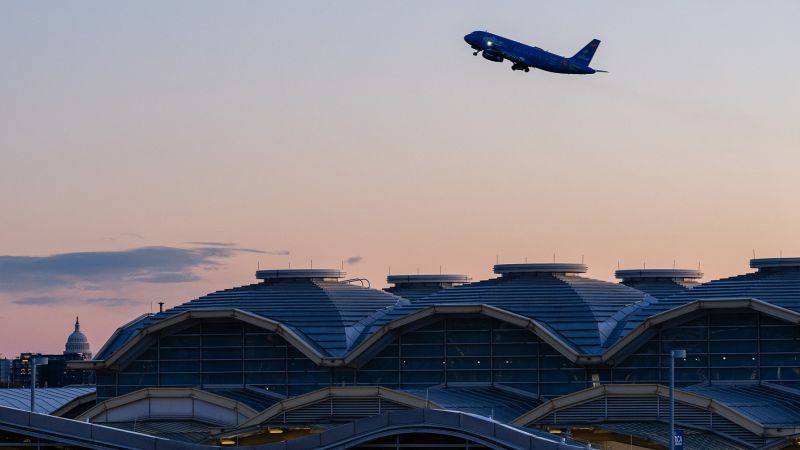
This fall has been rough for air travelers, with the annual Thanksgiving holiday still in progress, as well as flight cancellations and staffing shortages related to the U.S. government shutdown.
Here’s what we know about air travel during the busy holiday period, when millions of Americans will be heading to airports across the country.
Travel officials and analysts said it could take airlines one to two weeks to recover from the recent disruptions, and that depends on whether the groundings are resolved by the end of this week.
Transportation Secretary Sean Duffy suggested in remarks Tuesday at Central Wisconsin Airport that flight reductions may not end immediately after an agreement is reached to lift the closure, but that flights could be back to normal by Thanksgiving.
“So it depends on whether or not we have air traffic controllers on duty,” Duffy said. “Once the controllers arrive, I think we’ll be back to a normal flight schedule.”
At a news conference late Tuesday at Chicago O’Hare, Duffy said he expected the flight issue to be resolved by the Thanksgiving travel period. Wednesday’s vote in the House of Commons could move the government much closer to reopening.
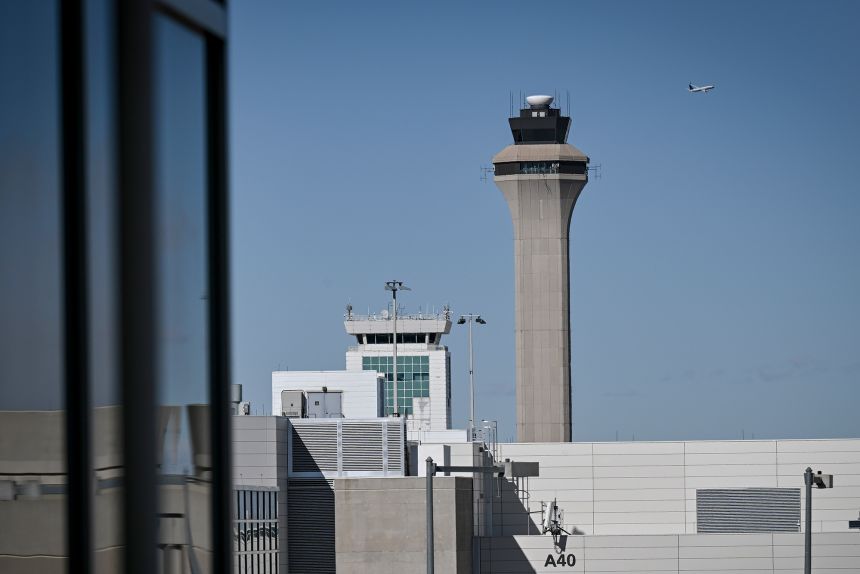
Returning flights to pre-grounding levels is a process.
“The busy season is fast approaching as we prepare for record Thanksgiving travel with approximately 31 million passengers expected,” Chris Sununu, president and CEO of the industry group Airlines for America, said in a statement. “However, airlines cannot immediately flip the switch and resume normal operations after the vote. The effects will remain for several days.”
Going.com travel expert Katie Nastro said the recent high level of disruption is unlikely to carry over into the holiday week if the government reopens quickly. Still, the air traffic controller shortage that led to the FAA’s order to reduce flights is likely to continue to have an impact even after schedules are restored.
A long-standing shortage of air traffic controllers has been exacerbated by the closure, with some unpaid employees not reporting to work. The FAA ultimately ordered fewer flights, but plans to gradually increase flights through Friday.
DOT Secretary Duffy said that before the shutdown, an average of four air traffic controllers were retiring each day. Flights have recently surged to 15 to 20 flights per day, which “will continue to be the case in the air travel industry well beyond the period of this government’s reopening,” Duffy told CNN on Sunday.
For example, passengers arriving at TSA lines at some airports such as Houston and Atlanta experience intermittent long wait times at security due to staffing issues.
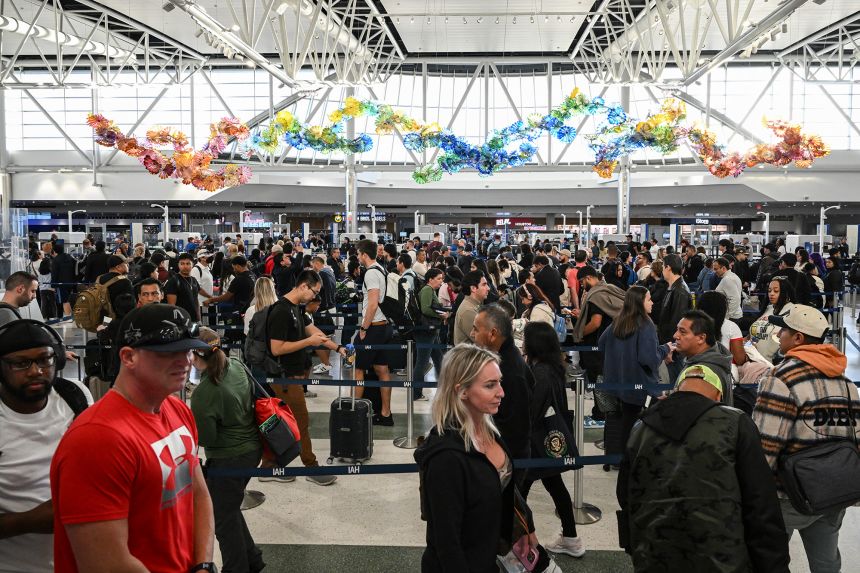
No matter what happens next, travelers should head to the airport for Thanksgiving travel with as many resources as possible for a quick turnaround.
Before your travel date, download your airline’s app and enable push notifications about flight changes. Third-party apps such as FlightAware, Flighty, and TripIt may also be helpful.
Also, research alternative flights in case your original trip is interrupted. Travel site Hopper recommends booking through its Disruption Assistance service, which offers rebooking on any airline. Several other booking platforms and airlines also offer similar services.
Please arrive at the airport early. Arrive at least two hours before your domestic flight, but may arrive earlier during busy holiday periods.
Haley Berg, chief economist at Hopper, said the first flight of the day is a great option. “In general, flights departing after 9 a.m. are twice as likely to be delayed than flights scheduled to depart between 5 a.m. and 8 a.m.,” Berg said in an email.
John DiScala, founder of the travel site JohnnyJet.com, said it’s OK to take another flight because planes aren’t usually full at this time.
“But after the holidays, planes are full and you can’t easily get on (another) plane. So you might get stranded. Time is of the essence. You have to hurry.”
Stay on top of your flight status, contact your airline instantly through the chat feature in your airline app, call your airline at the same time, and jump in the customer service line if you’re at the airport. Give yourself as many options as possible to resolve the situation quickly. “And always be kind,” DiScala added.
Learn what to do if your flight is delayed or canceled.
While staying informed is important, so is a wait-and-see approach, especially now that government reopening appears to be on the horizon.
Don’t cancel your air travel plans over grounding-related concerns unless the airline is offering a full refund, DiScala advises.
For travel this week, most U.S. air travelers will be able to change their tickets for free, even in basic economy class, thanks to an exemption airlines have applied to short-term flights. DiScala said those exemptions would be extended if closure-related cuts persist.
D’Scala is urging new travelers to avoid basic economy fares in case future exemptions exclude the cheapest tickets. Also, keep an eye on the weather, as airlines tend to offer waivers if significant storms threaten operations.
DiScala advises using waivers to your advantage. It’s a free opportunity to tweak your plans, whether you want to skip a trip, extend your stay, or find a better itinerary.
If getting to your destination quickly is important, it pays to have a solid Plan B.
That could mean purchasing a backup ticket on a different airline at least a few hours later than your original flight, DiScala says. “But that’s only if you absolutely need to stay somewhere or if you’re really concerned about it.”

The easiest way is to use loyalty points or miles. If you cancel your backup flight, you can easily redeposit it. If you need to buy a second ticket, avoid basic economy so you can cancel your travel credit, which is usually valid for one year.
It is wise to reserve a rental car in case of disruption. Rental car giants Hertz and Avis reported a surge in bookings for one-way rentals following the first wave of flight reductions. Hertz reported a 20% year-over-year increase in one-way weekend bookings and noted a number of flight cancellations on short-haul regional routes.
If you’re traveling on a regional route of 500 miles or less during the disruption period, “you may want to consider driving as regional jets will be the first to be canceled,” DiScala said.
Aviation consultant Mike Boyd said it was no consolation for passengers on canceled flights, but noted that cancellations in these areas typically affect a small number of passengers. His advice last week, when flight reductions were in place, was to “take a breather” and “relax.”
“This is a proposed 10% reduction in flights, not seats or passengers. Flights,” Boyd said, noting that the reduction in American Airlines’ flights to Texas destinations like Waco and Killeen would likely impact a total of about 50 people per flight.
Passengers who purchased travel insurance before the government shutdown was announced on Oct. 1 may be in luck, said Chrissy Valdez, senior director of operations at travel insurance comparison site SquareMath. Insurance companies may treat this as an “unforeseen event.” Please check with your insurance company regarding the details of your insurance contract.
“For travelers looking to purchase insurance for an upcoming trip, a government shutdown is now considered a known event and therefore excluded from standard trip cancellation and interruption coverage,” Valdez said.
“Cancel for any reason” and “Interrupt for any reason” coverages provide the highest level of protection for travelers who currently purchase insurance, she said.
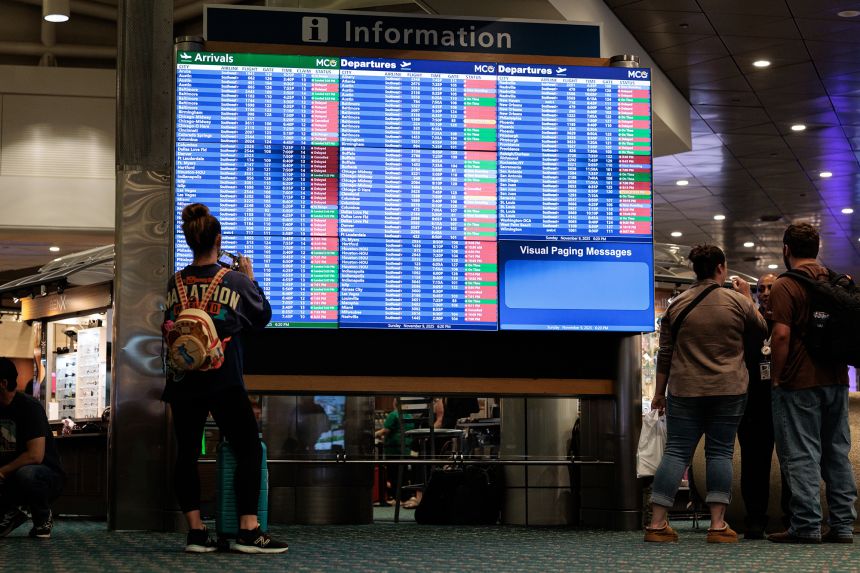
The uncertainty of waiting to see how Thanksgiving pans out isn’t for everyone. Some Americans are preemptively switching to Plan B to protect themselves from stress.
Alexis Miller-Wiseman of Seattle bought Amtrak tickets last week as part of an emergency plan for a Thanksgiving trip with her husband and son-in-law to visit her parents and relatives in northern Nevada.
That was before an agreement began to take shape in Congress on Sunday. However, after the news came out, they decided to continue their train journey from Seattle rather than spend their vacation week at Sea-Tac Airport. In a message to CNN, Miller-Weissman wrote that she received a credit for her Alaska Airlines ticket.
The train journey is “more than 29 hours long, but it’s scenic and peaceful.”
CNN’s Chris Boyette, Amanda Musa, Alaa Elassar, Alexandra Skores and Chris Isidore contributed to this report.
