

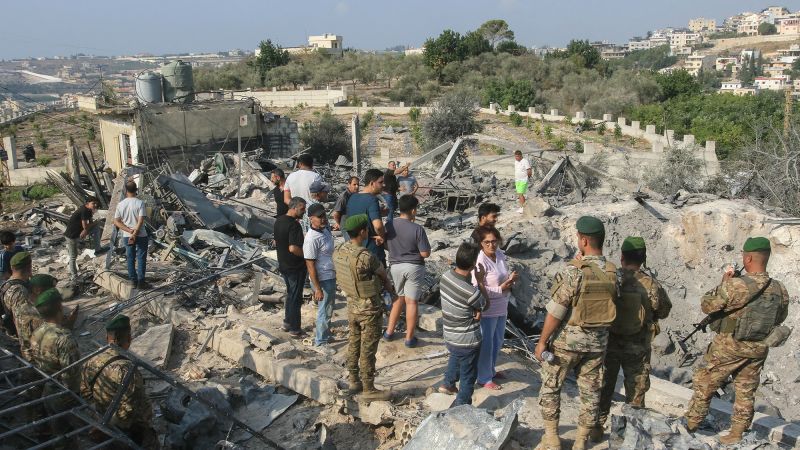
The Israeli military said on Thursday it carried out a series of airstrikes across southern Lebanon, targeting Hezbollah in response to the militant group’s attempts to rebuild operations in the region.
The Israel Defense Forces (IDF) said the airstrike targeted a weapons storage facility belonging to Hezbollah’s elite Radwan unit. The group claimed to be working on “rebuilding terrorist infrastructure” in southern Lebanon.
But Lebanese President Joseph Aoun said the strikes violated international humanitarian law by targeting civilians and forcing them to flee their homes. He denounced the act as a “full-fledged crime”.
“The more Lebanon expresses openness to a path of peaceful negotiations to resolve outstanding issues with Israel, the more Israel intensifies its attacks on Lebanon’s sovereignty,” Aoun wrote in X.
Prior to the airstrikes, IDF Arabic spokesman Avichai Adlai issued multiple warnings to residents of several villages.
“You are in a building used by Hezbollah. For your safety, you are asked to evacuate immediately at least 500 meters away from the building. Staying near these structures puts your life at risk,” Adley said in one of three evacuation advisories issued Thursday afternoon.
Late on Thursday, the United Nations Interim Force in Lebanon (UNIFIL) said it had observed several airstrikes within its area of operations in southern Lebanon, including Tayyah Diba, Taybeh and Aita al-Jabal, and warned that the actions jeopardized the safety of civilians.
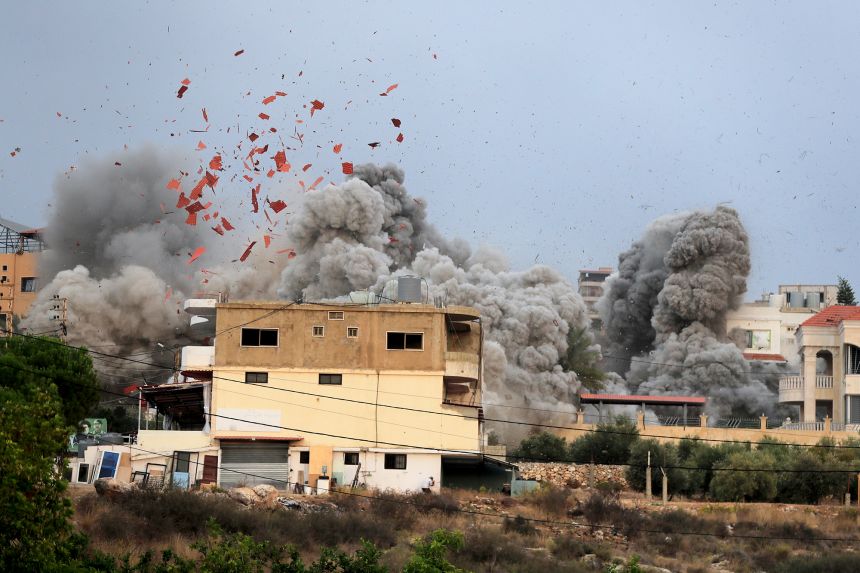
UNIFIL called on Israel to halt the attack, saying it was a “clear violation” of Security Council Resolution 1701, adopted in 2006 to end the 34-day war between Israel and Lebanon and calling for a complete cessation of hostilities between Israel and Hezbollah.
“Any military action, especially one of such a destructive scale, threatens the safety of civilians and undermines progress toward a political and diplomatic solution,” the statement continued.
Fighting between Israel and Hezbollah intensified the day after Hamas’ terrorist attack on Israel on October 7, 2023. At the time, Lebanese militant groups launched attacks on Israeli positions in an act of solidarity. In October 2024, Israel launched what it called a “limited ground operation” targeting Hezbollah in southern Lebanon.
In November 2024, a US-brokered ceasefire agreement between Lebanon and Israel went into effect, with Israel ceasing offensive operations and gradually withdrawing from its positions in southern Lebanon, while Hezbollah was to withdraw its heavy weapons north of the Litani River. However, the group denies that Israel continues to attack targets in Lebanon because of Hezbollah’s ceasefire violations.
The Lebanese army said in a brief statement on Thursday that it “continues to work closely” with UNIFIL despite the Israeli attack, insisting that the partnership between the two countries remains based on “high levels of trust and cooperation.”
Two Israeli officials said the Israeli Security Cabinet was scheduled to convene Thursday night. One of the officials told CNN that Lebanon would also be among the topics discussed.
Officials said Israel had been warning in recent weeks of what it called “Hezbollah’s efforts to rearm and reestablish its offensive capabilities.”
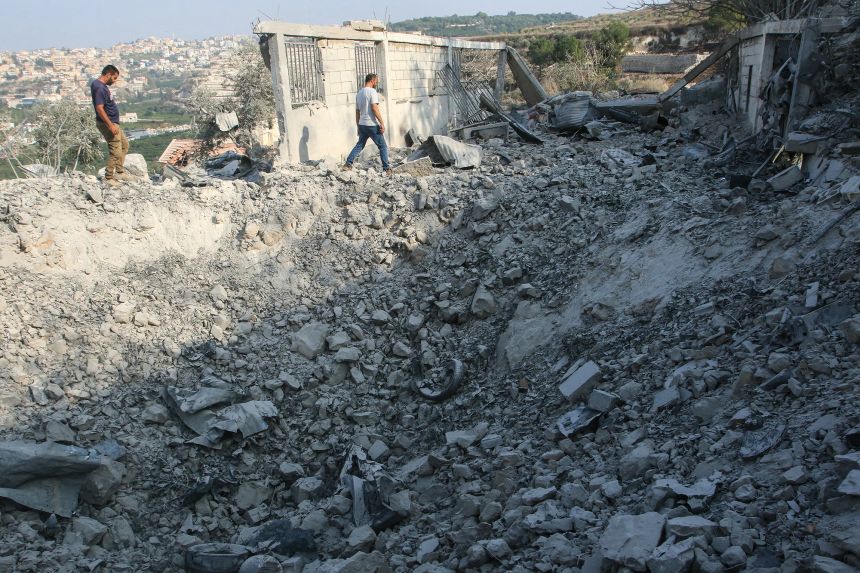
Last week, Israeli Prime Minister Benjamin Netanyahu held security talks with some of his ministers to discuss Israel’s response. Israeli sources familiar with the discussions said the military recommended launching a major operation against Hezbollah’s alleged rearmament attempts.
Foreign Minister Gideon Saar also said last week that Israel “cannot bury its head in the sand” as Hezbollah “continues to intensify its reconstruction and rearmament efforts.”
Lebanon’s president has made headlines in recent days after suggesting his country has “no choice” but to negotiate directly with Israel.
“Lebanon has no choice but to negotiate, because there are three spheres of action in politics: diplomacy, economics and war. If war doesn’t yield results, what else can we do?” he was quoted as saying by local media, widely believed to be referring to Israel.
In a statement Thursday, Hezbollah accused Israel of repeatedly violating a ceasefire agreed to in November 2024 and “blackmailing” the Lebanese government into recognizing Israel.
“(Lebanon) has no interest in succumbing to aggressive threats or being drawn into political negotiations with Zionist enemies. Such negotiations are not in the national interest and pose an existential risk to Lebanon’s substance and sovereignty,” it said, affirming the group’s “legitimate right to resist occupation and aggression.”
Israel’s military action comes days after US special envoy Tom Barak said Lebanon was a “failed state” run by “dinosaurs”. Barrack expressed doubts about whether authorities would be able to disarm Hezbollah, which has far more weapons than the Lebanese national army.
“In our opinion, it’s not reasonable to say to Lebanon, ‘Forcibly disarm one of the political parties.’ Everyone is deathly afraid of going into civil war. The idea is: What can we do to keep Hezbollah from using those rockets and missiles?” he said.
