

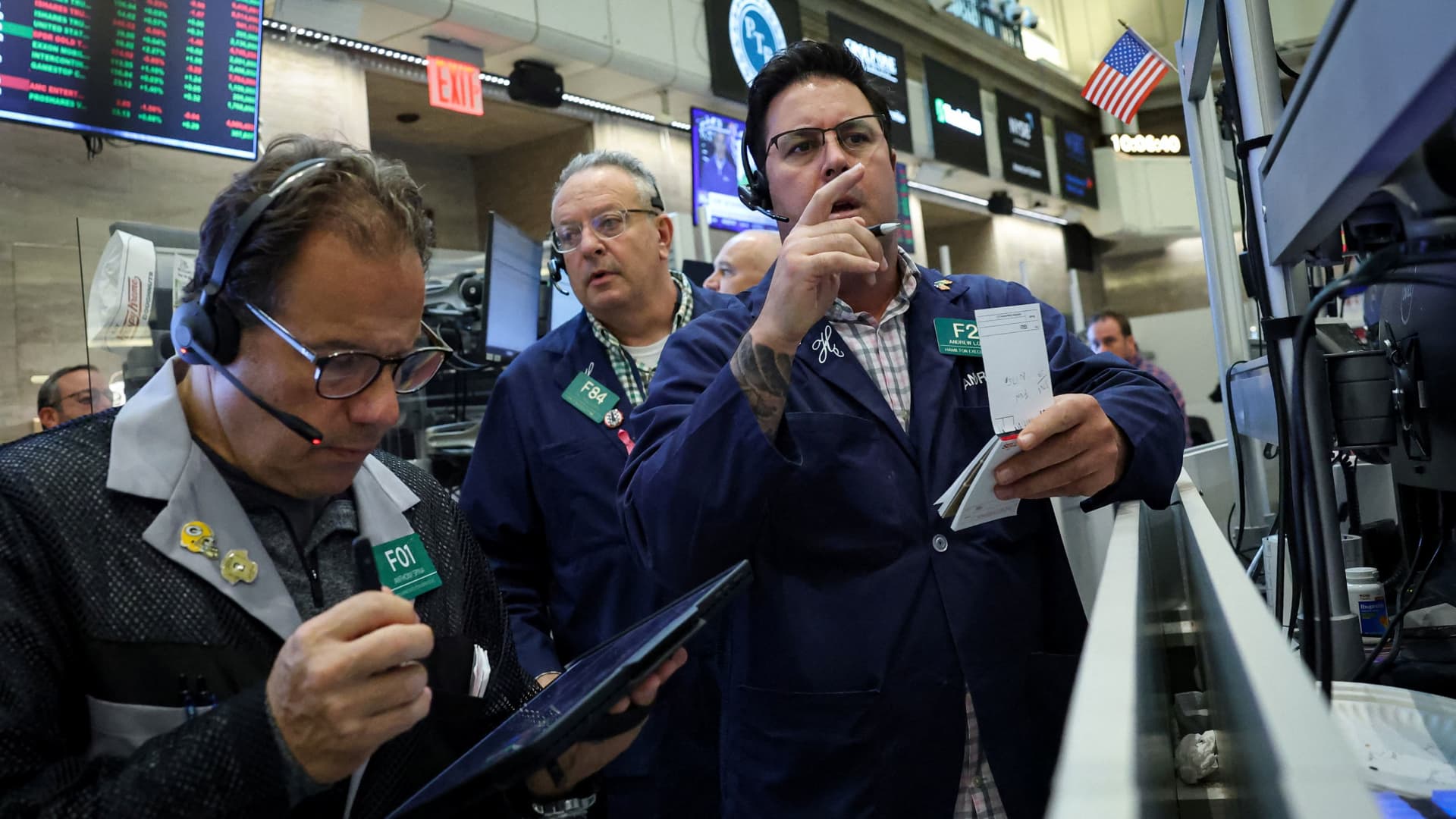
Delayed inflation data were finally released on Friday, giving Wall Street one last reason for optimism ahead of the Federal Reserve’s two-day policy meeting next week. The consumer price index in September rose 0.3% from August, bringing the 12-month inflation rate to 3%. A survey of economists polled by Dow Jones had expected increases of 0.4% and 3.1%, respectively. The so-called core CPI, which excludes volatile food and energy prices, rose 0.2% month-on-month and 3% annually. That was lower than Wall Street economists’ expectations of 0.3% and 3.1%. Investors welcomed the announcement, sending stock futures higher in pre-market trading. The statistics confirm expectations that the US Federal Reserve will cut interest rates two more times this year. According to CMEG Group’s FedWatch tool, interest rate futures trading shows a near certainty of a quarter-point cut in the federal funds rate next week, with an additional quarter-point cut likely in December. “The good news is that while inflation is on the rise, it’s not running away,” said Jay Woods, chief market strategist at Freedom Capital Markets. “Today’s numbers are what the Fed and markets needed heading into next week’s meeting. This gives the Fed and markets plenty of room to cut rates and remain dovish.” Following the CPI data, the probability of a December interest rate cut rose to 98.5% from 91% before the data. “Today’s benign CPI report did little to ‘surprise’ the Fed, and we continue to expect further easing at the FOMC next week,” said Lindsey Rosner, head of multisector fixed income investing at Goldman Sachs Asset Management. The CPI report took on added significance as much other data was not released during the three-week federal government shutdown (now the second-longest in history). The index was originally scheduled to be released nine days in advance, but it was only released after the Ministry of Labor called officials. Goldman Sachs’ Rozner also said traders can expect another rate cut in December, especially given the lack of economic data for central bank policymakers to consider. Brad Conger, chief investment officer at Hartle, Callahan & Co., said the number was expected to be higher than usual given the impact of President Donald Trump’s tariff hikes on prices. But he said the Fed is preparing for such a situation. Others were somewhat less optimistic. Ryan Weldon, investment director at IFM Investors, said Friday’s announcement showed “some stubbornness” in commodity inflation. But he pointed to recent comments from Fed officials who said the spike in inflation caused by tariffs would be short-lived, leaving room for the central bank to continue cutting rates. Ian Lingen, head of U.S. rates strategy at BMO Capital Markets, said Friday’s CPI report “confirmed” the possibility of a 25 basis point (bp) rate cut next week. He also expects the Fed to take a “dovish tone” in its accompanying statement. Lingen said the report would “solidify” further interest rate cuts at the meeting heading into December. There will be no Fed meeting in November. For Chris Zaccarelli, head of investments at Northlight Asset Management, the CPI report showed that inflation is not accelerating as much as many expected in the wake of President Trump’s tariff hikes. “Like the Sherlock Holmes stories, inflation is like the dog that never barked,” Zaccarelli said. “While so many are expecting a sharp rise in inflation and are taking a bearish stance as a result, the market is likely to continue shorting until it realizes that the economy, and U.S. businesses, are more resilient than many expected.”
