

EDITOR’S NOTE: This story is part of As Equals, CNN’s ongoing series on gender inequality. For information about how the series is funded and more, check out our FAQs.
Guatemala City
—
In the bracing morning air, workers leave their homes in the outer suburbs and hurry toward the industrial buildings lining the Guatemalan capital’s highways.
Some go by foot. Others by motorcycle; whole families on the school commute, children in their mothers’ arms. Many more travel on old yellow school buses, imported from the United States after decades of service.
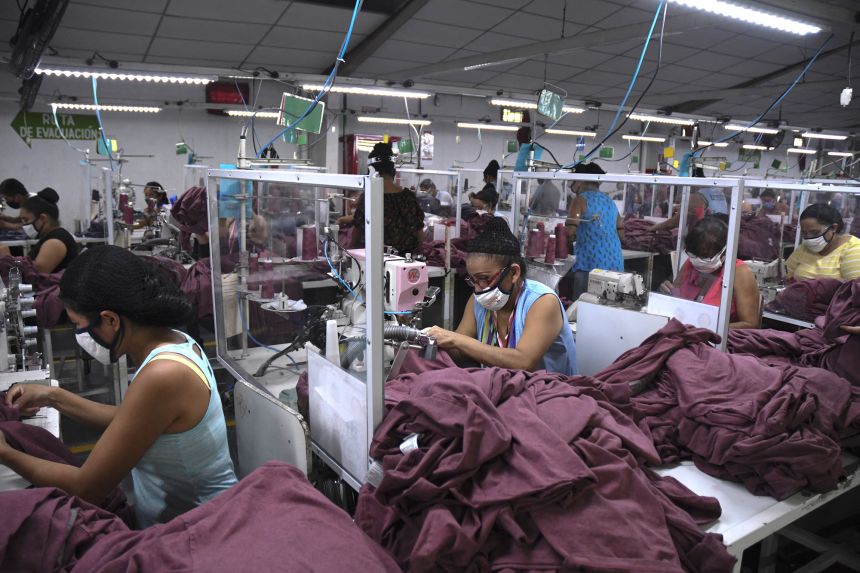
The workers are almost entirely women, ranging from their late teens to early 60s. They stream into factory buildings past heavy metal gates and 10-foot walls topped with barbed wire.
What happens inside these garment factories, known as “maquilas” throughout Central America, is largely hidden from public view – even though they employ tens of thousands of workers and are crucial to Guatemala’s economy.
Cameras and other recording devices are not allowed inside, several of the workers told CNN. Independent inspectors are hamstrung by factory bosses, according to government officials. Trade unions are few and attempts to organize are met with threats, firings and, in some cases, violence, the workers said.
What does emerge from these factories is box after box of garments overwhelmingly destined for the US: clothes for some of the biggest brands in North America, such as Carhartt, Target and Ralph Lauren, among others.
After decades of nearshoring policies pursued by successive US administrations, Guatemala has become an integrated hub for cheap apparel – and some of the consequences for the local workforce have been brutal.
A months-long investigation by CNN gathered dozens of testimonies of workplace abuse. Workers spoke of public dressing-downs and threats to fire staff unable to fulfill impossible quotas, wage theft and sexual harassment.
“If you don’t keep up, they flag you out, they discipline you.”
Worker Rosa Guerra
Some maquila workers told CNN they were given daily quotas of thousands of apparel items, and made to stand for up to 15 hours a day, while earning a minimum wage of less than $500 a month.
“If you don’t keep up, they flag you out, they discipline you,” said one worker, Rosa Guerra. “They ask us to hurry up and say that they cannot pay us.”
Others described deplorable working conditions: “The (drinking) water was dirty. Sometimes it even had soap or cockroaches in it,” said Merida Jacinto.
But dissent is not an option for the vast majority of maquila workers. Of the more than 850 textile maquilas in Guatemala, only 76 allow a workers’ union, Labor Minister Miriam Roquel told CNN. That’s about 9% of factories.
Guatemala has long been a cheap supplier for US companies. But maquilas took on an increasingly central role during the Covid-19 pandemic, when lockdowns meant many containers sat idle in East Asian ports for months – and US manufacturers looked to production closer to home. Between 2019 and 2022, apparel imports from Guatemala grew 37%, according to data from the US Department of Commerce.
The sector now counts for almost 10% of Guatemala’s GDP, and is so crucial to the economy it was granted an exemption to continue operating during Covid-19 restrictions.
Back in Guatemala City, as the light begins to fade from the skyline, the maquila workers emerge from their factories. Now, some are ready to share their stories of the world inside.
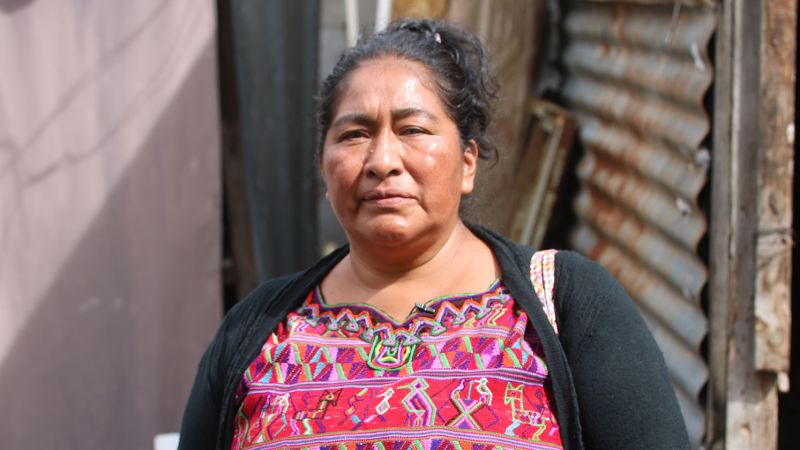
Rutilia Cano had worked for the same garment factory for 23 years – until she was abruptly made jobless in February.
An indigenous woman from the Guatemalan highlands, Cano never learnt to read and moved to the capital as a young mother in the 1980s to escape the violent civil conflict between the Guatemalan Army and leftist guerrillas that caused the death of tens of thousands of Maya civilians between the 1960s and the early 1990s.
Working in the textile industry was the only job she could land, and the pace of work was brutal. “We were asked to make some 300 t-shirts an hour, but I never managed to,” Cano, now in her late fifties, told CNN. “I’m old, I could only get to 150, 175 t-shirts maybe, and the managers were always coming after me.”
Her dream was to one day return to her village and purchase land to build a house. But for more than three decades her home has been a rundown apartment with a plastic curtain as a door.
Like many of her fellow workers, Cano was never able to purchase the fruits of her labor. The t-shirts, skirts and more that she made at the factory – owned by Korean company KOA Modas – were supplied to US retailer Target and sold abroad. Throughout her employment Cano was never under contract with Target, who – as a third-party client – was not responsible for her layoff. Target used an intermediary to purchase garments from KOA Modas, a spokesperson told CNN.
On a rare visit to a large department store that sells international brands, Cano ran her strong hands shaped by a lifetime of sewing along the hanging rails of clothes. “It would take me days to afford what is on offer here,” she told CNN.
Most of the garment factories here are run by Korean companies, who control almost two-thirds of investments in the Guatemalan textile industry, according to a 2022 report by USAID.
In this intricate supply chain, US brands do not have formal relationships with most of the Guatemalan workers who manufacture garments on their behalf, nor are they legally responsible for the working conditions inside the maquilas.
However, they benefit from a pattern of sub-contracting deals that keep prices down and deliveries running unabated, advocates have said.
According to a company fact sheet, big US brand Ralph Lauren purchases from 17 facilities across Guatemala, some of which are owned by Korean companies. Ralph Lauren did not immediately respond to CNN’s requests for comment on its supplier relationships.
Mother-of-three Cano had been looking forward to retiring one day and spending more time with her family. But in February, that future was upended when Cano’s factory declared bankruptcy. Labor inspectors told her the factory’s ownership had left millions of dollars in outstanding payments to the Guatemalan welfare agency. Cano’s pension was gone.
“I was due some 80-90,000 quetzales ($11,000)… and nothing. I feel so sad because we all lost our jobs, even me, a single mother. It’s just sad…” Cano told CNN.
A spokesperson for Target told CNN suppliers are required to comply with lawful, safe and respectful working conditions and that the company decided to end the relationship with KOA Modas because the factory did not comply with its standards.
CNN reached out to KOA Modas for comment, but did not receive a response at time of publishing.
After the factory closed, Cano joined litigation involving Sae-A Trading, another Korean company which used to purchase KOA Modas’s apparel on Target’s behalf and, after a lengthy legal battle, pledged to fulfill the vast majority of severance payments.
While Sae-A Trading has no legal responsibility for the workers, it agreed to make a “humanitarian contribution” to those affected by the closure, it said in a resolution document. Its contribution of $3.3million is “considered a loan,” it added.
Such severances are “by far the largest single sum of money most of these families will ever see in their lives,” Scott Nova, executive director at the Worker Rights Consortium, a US-based organization that investigates the garment industry, told CNN.
He said it was common in the industry for workers not to receive their pension, adding “it’s difficult to put into words how financially and psychologically devastating it is to work 20 years to earn this one sizable, real pot of money, and then just have it taken from you.”
When CNN last spoke with Cano in late September, she was still waiting to be paid under the settlement with Sae-A Trading. “I need that money,” she told CNN, adding “at my age I’m struggling to get work – the only thing I could do is cleaning houses but that is very tiring.”
For other maquila workers, simply joining their factory’s trade union – if it even exists – can be met with trepidation.
Corina Olivares is one of the union representatives at the Texpia II factory, also owned by Sae-A Trading. She took over after her predecessor, Anastacio Tzib Caal, was shot dead outside of Guatemala City in June last year.
In the months leading up to Caal’s death, obscenity-ridden threats appeared on the walls of workers’ toilets, which CNN has seen photos of. “Unionists, son of b****es, resign or we will lynch you,” read one, with the stylized image of a revolver mimicking a signature. “Unionist b**ch, go to sh*t don’t mess with the factory, be grateful it’s given you to eat for many years,” read another.
While the US Department of Labor implied Caal’s murder was linked to his union activity, Olivares wasn’t so certain. However, she added, the threats made her seriously question whether to run as his successor: “For months, I was genuinely scared to walk to work,” she said. Olivares told CNN that the company blamed the union – which had campaigned for reduced working hours and clean drinking water being made available between shifts – for a contraction in trade. The resulting hostility from other workers toward union members made her feel unsafe.
A spokesperson for Texpia II confirmed that threatening graffiti appeared between May and June last year but stressed that factory’s management took actions to condemn the threats and support union activities.
Any form of verbal abuse or personal harassment is not tolerated at Texpia II, the spokesperson said.
Elsewhere, VESTEX, the civil association representing the textile export industry in Guatemala, said in a statement to CNN that the group’s Code of Conduct strictly bans verbal and physical abuse, including corporal punishment, coercion and sexual harassment.
Power dynamics and sexual abuse
Inside factories, the balance of power between the male-dominated management and the mostly female workers can lead to another disturbing problem.
Worker Laura, who chose to remain anonymous, described how one manager would touch her inappropriately at work. “I knew it was not okay, but I was too scared to speak out,” she told CNN. “I didn’t know that inside a maquila, female workers were so exposed to the middle managers, as if a man who thinks he’s superior to us can dominate in such a way,” she added.
Another worker, Alexandra, who also preferred to remain anonymous, told CNN of a manager who sexually harassed her for years. “He would come toward me from my back in a really creepy way, putting his hands on my neck, touching me in a way that made me very uncomfortable,” she said.
“He would come toward me from my back in a really creepy way, putting his hands on my neck, touching me in a way that made me very uncomfortable.”
Worker Alexandra
When she rejected his advances, Alexandra said the manager would change her shifts, and scold and insult her in front of other workers.
When Alexandra and her colleagues complained about sexual and workplace abuse, she told CNN that the answer from upper managers was always that they were free to leave.
In reality, Alexandra had few options but to stay on, telling CNN that she could not afford to be unemployed, and resigning would have meant giving up her severance pay.
Alexandra’s factory sells almost exclusively to the US market. Past clients include Carhartt, which told CNN it parted ways with the factory in 2019, though it does continue to purchase from Guatemala more broadly.
Instead of quitting, Alexandra decided to join a workers’ union. The group relayed the abuse to the Guatemalan Ministry of Labor. But when labor inspectors were sent to the factory earlier this year, the company’s management refused to meet with them, video seen by CNN shows.
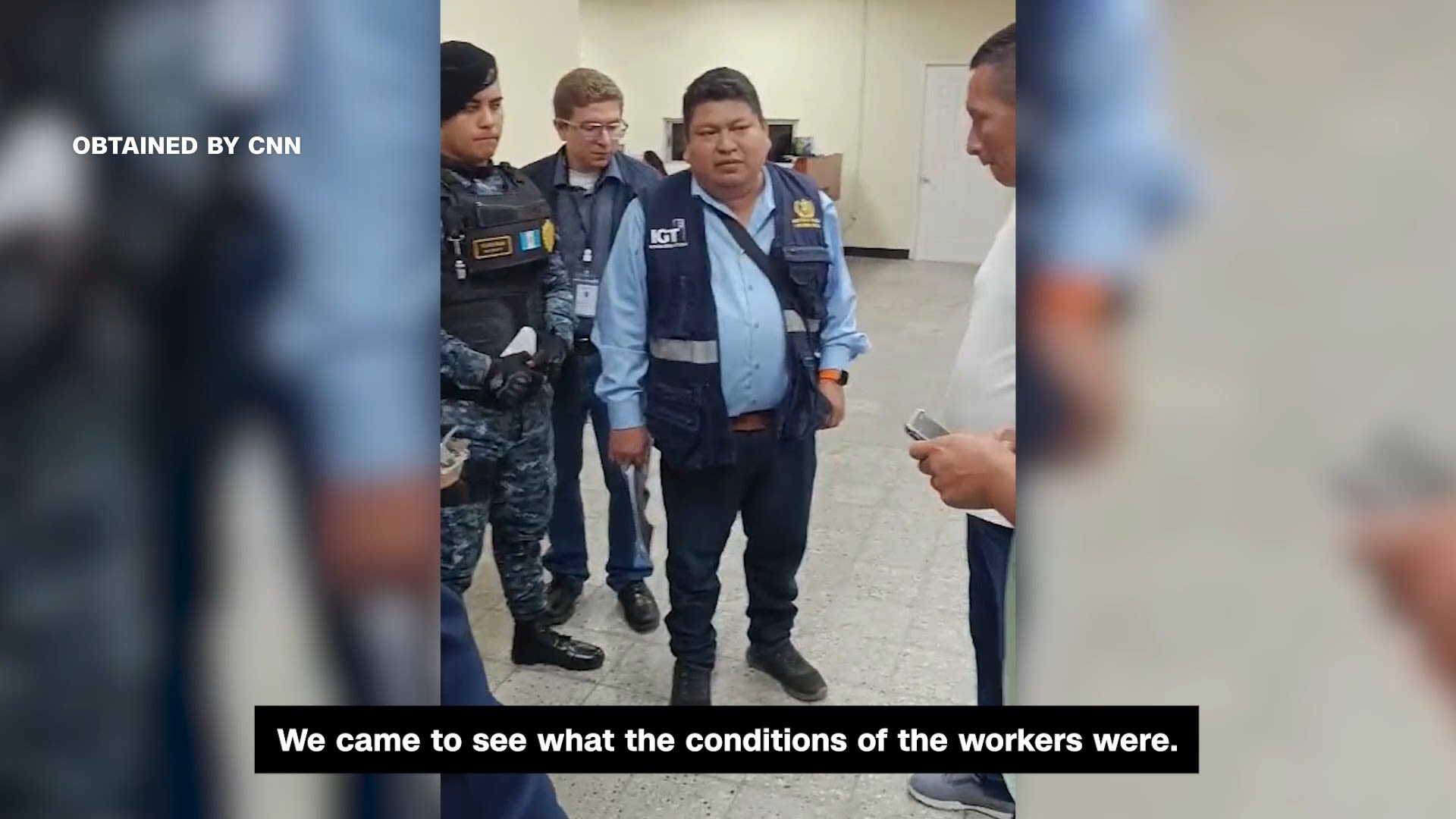
Guatemala labor inspectors are denied entry to the maquila.
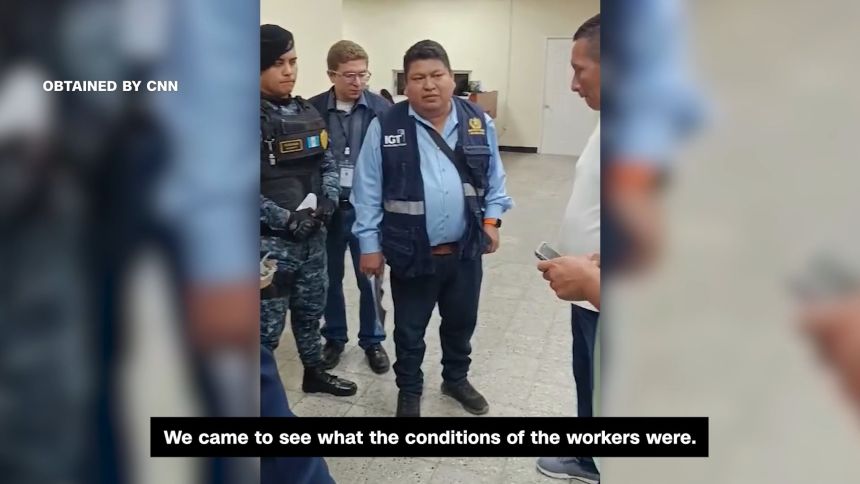
The following week, all the members of the union were laid off.
In the months since, the Ministry of Labor has continued to engage with the company, with no results. “(More recently) We tried to enter that maquila with our inspectors to register the workers’ conditions,” labor inspector Silvia Juarez told CNN. “We simply couldn’t: the management barricaded behind a shut door and we would need police intervention to break through,” she told CNN, gritting her teeth.
Alexandra’s factory did not respond to a detailed list of questions from CNN. However, the textile factories trade association VESTEX, told CNN in a statement that the group works hand in hand with the labor inspectorate to make sure regulations are respected.
“The management barricaded behind a shut door and we would need police intervention to break through.”
Labor inspector, Silvia Juarez
The Guatemalan president, Bernardo Arévalo, is the first progressive leader to be elected in the country in decades. His inauguration in 2024, after years of political malaise, raised hopes that rampant corruption and chronic malpractices could finally be reined in. But change is taking longer than expected.
“What has been lacking in Guatemala is the political will to make public institutions work,” the president told CNN, a nod to the abuse in the maquila sector that has been infamous since at least the 1990s.
Arévalo’s government raised the minimum wage for maquila workers by 6% and has pledged to do more to enforce existing regulation. But as the labor ministry’s inability to engage with shows, the state can do only so much.
Months after their dismissal, most of the workers fired along with Alexandra told CNN they were getting by doing odd jobs and had struggled to find a new employer – their membership in the union apparently a stain in the eyes of other maquila owners.
The future for these maquila workers feels even more uncertain as the White House has imposed import tariffs on several countries that play a key role in the supply chain, leaving textile workers around the world exposed. The impact of those tariffs is yet to be felt in Guatemala, but other countries such as Lesotho and Haiti are already facing a bleak outcome.
Prachi Agarwal, a research fellow at the ODI think tank, has written about a “gendered supply chain shock” as the vast majority of the workforce in the global garment industry are women.
Alexandra meanwhile has decided to cut ties with the sector altogether. She hopes her daughter – who is studying law – will have a brighter career.
“I will never want my daughter to work in a maquila. Ever,” she said.
Reporter: Stefano Pozzebon
Editor: Sheena McKenzie
Video Journalist: Lali Houghton
Video editor: Estefania Rodriguez
Field producer: Sofia Menchú
Commissioning editor: Ladan Anoushfar
Copy editor: Andy Raine
Associate Producer: Marta Simonella
