

AP
—
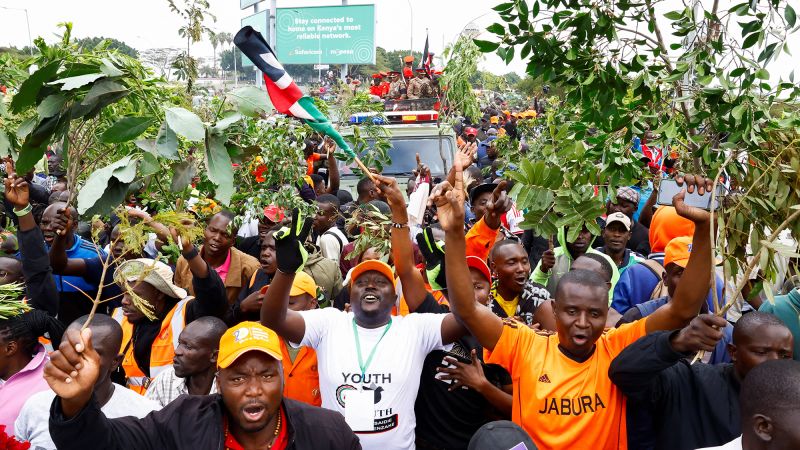
Kenyan police on Thursday fired tear gas at thousands of mourners who were holding a public display of the body of former Prime Minister Raila Odinga, who died in India the day before.
Mourners filled the capital’s 60,000-seater soccer stadium after escorting the body on foot from the country’s main airport, 29 kilometers away. Tensions escalated as they entered the presidential palace, and police fired tear gas.
As mourners fled outside, a crowd formed in front of the stadium gates, and leaders in attendance remained locked in their rooms. An unknown number of people were injured in the stampede.
Odinga’s body arrived from India on a chartered plane Thursday morning and was greeted with a water cannon salute at the airport.
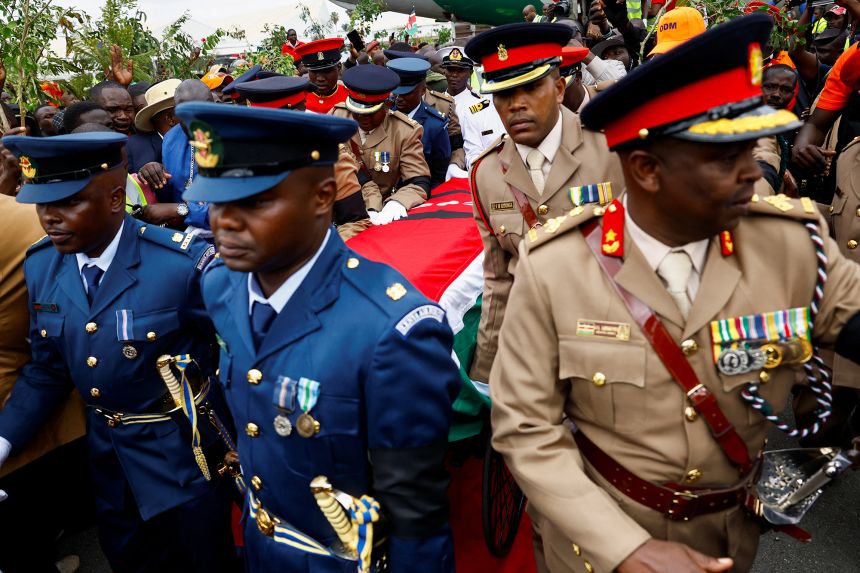
The planned reception of the body by relatives and leaders at the airport was halted as mourners requested access to view the body. People waved twigs as they walked off the tarmac to view the military vehicle carrying Odinga.
“We are mourning as a nation. We loved Baba very much. He was a defender of the people,” said Beatrice Adala, one of the many who came to the airport. Like many people, she called Odinga “Baba.” This is a Swahili title usually given to a beloved father figure.
The politician, admired for his fight for democracy, died on Wednesday at the age of 80 after collapsing during a morning walk. Efforts to revive him at a hospital in India’s Kerala state were unsuccessful.
Mr Odinga will be given a state funeral on Sunday at his rural home in Bondo, in the west of the country.
His family said he wanted to be buried quickly, preferably within 72 hours, which is unusual for a popular Kenyan leader.
The country declared Friday a public holiday as Kenyans gather at a soccer stadium in Nairobi for his state funeral. Another public viewing is scheduled to be held on Saturday in western Kisumu County, near his rural home.
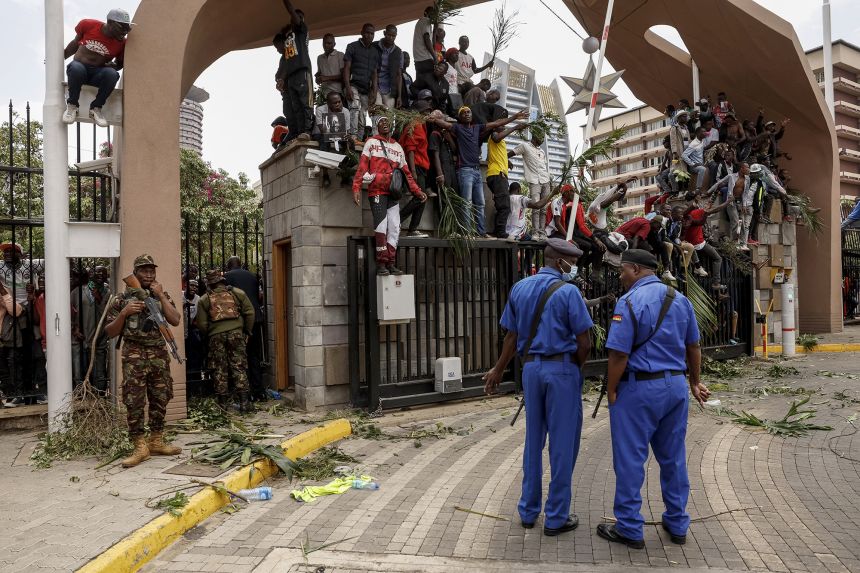
The council announced that a public viewing planned for the council grounds has been moved to the football stadium to provide more space for mourners.
Kenyan President William Ruto, who defeated Mr. Odinga in the 2022 election but later struck a political agreement with him that appointed opposition members to his cabinet, mourned him as “a patriot of extraordinary courage, a Pan-Africanist and a unifier who sought peace and unity over power and self-interest.”
Ruto declared seven days of national mourning for the veteran politician.
Odinga has run for Kenya’s president five times in three decades, sometimes with enough support that many believed he might win.
Although Odinga never became president, to many he was a respected figure and politician whose work helped lead Kenya to a vibrant, multiparty democracy.
He came close to winning the presidency in 2007, but narrowly lost to incumbent Mwai Kibaki in a disputed election marred by ethnic violence.
Odinga later served as Kenya’s prime minister from 2008 to 2013 in a national unity government mediated by the international community.
In 2017, a court invalidated Africa’s first presidential election after Odinga challenged it, but he decided to boycott a new vote, arguing that without reforms, the election could not be trusted.
