

Tel Aviv, Israel
—
Ofir Braslavsky is smiling for the first time in two years.
It was a dramatic change in the face of the father of 21-year-old hostage Rom Braslavsky, who was emotionally depressed in August after seeing his son emaciated and crying in footage released from inside the Gaza Strip by the Palestinian Islamic Jihad (PIJ) militant group.
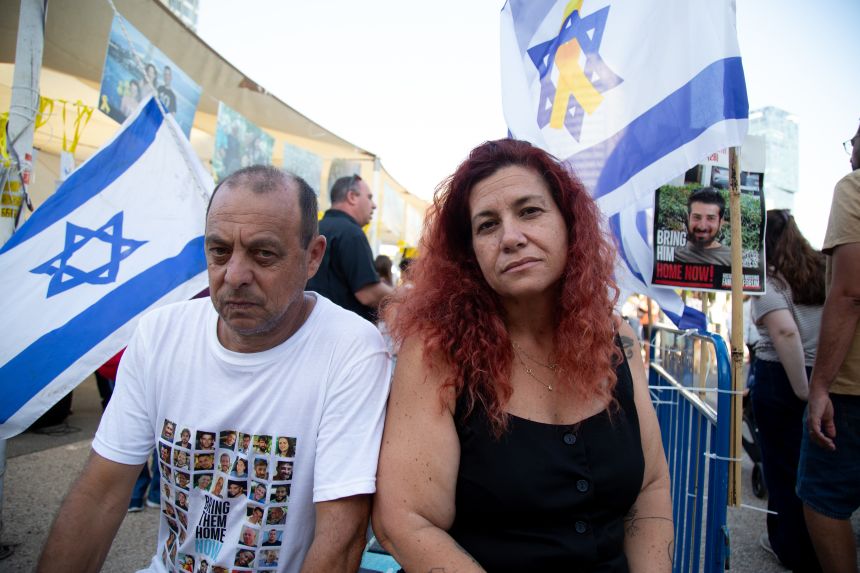
“We focus on kisses, hugs, his smell,” Braslavsky told CNN on Saturday while looking out at the Tel Aviv square known as Hostage Square, which has been the center of hostage demonstrations for more than 700 days.
“Many thoughts are running through my head,” he said, stressing that he is looking forward to nothing more than a reunion.
Like hundreds of people in front of him, Braslavsky can’t wait for the weekend to end. Under the first phase of a ceasefire plan agreed by Hamas and Israel, 48 hostages, 20 of whom are believed to be alive, are scheduled to be released by midday on Monday.
“Every second feels like an eternity. We are just waiting for the moment when they will call us, to REM (meeting point) and then to the hospital,” he said.
U.S. President Donald Trump is being praised and thanked in the crowd, and there are many signs, American flags and portraits of American leaders.
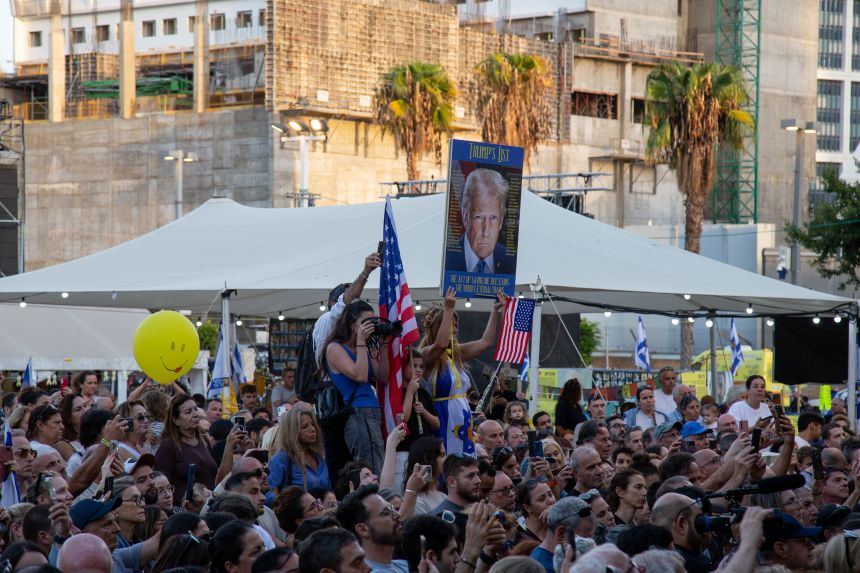
President Trump cornered Israeli Prime Minister Benjamin Netanyahu into agreeing to the first phase of a ceasefire agreement. Many of the hostages’ families have accused Israeli leaders of prolonging the war, avoiding responsibility for the October 7 attack and obstructing negotiations to free the hostages and end the war.
But Braslavsky is not interested in politics. He just wants peace, and believes it will last despite pressing questions about the second phase of the deal, which includes significant obstacles to overcome for both sides regarding the disarmament and governance of Hamas and Israel’s complete withdrawal from Gaza.
“I believe things will get better and easier now, given everything that happened,” he said.
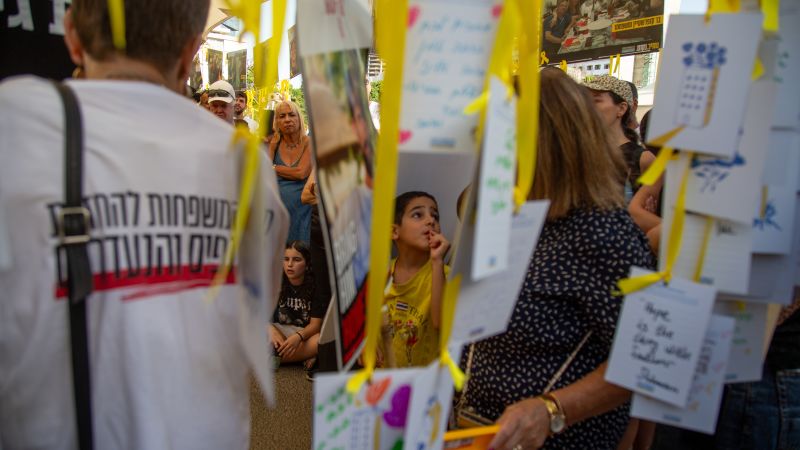
His optimism was shared among the crowd, which had the feel of a friends reunion. Homemade cookies were handed out along with a tag that read “Taste of Joy.”
The children walked among the adults and shared sweets from their pockets. Strangers became friends and friends became family in a crowd that felt angry, hopeless, hopeless and finally happy.
As he made his way through the crowd, Blaslavsky stopped to hug Michel Illouz, whose 26-year-old son Guy was killed in Hamas custody, but his impromptu speech, which included the last message his son gave at the Nova Festival after he was kidnapped, was repeatedly interrupted by hugs from strangers who wanted to shake his hand.
Two fathers were there, one waiting for his son’s body. Those expecting their son’s embrace also stood in a uniquely Israeli paradoxical moment, torn between sadness and joy.
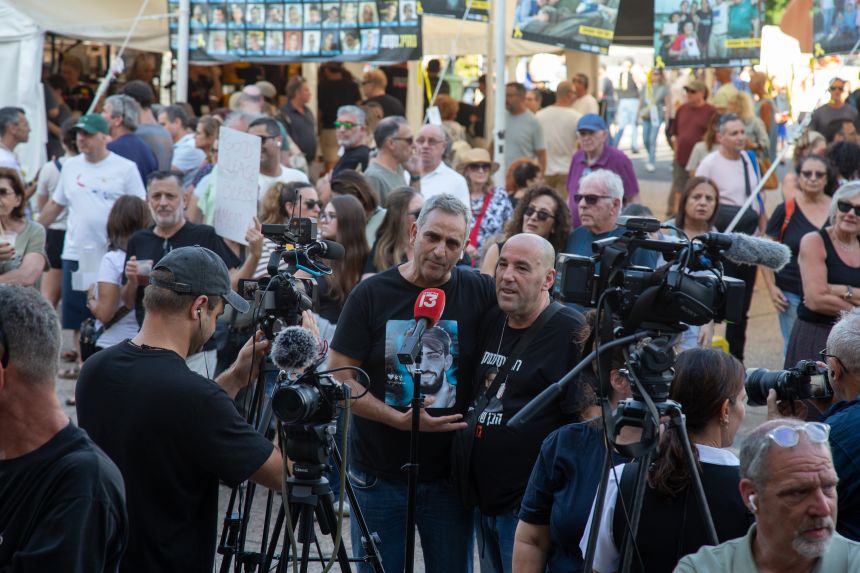
“It’s impossible to explain. This connection (between us) does not exist anywhere else,” Braslavsky said. “People who have lost loved ones keep coming here…it’s hard to understand,” he added.
For Illouz, who rushed to the square in jubilation when the deal was announced on Wednesday night, the impending release of the hostages is deeply complicated.
“I’m very proud to see the children alive and to be able to help them recover. I’m also very happy for the families,” Illuz said.
“But I’m finding a place to grieve,” he said. “It’s a very confusing moment. A nightmare, in fact.”
As Illuz prepares for the return of her son’s remains, she outlines the excruciating task that lies ahead.
“What are we actually going to get? … What kind of bones are we going to get? How do we find a way to recognize him? I’m so scared of that. And to bury him,” he said.
“It’s going to be a long, long journey, but we’re just getting started,” he added.
Illuz hopes to be able to bury her son within the next few days, but it is not certain that the burial will be completed.
Prime Minister Benjamin Netanyahu on Friday hinted publicly for the first time that not all dead hostages captured in Gaza would be returned, underscoring previous assessments that Hamas may not be able to find and return all the remains. The Israeli government has known for months that Hamas may not know the location of all 28 bodies or be unable to recover or return them.
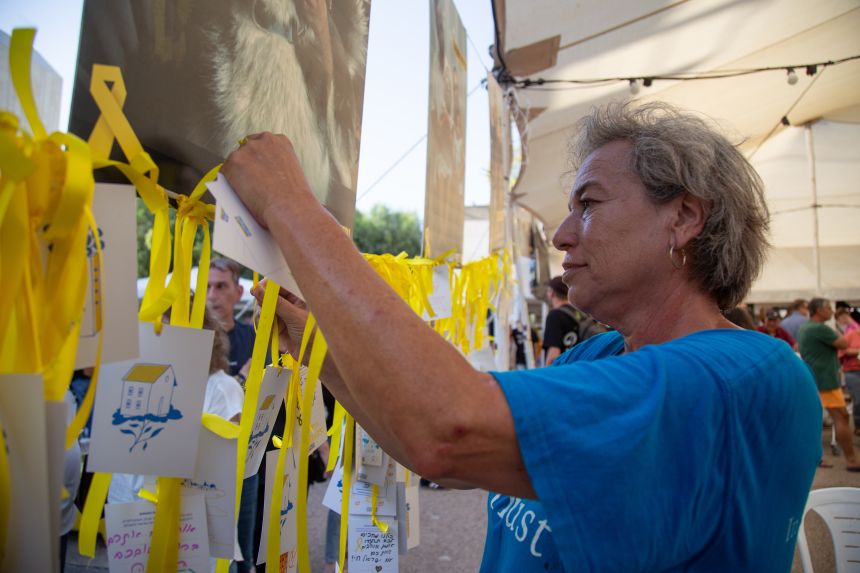
On a crowded row of stairs in front of the adjacent library, Simcha Cohen was trying to come to terms with her own mixed emotions. Cohen, who lost her son to suicide a few years ago, is part of an NGO that supports bereaved families, and before October 7, had regularly held meetings in the same square.
Simcha had not returned to the square since that day in 2023, when it became known as Hostage Square.
“I’m still not happy,” she said. “It will probably be tomorrow when they (the hostages) go home.”
But she knows that even the moments of joy that are yet to come will be marred by the trauma of the past two years.
With tears streaming down her face, she pointed to a photo of Roy Shalev. Roy Shalev’s partner, who was killed in front of his eyes during the Nova Music Festival attack, died by suicide on Friday, just hours after the ceasefire took effect.
Inside the library, the family of former hostage Ofer Calderon, who was kidnapped from Kibbutz Nir Oz on October 7, 2023 and released in February during the last ceasefire agreement, was looking forward to Monday.
Calderon’s sister-in-law, Sharon, told CNN that she had a “bump” in her stomach but wanted to come to Hostage Square one last time, so she canceled plans for her husband’s Nissan and her family.
“When the offer came back, we had the support of the families. So we’re here to help them, we’re here to hold them and make sure they’re happy while they wait,” Sharon said.
“Wait, wait, wait.”
