

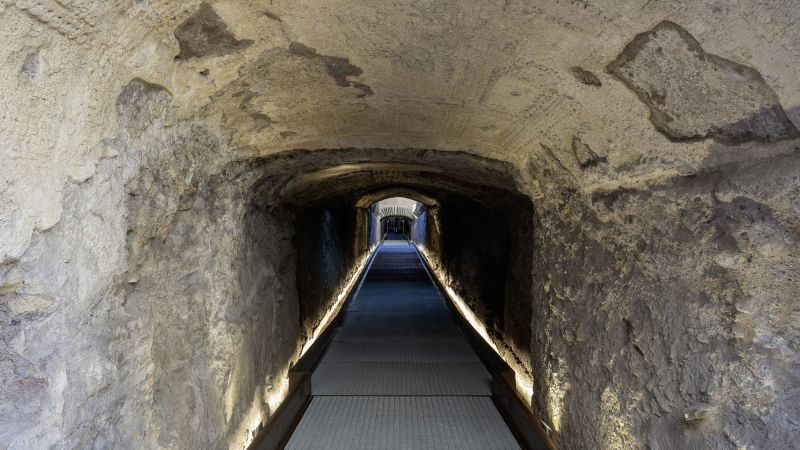
The 2,000-year-old tunnel once used by Roman emperors to secretly sneak into the Colosseum opens to the public this month, giving visitors a behind-the-scenes glimpse of the arena’s emperors.
A 180-foot corridor known as the Commodus Passage was constructed beneath the amphitheater so that the emperor and VIP guests could take their seats in the imperial box without mingling with the crowd.
The passage takes its name from Emperor Commodus, a ruthless leader who ruled from 177 to 192 AD and was almost assassinated in the underground passage.
Movie buffs will remember Commodus as the scheming emperor played by Joaquin Phoenix in Gladiator. Commodus is the man who murdered his father, Marcus Aurelius, and confronted Maximus, played by Russell Crowe, in the arena.
In real life, Commodus’ vanity went even further. According to the Colosseum Archaeological Park, he dressed up as Hercules and competed in gladiator games, killing weak warriors and even animals, and once decapitated an ostrich in front of a cheering crowd.
The Hidden Corridor was first discovered between 1810 and 1814 by French excavators led by architect Carlo Lucangeli, then reopened in 1874 and studied again in the 1990s. During the restoration of the entire site in 2020-2021, archaeologists created a complete map of the tunnel and began a new phase of conservation.
Wine and festive scenery
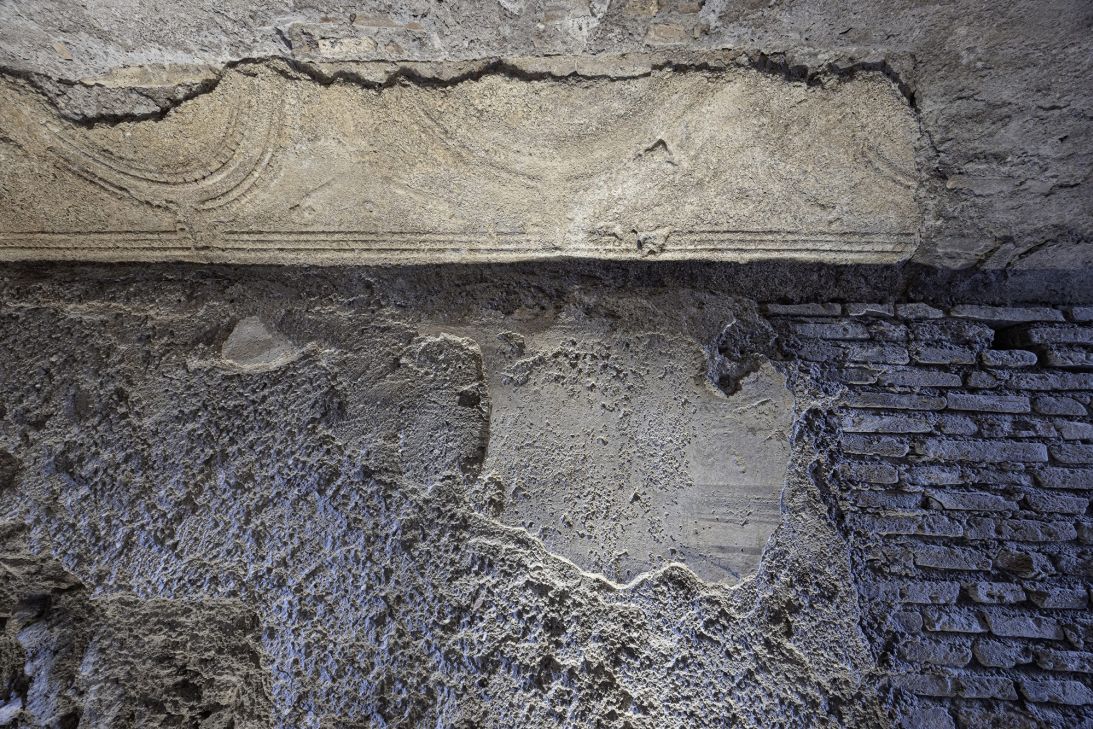
Recent restorations removed centuries of dust and grime and used laser tools to reapply fragile plaster, revealing marble-lined walls etched with landscapes and mythological scenes, including stories of Dionysus, the god of wine and revelry. Near the entrance, carvings of boar hunts, bear fights and acrobats recall the scenes that once filled the arena.
“When this passage is opened to the public, visitors will understand what it was like to be an emperor,” said Barbara Nazzaro, an archaeologist who led the work.
The Italian museum’s director, Massimo Osanna, described the reopening as an “important milestone” that combines research and conservation. New features such as tactile maps and reimagined videos aim to make the site “truly accessible and inclusive for all viewers.”
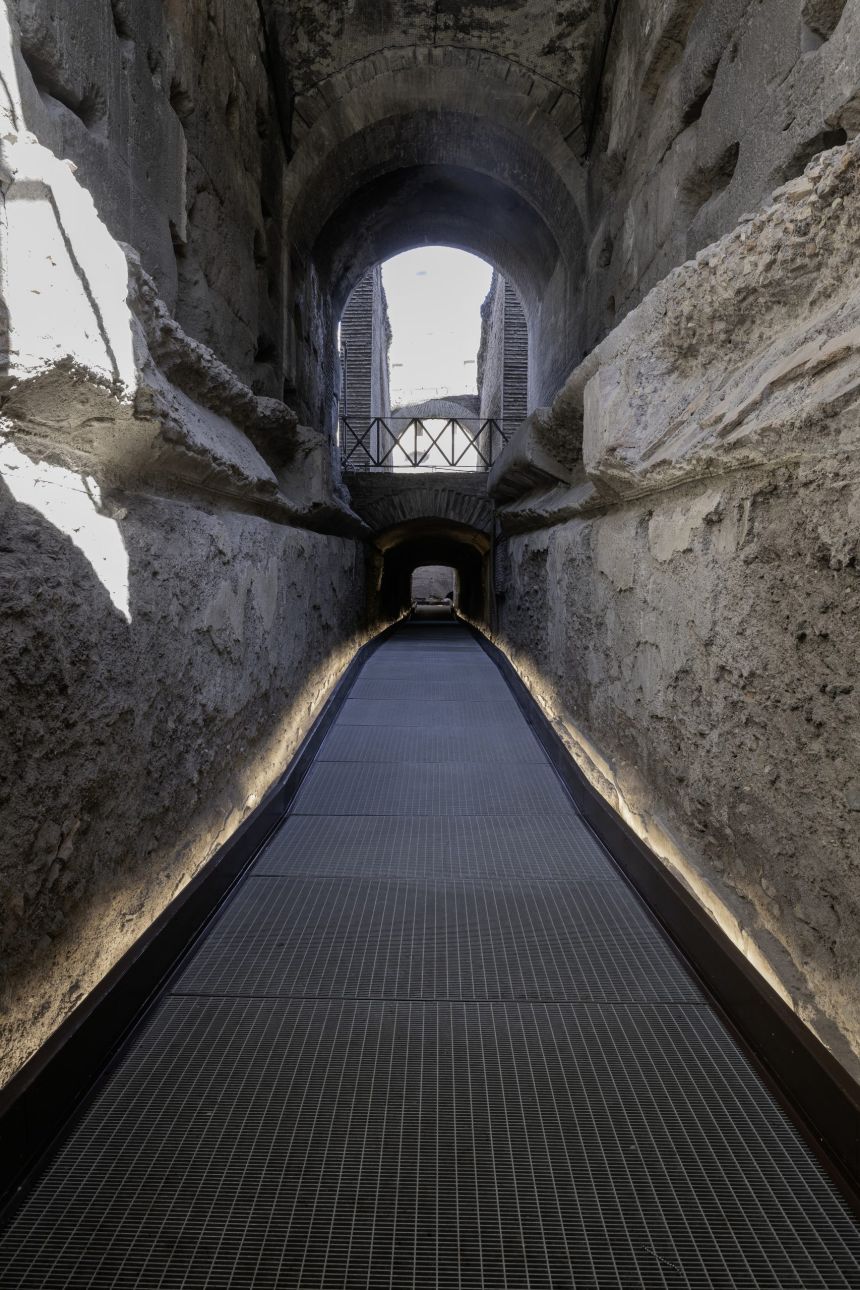
This vaulted aisle was added in the 1st and 2nd centuries after the Colosseum’s original construction and consists of three branches. Two run east-west and one north-south.
The restoration includes lighting that recreates daylight from a long-sealed skylight and glass panels that will allow visitors to observe archaeologists at work. New excavations planned for next year will trace the tunnel’s route, possibly leading to the gladiator barracks.
The project was funded by the Colosseum Archaeological Park and the Italian National Plan for Reconstruction and Resilience (PNRR).
